Author: Mike Lear
VIDEOS: Missouri House Republican and Democrat leadership answer media questions
Missouri House endorses statewide prescription drug monitoring program
The Missouri House has given preliminary approval to a statewide monitoring program for prescription drugs. Supporters say it will combat abuse of prescription drugs. Opponents say it will lead to more people switching to heroin and other illegal drugs, and cause an increase in overdose deaths.

Missouri is the only state in the nation without a statewide program, though a program started by St. Louis County encompasses roughly 87-percent of the state’s population.
House Bill 1693 would replace St. Louis County’s program with one that covers all of Missouri and puts additional protections in place for those whose data would be in the Monitoring program.
It would create an online database that doctors and pharmacists could use to record and monitor the purchases of pills and visits to pharmacies. For the seventh year, Representative Holly Rehder (R-Sikeston) is the proposal’s sponsor. She said it would help fight what has been called an “epidemic” of prescription drug use.
Representative Justin Hill (R-Lake St. Louis) has opposed creation of a Prescription Drug Monitoring Program (PDMP) each year he has been in the House. He argues that such programs have not worked, and said by taking away pharmacies as places abusers can get prescription drugs the state would be pushing abusers to illicit drugs. He said after St. Louis County’s PDMP was implemented the rate of drug overdose deaths increased in areas it covered.
Rehder acknowledged the increase in overdose deaths but maintained PDMPs are effective tools in detecting and stemming addiction before it worsens.

“As a grandmother who got my grandbaby out of a meth lab, who was living in one, there is no way that I would have the passion for this bill if I did not know from researching the data that this gets to the underlying problem,” said Rehder. “We must stop addiction on the front end. We must allow our providers to see it.”
Representative Glen Kolkmeyer (R-Odessa) said he backs the bill because not having a PDMP statewide means people can simply go to counties that do not have it to keep getting drugs to abuse or sell.
“My issue is … when we’re doing it patch quilted together is … if you’re from one county [which has PDMP] you’ll go to another county that doesn’t have it,” said Kolkmeyer. “That’s why we need it statewide.”
Rehder said her bill includes protections against information in the PDMP database being used to take away Missourians’ rights under the 2nd and 4th Amendments. She said those protections do not exist in the St. Louis County program.
Several proposed amendments to HB 1693 were voted down, including one that would have removed the bill from law if overdose deaths increase after its passage.
The bill was perfected by a roll call vote of 95-56. Another favorable vote would send it to the Senate.
House committee approves bill to legalize syringe exchange programs for IV drug abusers
A House Committee has endorsed continued operation of programs that offer clean needles to drug abusers.

Those programs aim to get drug users into treatment by introducing them to medical professionals who can consult with them while providing them clean needles. They also fight the spread of diseases like HIV and Hepatitis C, which are often transmitted through the use of dirty needles.
Representative Holly Rehder (R-Sikeston) is carrying the legislation for a third straight year. She said such programs operate in Missouri now, including one in St. Louis County and one that has been operating for decades in Kansas City, but they are technically in violation of state laws against distributing drug paraphernalia.
“We do not want to create a scenario of increasing drug use. In fact, syringe access programs have been found to cause a 13-percent reduction in use. They play a very large role in the referral for treatment. They’ve also been found to decrease needle sharing by 20-percent,” Rehder told the House Committee on Health and Mental Health Policy.
The top Democrat on the committee, Representative Doug Clemens (D-St. Ann), said he is enthusiastic about House Bill 1486, and the finding that users who take advantage of needle exchanges are five times more likely to enter a drug treatment program.
Chad Sabora has testified to House committees on this proposal for several years. He runs a needle exchange program in Missouri. He is also a former Chicago prosecuting attorney who has been clean from a heroin addiction since 2011. He said the way society treats drug abusers now could be described as, “negligence and malpractice.”
Bill Kraemer of St. Genevieve testified in favor of the bill. He told of finding his daughter dead on a basement floor of an overdose. He managed to revive her and she recovered, and today is 2.5 years clean and just had a baby girl.
He said he learned through his experience with her that drug users will resort to dirty needles if they must.
Kraemer and representatives on the Committee said they hope needle exchanges will spread to rural parts of the state, because it is needed there at least as much as in Missouri’s urban centers.
Rehder and other proponents of the programs say their ability to combat the spread of diseases is particularly important now. Missouri is on the verge of a crisis in the spread of HIV and Hepatitis-C, mostly among drug users who are sharing needles.
The proposed change would cost Missouri nothing as these programs are privately funded. Rehder said the legislation could actually save the state some of the cost it has expended to treat drug abusers.
In each of the last two sessions the House has passed needle exchange legislation by sizable, bipartisan votes, but it has stalled in the Senate. HB 1486 has been approved by one House committee and is awaiting a hearing by a second.
House Committee votes to let felons work where alcohol and lottery tickets are sold
A House committee has voted to allow felons in Missouri to work in businesses that sell alcohol and lottery tickets.

House Bill 1468 would bar the state from prohibiting felons from selling alcohol only because they have been guilty of a felony, and from keeping someone convicted of a crime from selling lottery tickets. It would also lift the requirement that employers with liquor licenses notify the state of any employees with felony convictions.
“I term this an employer freedom bill/criminal justice reform bill because it does two things: it lessens the regulations and requirements on employers and it helps give prior felons a second chance,” said bill sponsor, Cheri Toalson Reisch (R-Hallsville).
Toalson Reisch told the House Special Committee on Criminal Justice her county, Boone, has the lowest unemployment rate in the state at less than two percent, and employers struggle to find enough workers.
“We need to give these felons jobs so they do not recidivate,” said Toalson Reisch. “You can go into Casey’s and they can’t even hire you as a prior felon to make donuts and pizza in the back because they sell lottery tickets in the front.”
ACLU Legislative and Policy Director Sara Baker said the legislation is, “an excellent step towards giving folks a chance at getting back on their feet after incarceration.”
“The biggest predictor of recidivism is if you can get a job or not when you’re out from incarceration, and so the more we can do to lower barriers to getting back to employment, the better chance we have for true criminal justice reform in this state,” said Baker.
Last year the proposal advanced well through the legislative process but became bogged down when it was attached to other legislation. Toalson Reisch is optimistic about its chances of becoming law this year because it is being debated early in the session and because it continues to have broad, bipartisan support. She hopes to keep the bill free of other language so it can stand on its own.
The committee voted unanimously to advance the bill. If approved by a second committee it will be considered by the full House.
VIDEO: New Legacy Waste Caucus to focus on nuclear waste issues in Missouri
VIDEO: Missouri House members mark the beginning of Black History Month
Second House bill sent to Senate would increase penalties for trafficking fentanyl
The second bill the Missouri House has sent to the Senate would increase penalties for trafficking a dangerous drug, the use of which can easily result in overdoses. Opponents worry the change will cast too broad a net, putting more users in prison for long terms.
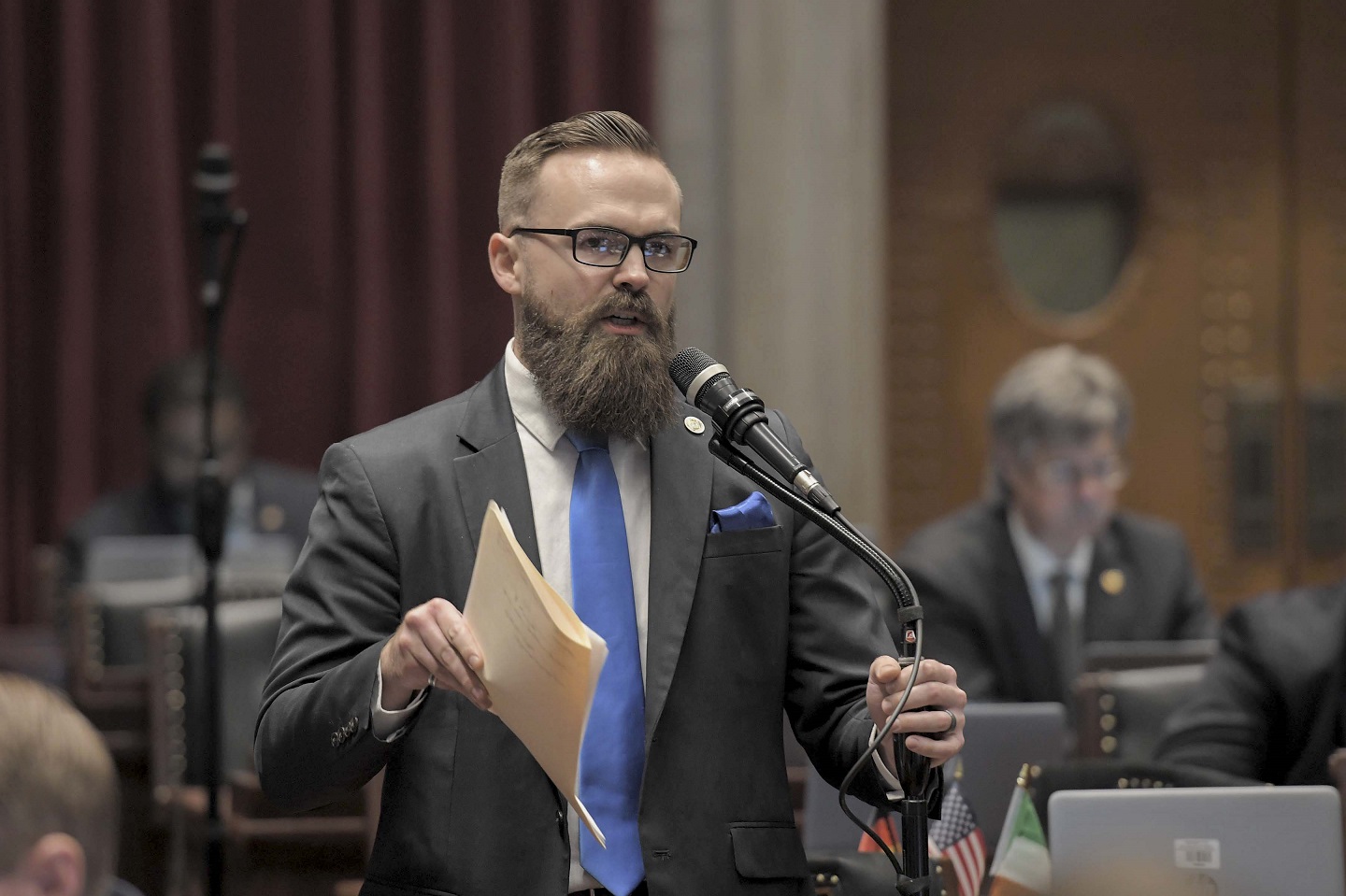
The House voted to making it a class-B felony to knowingly distribute, make, or attempt to distribute or make, more than 10 milligrams of fentanyl or its derivatives. This would carry a penalty of five to 15 years in prison. Making or distributing 20 or more milligrams would be a class-A felony, carrying a sentence of 10 to 30 years in prison.
Law enforcement advocates have told lawmakers that fentanyl is 50 to 100 times more potent than morphine. It is being trafficked frequently in Missouri – particularly illegally made – and is often mixed with other drugs like heroin or cocaine, often resulting very easily in overdose deaths.
The sponsor of House Bill 1450, O’Fallon representative Nick Schroer (R), said fentanyl trafficking has continued to increase exponentially in the past year. He believes increased penalties will help law enforcement get to those who are making and selling fentanyl.
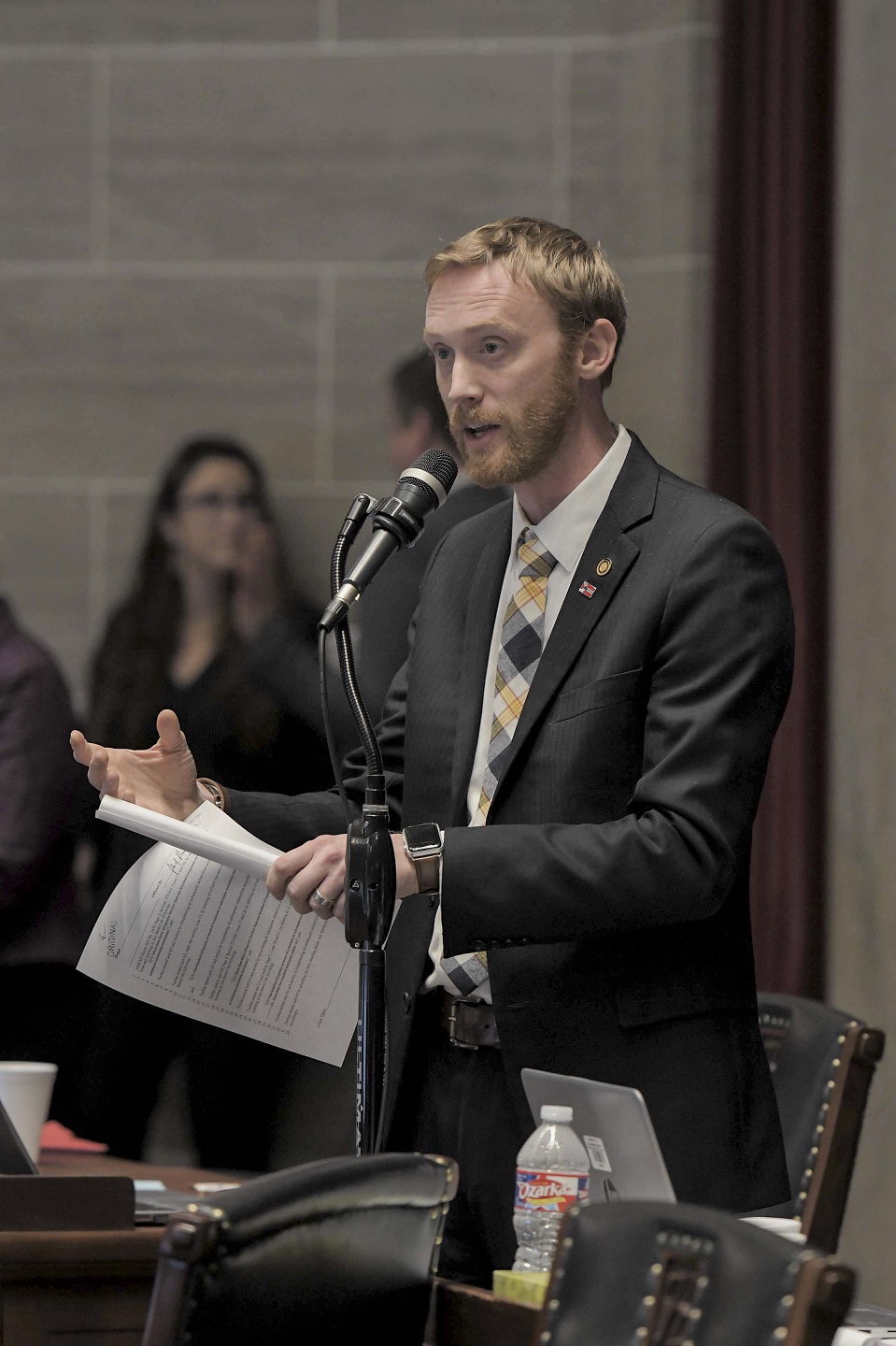
Representative Peter Merideth (D-St. Louis City) agrees that fentanyl is dangerous and efforts should be made to get it off the streets, but he does not believe the way to do that is by increasing penalties.
“For the last many decades now we’ve been pursuing a drug war where we try and lock people up for longer times thinking that’s going to help us deal with our drug problem, and it hasn’t. It hasn’t at all,” said Merideth. “What we’re really doing is also pulling people out of their communities, out of their families and putting them in prison for extremely long sentences for drugs.”
Florissant representative Alan Green (D) said the longer sentences HB 1450 proposes fly in the face of recent years’ efforts toward criminal justice reform.
Schroer argues that criminal justice reform does not mean being “weak on crime, it means being smart on crime.” He said fentanyl has not been addressed in Missouri and his proposal would do that.
“I agree with the governor … when he indicated that only the most violent of offenders, only society’s most harmful, need to be in our prisons, and I think anybody who’s going to bring these deadly drugs – that even [an amount the size of] a granule of salt will kill several people – those people need to be addressed,” said Schroer. “If we lock that person up, if they just take a plea deal and are locked away we can’t get to the actual manufacturers, this will continue. We’re not fixing the issue. This is a tool which we have seen across this nation is starting to work.”
HB 1450 would also increase the penalties for trafficking one gram or more of Rohypnol or any amount of GHB, both of which are often used in sex crimes.
The House voted 122-33 to send the bill to the Senate for its consideration.
Father says son’s death investigation was mishandled, urges House to require increased training for coroners
A father who says his son’s death was mishandled by a local coroner is leading the push in the House to require more training for coroners.

Jayke Minor’s death in 2011 was initially ruled to have been the result of a drug overdose and no autopsy was conducted. Toxicology results later showed only marijuana in his system.
“I lost my son eight and a half years ago. There was a terrible job done on his death records to the point that I’ll never have the answers of what happened to him,” said Jay Minor, Jayke’s father. “As tragic as it’s been it led us to this point, to coming here to support this bill, because the only way that change is going to be made is to get this bill passed, and we’re dedicated to doing that.”
House Bill 1435 would require additional training for coroners. Sponsor Dan Houx (R-Warrensburg) said coroners can have any type of background, but might not have the training they need to do the job.
“Especially in rural Missouri where we don’t have medical examiners, and once again it could be any walks of life who don’t have the true training of how somebody passed away,” said Houx. “A lot of time right now with our epidemic that we have with opioids that they just say, well there’s an empty pill bottle and they possibly died from opioids when truly they maybe had a heart attack or some disease that could be traced back to family, and help families out down the line.”
Minor said when the toxicology report did not back up the finding of a drug overdose in his son’s death, the Howard County coroner changed his findings.
“These coroners don’t do exams, they don’t do autopsies, they just guess at what happened, and when the facts come back and they’re wrong they just change it to whatever they want,” said Minor. “My son’s coroner’s report had someone else’s name on it and it was scratched out with a pencil and his name was written in.”

Minor said he has heard of two cases in other counties in which deaths were mishandled and families were left without answers.
Minor said growing up in rural Missouri he always assumed that county coroners had adequate training and knew what they were doing.
“Until this happened to me I had no idea. We all put our trust in elected officials,” said Minor. “I have to say there are some very good coroners out there because some of them have been helping us. When the good coroners see the problem and they know that other professionals in their field have lacked and caused these problems, this says a lot, but they’re the very ones that are going to help us get this pushed through and make a change.”
This is the third year Houx has carried this legislation and the third year that Minor has gone before the legislature, media, and others, and shared what is a very painful story for him. Last year the legislation was vetoed by Governor Mike Parson (R) because of an amendment that had been added to it, to which he objected. Houx is optimistic that without that amendment, it will become law this year.
Minor is hopeful this will be the last year he has to push for the legislation.
“I have to be honest, it’s been very hard to do. You pour your heart and soul out in front of these people. The reaction that you get from the people that support you, whether it’s in these hearing rooms or on social media or family and friends, it’s overwhelming and that’s what gets you through it,” said Minor. “It is quite an honor to do this in my son’s name. This is for everybody in Missouri. This could happen to you tomorrow or you the next day, and that’s what we’re trying to prevent.”
The House Committee on the Judiciary held a hearing on HB 1435 and could vote on it at any time.
House Committee considers lifting statute of limitations in child sex abuse civil cases
The Missouri House is working early in the 2020 legislative session on a bill to remove the statute of limitations on civil actions stemming from child sexual abuse.
The legislature in 2018 lifted the statute of limitations on criminal prosecution of such cases, but the limit on civil cases remains. It only allows civil actions to be brought before the plaintiff turns 31; or within three years of the discovery that an injury or illness was caused by childhood sexual abuse. House Bill 1411 would eliminate that provision, but would not allow the filing of civil suits in cases for which the statute of limitations has already expired.
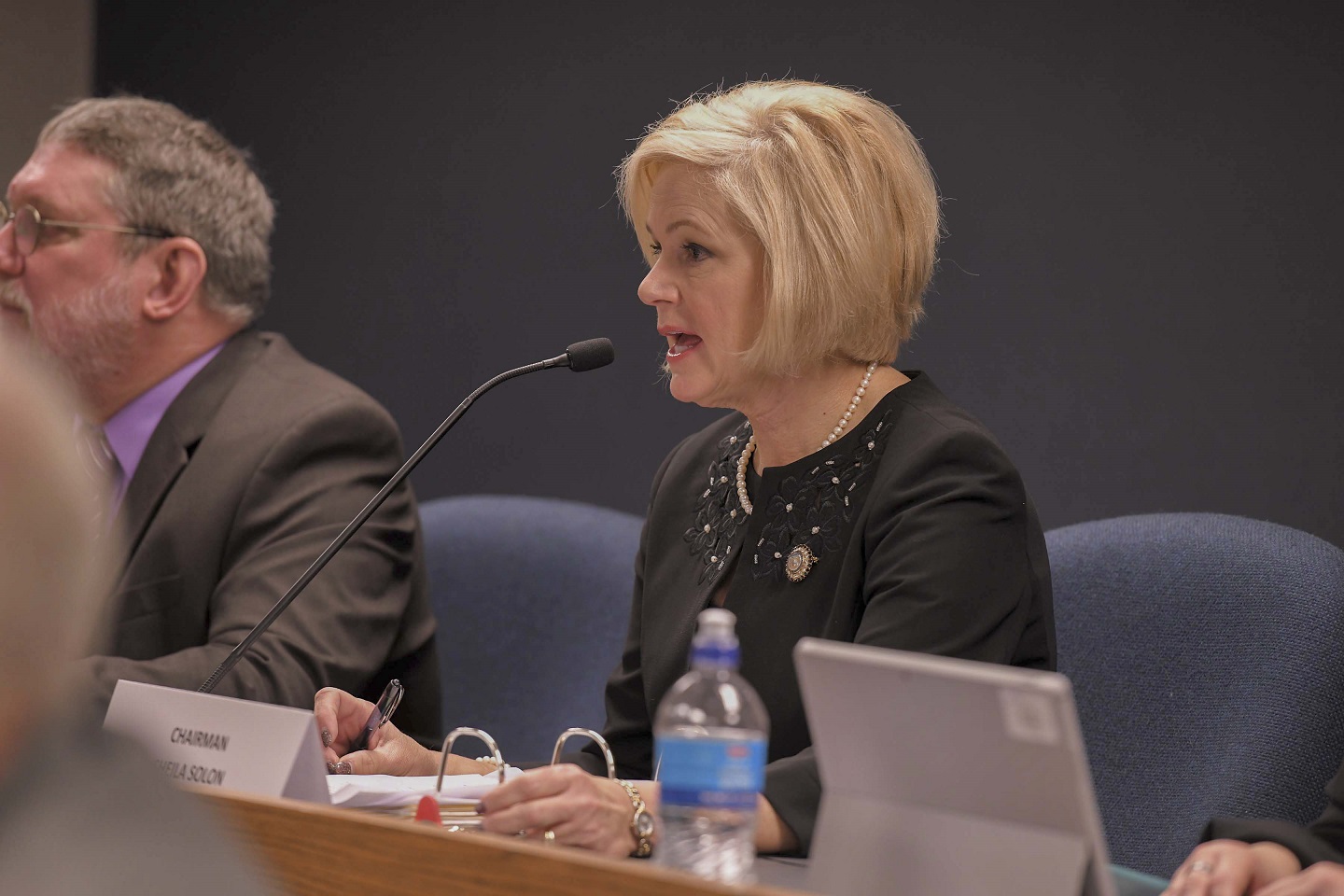
“It make sense that since the statute of limitations has been removed for criminal it should also be removed for civil,” said Representative Sheila Solon (R-St. Joseph), the sponsor of HB 1411. “For us to have a law on the books that has constraints in it on when a victim has to be brave, come forward, and stop fleeing these memories but get in fight mode, isn’t right.”
Solon said survivors who want to sue perpetrators are not just after money.
The House Committee on Children and Families heard from Bryan Bacon, who was abused in 1985 by a priest who was the assistant principal at Vianney High School in St. Louis. Bacon’s memories of the abuse resurfaced after the statute of limitations, then still in place, prevented a criminal prosecution, but he was able to file a civil suit. He did so after learning that the priest had other victims, and after officials denied any knowledge of abuse.
“I knew that I had to file a lawsuit, and for one primary reason; that if Brother Mueller had abused two students in 1969 and 1970 … in 1985 at Vianney, myself, there were certainly other victims between those two time periods,” said Bacon. “My ability to file a civil suit against the Marianist order and conduct discovery resulted in the ability of many other victims of Brother Mueller to come forward and begin their healing journey. After I filed suit an additional 80 victims came forward.”
Julie Donelon, president of the Metropolitan Organization to Counter Sexual Assault (MOCSA) in Kansas City, told lawmakers survivors of child sexual assault often repress memories of the event only to recall them when they are older and better able to deal with the trauma. She said survivors should be allowed to file civil suits at any time to benefit other survivors, but also to offset the costs that can come from dealing with abuse – costs that often fall on the survivor and the state.
No one testified against HB 1411 while several advocacy groups testified in support of it. Those included Missouri KidsFirst, represented by Public Policy Director Jessica Seitz.
“It grants more access to the justice system for victims of child sexual abuse.”
The Committee approved Solon’s bill and sent it to a second, where it awaits a hearing.