Missouri House votes to limit lawsuits against bankruptcy trusts in asbestos illness cases

The Missouri House has voted to limit the ability to file lawsuits against bankruptcy trusts in cases of asbestos-related illness.

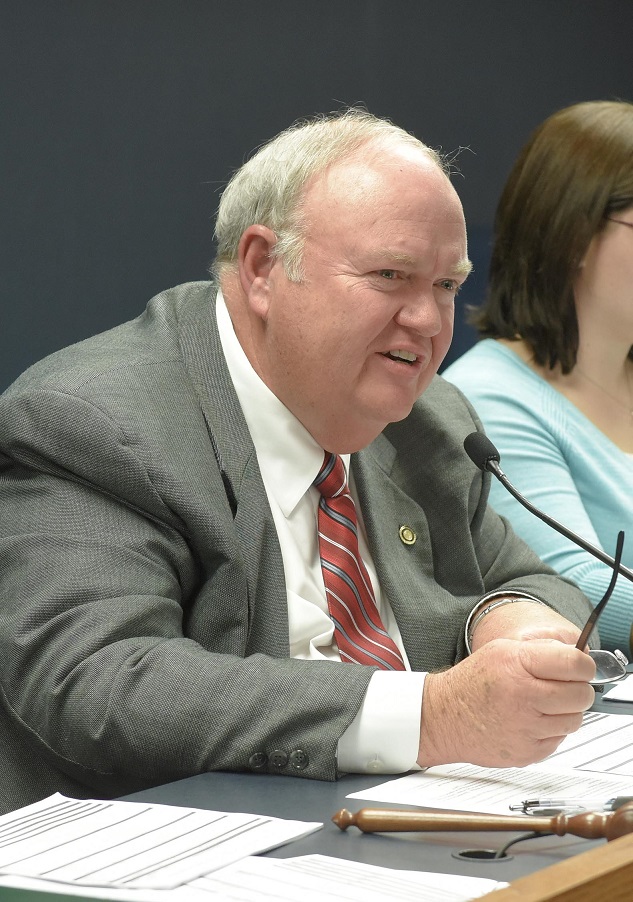
Representative Bruce DeGroot (photo; Tim Bommel, Missouri House Communications)

Representative Bruce DeGroot (R-Chesterfield) said plaintiffs who sue solvent companies for an asbestos-related illness and are awarded money by a jury often then file claims against bankruptcy trusts for the same health issues – what he called “double dipping.”  His legislation, House Bill 1645, would give plaintiffs 30 days from filing suit against a solvent company to disclose any potential claims against a bankruptcy trust.

DeGroot said the bill aims to protect bankruptcy trusts, which compensate those injured by defunct companies, and have finite resources.

“Once that money is depleted it’s gone, and if we are allowing the system as it currently stands to go on, what we’re doing is allowing those trusts to be depleted at a much quicker rate than what they should be,” said DeGroot.  “Who this of course truly affects is that guy standing at the end of the line … by the way, we don’t even who those people are at this point, but by the time they get up and they’re ready to make their claim against the bankruptcy trust, that money won’t be in effect any longer.”

Jefferson City Republican Jay Barnes said current law already allows defendants in these cases to prevent “double dipping” by claimants.  He argued that it could take claimants longer than 30 days to know whether they have a claim against a trust, and under DeGroot’s bill many sick with mesothelioma would die before they could get to a trial.

He also said DeGroot’s bill would do the opposite of protecting bankruptcy trusts.

Representative Jay Barnes (photo; Tim Bommel, Missouri House Communications)

“Under current law a claimant is not required to file a trust claim … they don’t have to take any assets from a trust under current law.  And [Representative DeGroot], who says his bill is to protect trust assets, requires them to make claims from these trusts,” said Barnes.  “Under current law there is a situation where there could be zero claim against the trust and if this bill passes, every person who has a claim against a trust must make a claim against a trust it does the exact opposite of what [Representative DeGroot] says is the purpose of the bill.”

Representative DaRon McGee (D-Kansas City) said the concept that individuals who pursue claims against trusts after suing solvent companies is double dipping is a “myth.”

“If four defendants are responsible for an injury and you sue two solvent defendants and are forced to pursue the other two through trusts, this is not ‘double dipping.’  You’re getting the full dip that you’re entitled to,” said McGee.

Kansas City Republican Kevin Corlew said the bill would allow plaintiffs to pursue claims against trusts in a more efficient way while at the same time pursuing cases against solvent companies.

“It’s often not the plaintiff’s fault that this information isn’t brought forth, it’s the plaintiff’s lawyers who are trying to make sure that they get recovery here and then make sure that they get recovery later through the system.  All this is saying is seek recovery at the same time,” said Corlew.

The House voted 96-48 to send the bill to the Senate, which is considering its own version of the proposal.
Lawmaker wants Missouri on track to next-generation 911

Some Missouri lawmakers think you should be able to send text, photos, videos, or data to 911, and they want to put the state on a schedule to achieve that goal.

Representative Lyle Rowland (photo; Tim Bommel, Missouri House Communications)

A House Committee has been asked to consider House Bill 1094, offered by Cedarcreek Republican Lyle Rowland after he was approached by a friend who sits on the Commission for the Deaf and Hard of Hearing.  He was told people who are deaf could use text to communicate with 911 operators.

Rowland’s bill would require the Advisory Committee for 911 Service Oversight to develop a plan and target dates for Missouri to test, implement, and operate a next generation 911 system.

“This will provide our deaf communities a way of getting emergency help when it’s needed,” said Rowland.

The Committee heard from Opeoluwa Sotonwa, the Commission’s executive director.  He explained what it could be like for a person who is deaf or hard of hearing to use 911 in most of Missouri.

“A hard of hearing individual who speaks may be able to share his or her needs, but may not be able to hear questions being asked.  I may not be able to understand what action others are taking if I cannot hear them speak.  Moreover, I am not able to speak directly with a 911 operator,” said Sotonwa through an interpreter.  “You can count the resources used to track a suspect, evaluate the cost of replacing a house, and tally deaths of those who cannot receive help fast enough, however what is not measureable is the fear, insecurity, and indignity of the Missourians who are not able to access 911 services because our state’s technology is simply outdated.”

Representative Bruce Degroot confirmed as true what Sotonwa said would happen if, in most of Missouri, a person sends a text to 911.

“I did exactly as the witness suggested and texted 911, letting them know it wasn’t a true emergency, and sure enough I got a message back,” said DeGroot.  “’Make a voice call to 911 for help.  Text to 911 is not available.’”

Steve Hoskins, the Vice President of Association of Public Safety Communications Officials, told the committee his organization also backs the bill.  He said a next generation 911 system wouldn’t just help those with hearing problems.

“What if you’re calling 911 but the reason you’re calling is because you’re choking and you can’t speak?  That’s why we need this kind of technology,” said Hoskins.

No one spoke against Rowland’s bill.  The committee has not voted on it.