Missouri House proposes repeal of the state’s prevailing wage law

The Missouri House has proposed repealing the state’s prevailing wage law.  Backers say the bill will allow more public works projects to move forward.  Opponents say it will lower wages and drive more people onto public assistance programs.

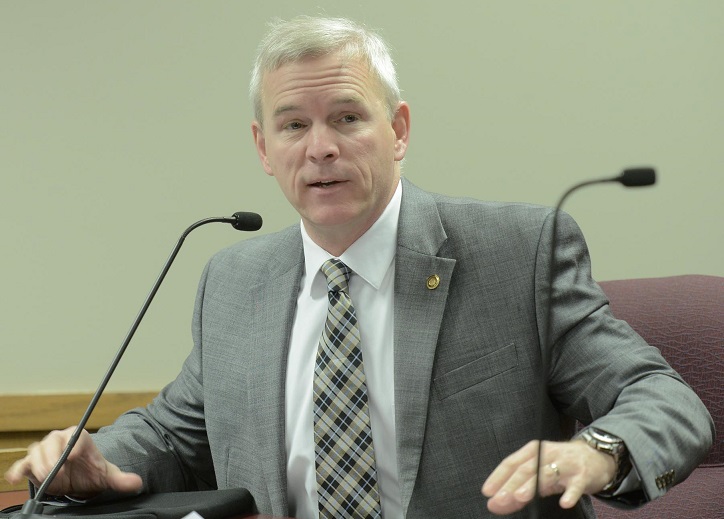
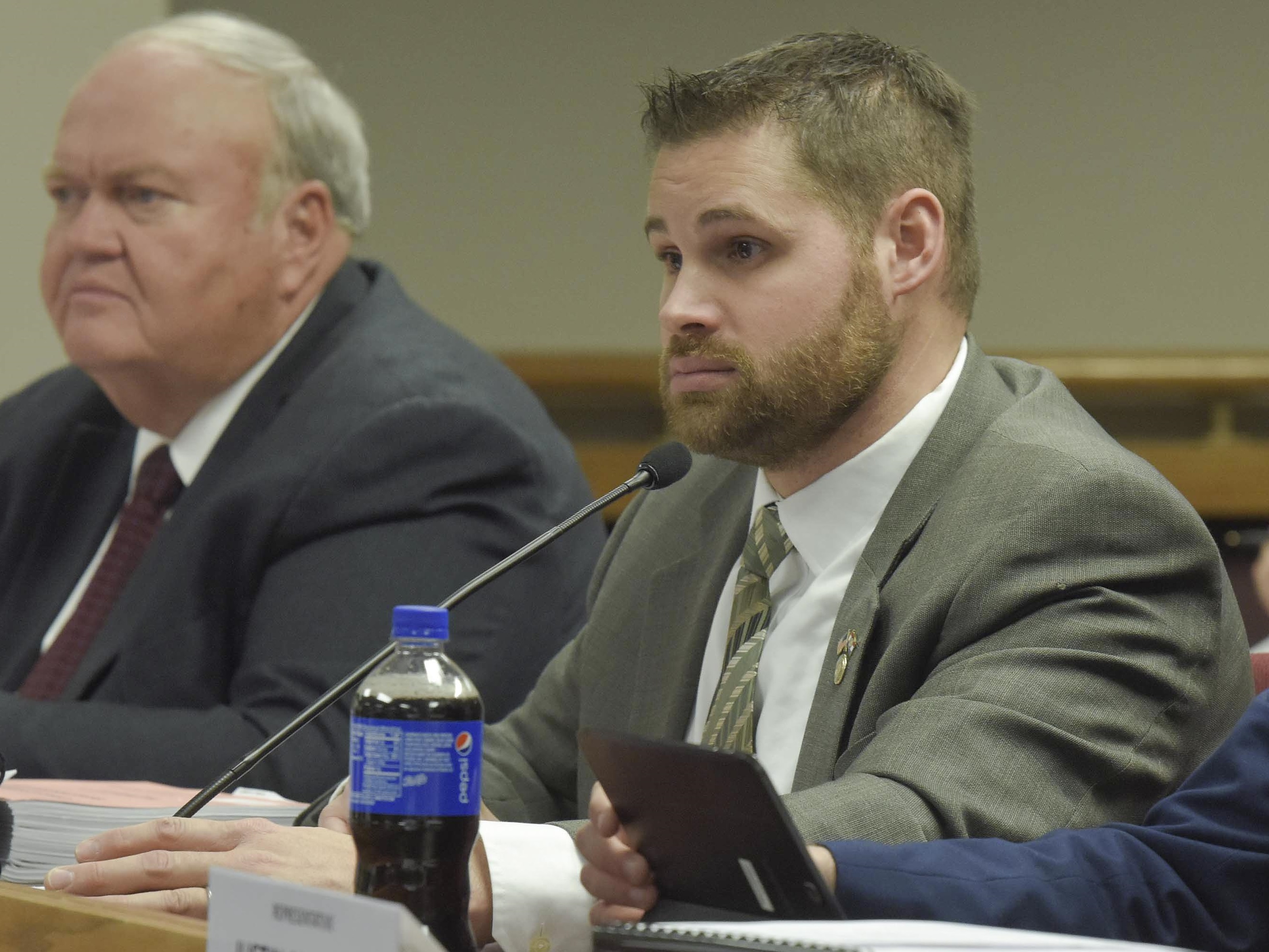
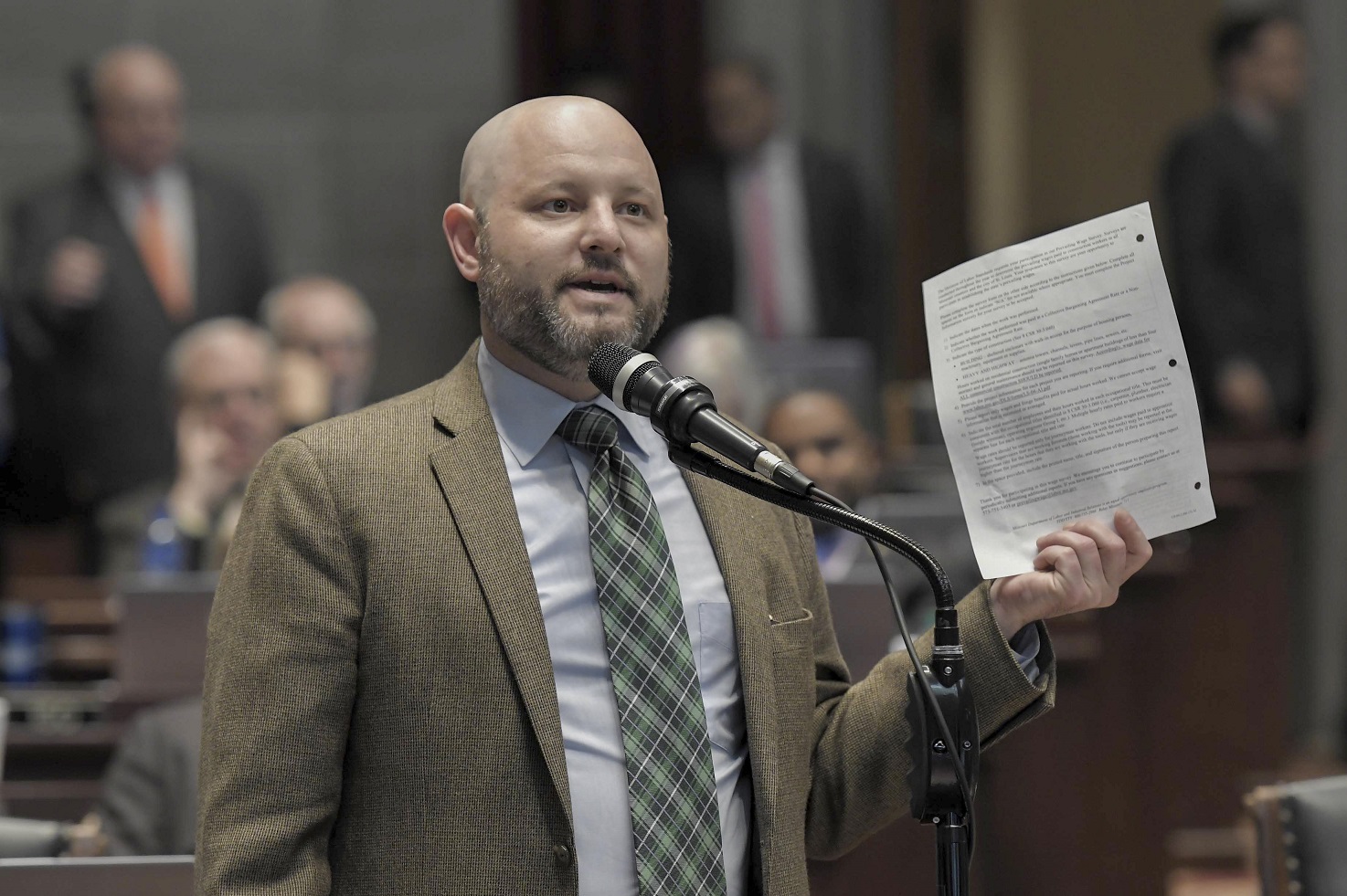
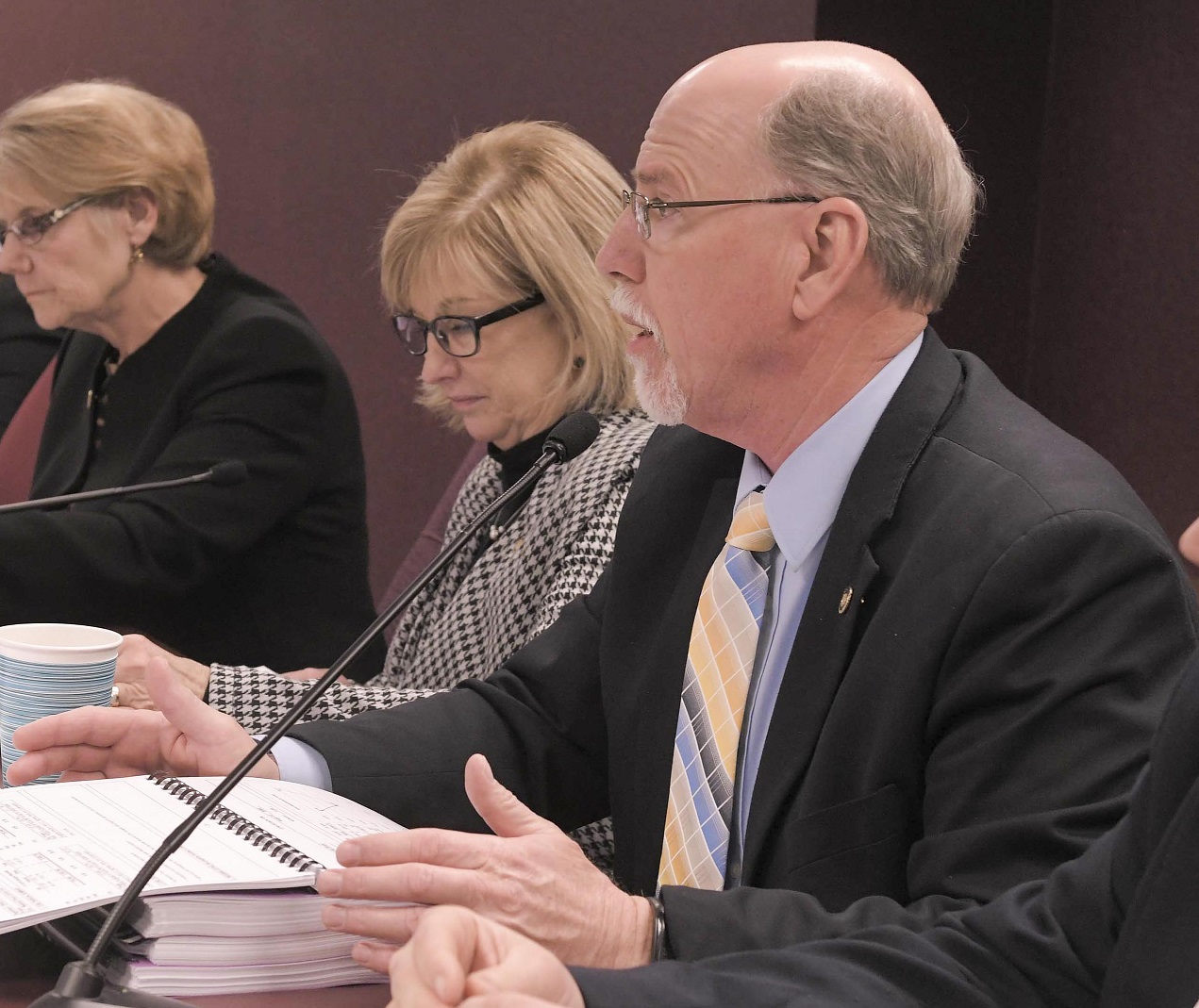
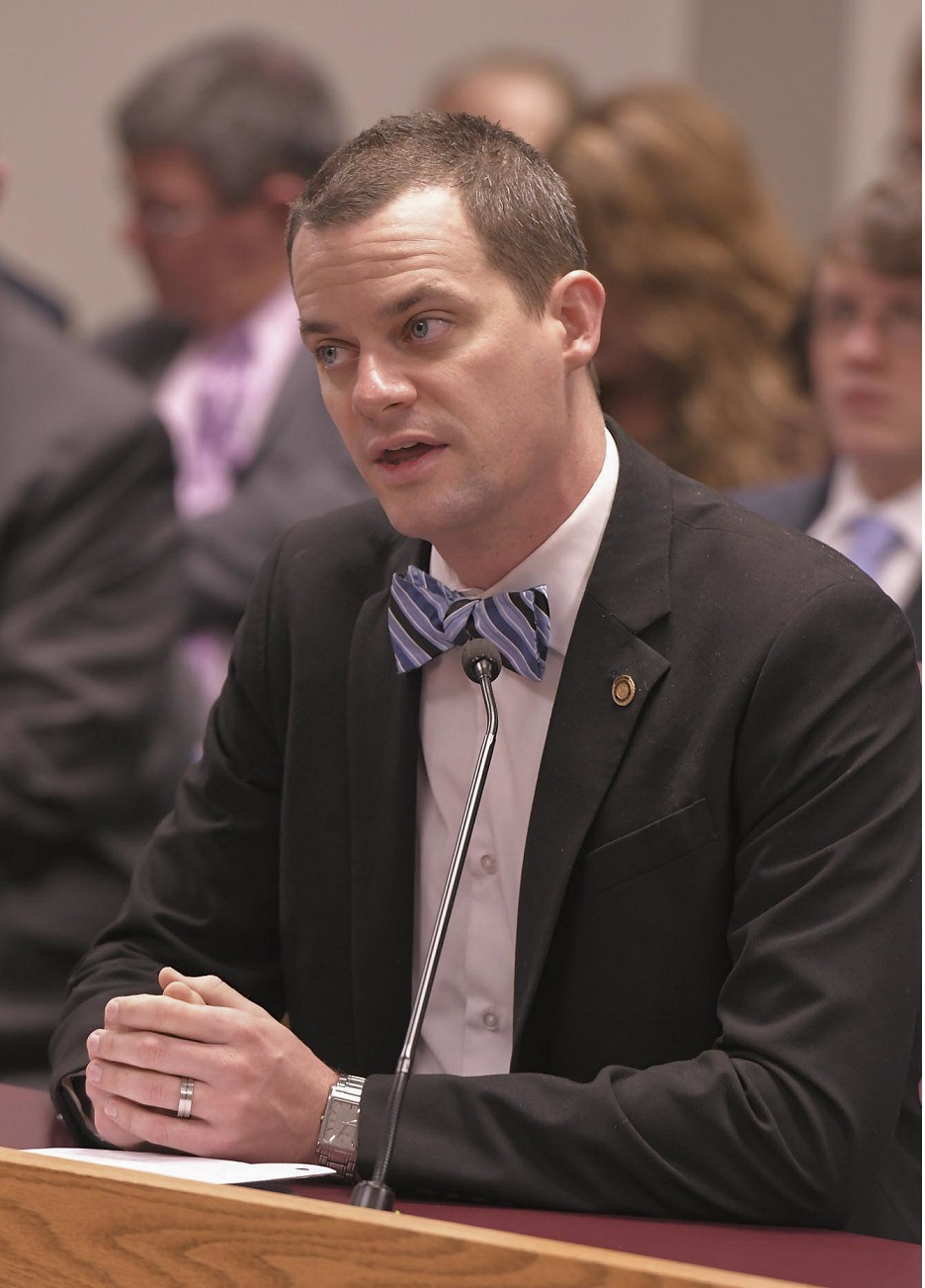
Representative Jeffery Justus (photo; Tim Bommel, Missouri House Communications)

Missouri’s prevailing wage law sets a minimum salary that must be paid to individuals working on public projects, such as the construction or repair of bridges, school buildings, and fire stations.  If House Bills 1729, 1621, and 1436 pass, bidders on such projects would pay the state or federal minimum wage, whichever is higher.

The bills are being carried on the House Floor by Representative Jeffery Justus (R-Branson).  He is one of those who say eliminating the prevailing wage would allow public tax dollars to accomplish more in any given project because the law artificially inflates the wages paid to workers.

“Imagine our state as we go into the future being able to, at the same cost of building a road for 100 miles, be able to build 110 miles; imagine being able to repair 11 bridges for the same cost for what you can [repair] 10 bridges for now.  Imagine school buildings – being able to build where get an extra four or five rooms for what we’re paying for less now.  Imagine a sewer plant having the capacity of 5-million gallons being able to do 5-million 500-thousand gallons for the same amount of money,” said Justus.

Democrats argued that repealing prevailing wage would cause workers to receive less in wages and benefits.  St. Louis representative Karla May, a member of the Communication Workers of America (CWA) and of the Coalition of Black Trade Unionists (CBTU), said that law exists for a reason.

“The reason why the government had to step in to create prevailing wage is because of the greed of companies and contractors not willing to pay workers and not willing to maintain good working conditions,” said May.  “The only reason laws exist is because we have bad actors.”

Representative Doug Beck (D-St. Louis), a pipefitter for the UA Local 562, told lawmakers that voting to repeal the prevailing wage law would be “foolish.”

Representative Karla May (photo; Tim Bommel, Missouri House Communications)

“You’re telling your constituents – especially your construction constituents – that you want them to make less money.  That is what will happen; that is a fact.  They will also have less healthcare.  Job fatalities go up.  Safety issues go up – they all go up.  That’s what happens.  Less pensions; we’ll be paying for this through the state some way or another  way,” said Beck.

Republican Cheri Toalson Reisch (Hallsville), who worked as the city clerk and later mayor of Hallsville, said prevailing wage is not a union vs. non-union issue.

“This is a taxpayer issue.  I don’t care if you’re a union representative or not.  That has nothing to do with this bill,” said Reisch.  “I’ve spent almost my entire life being a taxpayer watchdog.  I have personally done millions upon millions and millions of water, sewer, street, and building construction projects that had to go prevailing wage.  I can tell you it does add 30-percent to the cost to my taxpayers.”

The House voted 89-62 to send the bill to the Senate.  Last year a similar proposal was sent to the Senate but that chamber failed to pass it.

House budget leader has plan to restore higher ed funding, but wants agreement on tuition first

The Missouri House budget committee has a plan to continue funding of Missouri’s colleges and universities at the amount budgeted last year, but in exchange lawmakers want those institutions to freeze tuition.

Representative Scott Fitzpatrick (photo; Tim Bommel, Missouri House Communications)

House Budget Committee Chairman Scott Fitzpatrick (R-Shell Knob) said the solution comes from money the state set aside for the Children’s Health Insurance Program (CHIP).  Because federal funding for the program was uncertain, the state set aside funds for CHIP.  Now that federal funding has come through, Fitzpatrick has said the state could restore all $68-million that Governor Eric Greitens (R) proposed cutting from higher education.

Fitzpatrick said full restoration is his goal, but he is seeking agreement from the state’s institutions that they will hold down tuition.

“I want to make sure that if we’re putting that money back it’s going to result in holding down the cost of college for Missouri students, so I’m in the process of trying to seek a deal on holding down tuition with the institutions in the state in exchange for making a full restoration,” said Fitzpatrick.  “So far that deal has not been agreed to and so what we did was we put, out of the $68-million we took $30-million of that, which is the amount that it takes to fully fund the Access Missouri Scholarship, which is the state’s need-based scholarship program, and we fully funded that scholarship because if tuition is going to go up I want to make sure that we are putting some of that money into a place where it’ll help the people that are having to pay that tuition offset it.”

Fitzpatrick told the rest of the committee that if the institutions agree to his plan he will put that $30-million back toward their state support.  If they don’t agree, he will leave that $30-million where it is and might move some of the remaining $38-million to other things.

“My goal is to help the institutions out but I also want that to translate into the cost of college being held down, and I don’t plan to seek an agreement that tuition won’t be raised every single year but I do think if we’re going to be spending close to $70-million on just going back into institutional budgets that there should be some consideration for that,” said Fitzpatrick.

Representative Kip Kendrick (photo; Tim Bommel, Missouri House Communications)

The leading Democrat on the House Budget Committee, Kip Kendrick (Columbia), said he’s still undecided on whether he supports the chairman’s proposed agreement, but he thinks the committee’s members all want to see tuition as level as possible and keep higher education affordable for Missourians.

“It’s hard to make an argument against fully funding the only needs-based scholarship program we have in the state of Missouri,” said Kendrick. “Access Missouri provides access, as it says – it’s in the name. It provides access to many Missourians – middle-class and lower-income individuals – to higher education. It’s an important program, it’s been underfunded for a number of years, so it’s hard to necessarily argue with where it currently stands.”

Kendrick said he hopes before the budget is final money could be found to both restore core funding to colleges and universities and to fully fund Access Missouri.

The budget committee will go through it’s “mark up” process next week.  Individual members of the committee will propose changes they want to make – to increase funding where they think it should be increased and propose where that funding could be pulled from.  From there, the committee will vote on whether to send each budget bill to debate by the full House, which is expected to happen after the legislature’s spring break.

House votes to outline lengths guards can go to, to protect Callaway nuclear plant

The Missouri House has approved a bill aimed at increasing security at the state’s only nuclear power plant.

Representative Travis Fitzwater (photo; Tim Bommel, Missouri House Communications)

House Bill 1797, called the “Nuclear Power Plant Security Guard Act,” would create the offense of “trespass on a nuclear power plant, and make it punishable by up to four years in prison.  The bill also allows armed guards at the plant to use or threaten physical or deadly force if they believe it necessary to protect themselves or others protects them from civil liability for conduct covered in the bill.

Representative Travis Fitzwater (R-Holts Summit), whose district includes Ameren’s Callaway Energy Center, proposed the Act.

Fitzwater called the plant, “a very unique spot in our state, a very unique asset to our economy.  It just gives [guards] statutory authority to protect that facility.”

The bill had bipartisan support, including from Representative Bob Burns (D-St. Louis) who recalled touring the plant when he was first elected to the House 6 years ago.

He said the state can’t do enough to protect the plant, “Particularly with what we’ve been hearing for the past couple of years about our electric grid.  Things like Callaway, those are targets for terrorists, and if something happened to Callaway it wouldn’t just hurt Callaway, it would hurt our whole state and our region.  I mean it could make Chernobyl look like a firecracker.”

The bill passed 134-8.  One of those 8 “no” votes was cast by Kirkwood Democrat Deb Lavender, who said guards at Callaway already have the authority the Act would allow, including authority to use deadly force when there is a “reasonable belief” that it is necessary.

“We already have measures in place that protect this plant.  I don’t think this plant is fragile.  For those of you who don’t know, we hire a SEALS team to attempt to break into Callaway once a year.  They have never been successful,” said Lavender.

The Act now goes to the Senate for its consideration.

Missouri House votes to limit lawsuits against bankruptcy trusts in asbestos illness cases

The Missouri House has voted to limit the ability to file lawsuits against bankruptcy trusts in cases of asbestos-related illness.

Representative Bruce DeGroot (photo; Tim Bommel, Missouri House Communications)

Representative Bruce DeGroot (R-Chesterfield) said plaintiffs who sue solvent companies for an asbestos-related illness and are awarded money by a jury often then file claims against bankruptcy trusts for the same health issues – what he called “double dipping.”  His legislation, House Bill 1645, would give plaintiffs 30 days from filing suit against a solvent company to disclose any potential claims against a bankruptcy trust.

DeGroot said the bill aims to protect bankruptcy trusts, which compensate those injured by defunct companies, and have finite resources.

“Once that money is depleted it’s gone, and if we are allowing the system as it currently stands to go on, what we’re doing is allowing those trusts to be depleted at a much quicker rate than what they should be,” said DeGroot.  “Who this of course truly affects is that guy standing at the end of the line … by the way, we don’t even who those people are at this point, but by the time they get up and they’re ready to make their claim against the bankruptcy trust, that money won’t be in effect any longer.”

Jefferson City Republican Jay Barnes said current law already allows defendants in these cases to prevent “double dipping” by claimants.  He argued that it could take claimants longer than 30 days to know whether they have a claim against a trust, and under DeGroot’s bill many sick with mesothelioma would die before they could get to a trial.

He also said DeGroot’s bill would do the opposite of protecting bankruptcy trusts.

Representative Jay Barnes (photo; Tim Bommel, Missouri House Communications)

“Under current law a claimant is not required to file a trust claim … they don’t have to take any assets from a trust under current law.  And [Representative DeGroot], who says his bill is to protect trust assets, requires them to make claims from these trusts,” said Barnes.  “Under current law there is a situation where there could be zero claim against the trust and if this bill passes, every person who has a claim against a trust must make a claim against a trust it does the exact opposite of what [Representative DeGroot] says is the purpose of the bill.”

Representative DaRon McGee (D-Kansas City) said the concept that individuals who pursue claims against trusts after suing solvent companies is double dipping is a “myth.”

“If four defendants are responsible for an injury and you sue two solvent defendants and are forced to pursue the other two through trusts, this is not ‘double dipping.’  You’re getting the full dip that you’re entitled to,” said McGee.

Kansas City Republican Kevin Corlew said the bill would allow plaintiffs to pursue claims against trusts in a more efficient way while at the same time pursuing cases against solvent companies.

“It’s often not the plaintiff’s fault that this information isn’t brought forth, it’s the plaintiff’s lawyers who are trying to make sure that they get recovery here and then make sure that they get recovery later through the system.  All this is saying is seek recovery at the same time,” said Corlew.

The House voted 96-48 to send the bill to the Senate, which is considering its own version of the proposal.

Missouri House proposes civil penalties for poaching

The state House has voted to increase fines for poaching because it’s cheaper for non-Missouri residents to poach than to hunt with a license.

Representative Jered Taylor (photo; Tim Bommel, Missouri House Communications)

That’s what Representative Jered Taylor (R-Nixa) told his colleagues when he presented House Bill 1873, which creates a civil penalty for poaching.

“Currently when an individual is caught poaching … the Conservation Department will write a ticket to that individual.  It will go to the Fine Collection Center where fines are typically no more than $200, so it’s actually cheaper for an individual from out of state to come into Missouri and not get a hunting permit, attempt to get a deer by poaching illegally, and risk the chance of being caught because the highest it will be is $199, where an out-of-state permit is $250,” said Taylor.  “It’s cheaper for them to take that risk.”

Under HB 1873 anyone found guilty of killing, chasing, processing, or disposing of animals listed in the bill must pay restitution, which will go to the school district in which the individual was caught.  Penalties would range from between $375 and $750 dollars for a turkey to between $2,500 and $5,000 for a black bear or elk.

The legislation would create a civil penalty of between $500 and $1,000 for each paddlefish taken illegally.  Taylor explained that was an addition to this year’s version of the legislation because of growing problems regarding those fish.

“Individuals are collecting the paddlefish, collecting the eggs and selling it – I believe it’s about $200 an ounce for these eggs to use as caviar, and it’s a big problem,” said Taylor.

The bill had widespread support, particularly from lawmakers like Don Rone (R-Portageville), who have been angered by cases of poaching they know of first hand.

Rone said a man from Tennessee came to his district when high water had a number of deer contained in an area.

“There was a world-class buck that we had been following on our farm for four years.  We would not shoot this deer because we knew this deer had the capabilities of becoming a world-class buck,” said Rone.  “This gentleman killed that deer in the woods when the deer was corralled in the five-acre woods.  That’s why we need to have this fine up higher than we have it today … what did he get?  $175 fine.”

Taylor said the proposal mainly targets repeat offenders that would be identified by Conservation Department officials and local prosecutors working together.

Backers of the bill said it will help dissuade poachers from taking wildlife away from Missourians, and say Missouri has some of the lowest poaching fines in the country.

The House voted 130-19 to send the bill to the Senate for its consideration.

Representative proposes easing of mandatory minimums for some crimes

The state House is being asked to consider giving judges more flexibility about when to impose minimum sentences mandated by Missouri law for many offenses.

Representative Cody Smith (photo; Tim Bommel, Missouri House Communications)

House Bill 1739 would allow judges to depart from those mandatory minimums except regarding crimes that involved the use, attempted use, or threat of serious physical force, or certain non-consensual sex crimes against a minor.  The case would have to involve “substantial and compelling” reasons that the minimum sentence would be unjust to the defendant, or would not be needed to protect the public.

It’s sponsored by Carthage Representative Cody Smith (R).

“HB 1739 would permit judges to adjust the length of a prison sentence to fit the crime and a person’s role in it. If someone played a very minor role in a nonviolent offense but still deserves some prison time, the judge could give the person a shorter sentence that is more appropriate for the severity of the crime,” said Smith.

Smith said one of the issues his bill would help address is overcrowding in Missouri’s prisons.  It is predicted that Missouri is on pace to need to build two new prisons.  The cost to the state to build and operate those is projected at $485-million over the next five years.

Many offenders in Missouri prisons are serving sentences stemming from nonviolent drug offenses.  Smith said in such cases, easing mandatory minimum sentencing requirements could allow judges to instead require drug treatment and other programs in lieu of prison time.  Smith said treatment outside of prison is typically more effective.

“It’s my understanding that drug treatment in prisons is largely unsuccessful and it’s much more successful outside of prisons through programs like drug courts.  To have people working with drug courts or through their probation or parole while they can maintain a job, be with their family presumably, be productive citizens I think is much better than having them incarcerated and trying to do that through prison sentencing,” said Smith.  “[Drug issues are] more of a health care problem at this point rather than a criminal justice issue, in my mind.”

Smith said more than 30 states have reduced, eliminated, or reformed mandatory minimum sentences and in those states crime rates have dropped.  He thinks the changes to sentencing laws contributed to those drops.

“Once you have a prison sentence you lose your job, often times you lose your family, you are unable to maintain whatever positive momentum you have going in your life.  I can see how you would very easily turn back to crime or drugs when you get out of prison, or do something in prison that would keep you there for a longer time,” said Smith.  “If you can maintain some semblance of a normal lifestyle – again with your family, with a job, and work with something like a drug court – then you have incentive to turn your life around, and that’s been the case in those states.”

The projected fiscal impact of HB 1739 says it could save Missouri more than $3.1-million once fully implemented.  Smith notes that does not include how much the state could save if it is able to avoid building and operating any new prisons.

The bill has been approved by the House Committee on Crime Prevention and Public Safety.  It faces another committee, which could vote whether to send it to the full house for consideration.

Missouri House adopts resolution launching investigation of charge against Gov. Greitens

“We will do our best.”

Representative Jay Barnes presents a resolution that would launch the House’s investigation into a felony charge against Gov. Eric Greitens. (photo; Tim Bommel, Missouri House Communications)

That was the final statement to the House Thursday from Representative Jay Barnes (R-Jefferson City) before the chamber adopted a resolution that launches its investigation of a felony charge against Governor Eric Greitens (R).  Barnes will chair the Special Investigative Committee on Oversight that will conduct that investigation.

A St. Louis grand jury last month indicted Greitens for felony invasion of privacy.  He is accused of taking, without consent, an intimate photo of a woman with whom he had an affair in 2015.

House Resolution 5565 authorizes the Committee.  It was approved 154-0.

Barnes discussed with other members how the investigation will be conducted.  He said the committee will close its hearings to the public when witnesses are giving testimony.

“The reason for that, if you think about legal process and the context of a trial where testimony is given, other witnesses in a case are excluded from the courtroom while a separate witness is testifying … lawyers call that, ‘invoking the rule.’  So we could ‘invoke the rule,’ but if we have a public hearing, invoking the rule means nothing because everything that a previous witness says would be reported to other potential witnesses and they could come in and that would color their testimony based on what they had heard previous witnesses have said, and I think the best way to get accurate information is to close those hearings so that other potential witnesses don’t know what previous witnesses said,” Barnes explained.

Barnes said the first witnesses the committee will question are individuals that were identified in publicly-available documents and documents that have been reported on, though he did not name them.  He said subpoenas would be sent to those witnesses.  Based on their testimony, more individuals could be called to testify.

House Speaker Todd Richardson (right) and Majority Floor Leader Rob Vescovo (left) talk with Representatives Jay Barnes (second from right), who chairs the Special Investigative Committee on Oversight, and Representative Don Phillips (seated), the vice chair of that committee. (photo; Tim Bommel, Missouri House Communications)

Democrats expressed concerns that they would like more clarity about what possible actions will remain after the committee completes its work, but in the end they joined in supporting the resolution.

Columbia representative Kip Kendrick (D) said the situation with the governor has become a distraction for lawmakers.  He wished the committee well in conducting its investigation.

“It’s an embarrassment for everyone in this body, for everyone in this chamber, for the whole state,” said Kendrick.  “The charge of this committee to hold this investigation is very serious.  Outside of passing the budget this year it’s probably the most serious thing that’s happening … I hope that everyone in this chamber, on both sides of the aisle, don’t enter into the partisan bickering or partisan fights on this moving forward.  There are going to be attempts to make this a partisan issue and it’s not.  This should be a fair and thorough process that should be allowed to play out.”

House Minority Leader Gail McCann Beatty (D-Kansas City) asked Barnes about the process, and at the end of her inquiry told him, “We’re putting all of our trust in you to handle this properly.”

Barnes acknowledged to the chamber the levity of the job before him and the committee.

“This is a solemn and serious obligation.  Thank you for the trust that you have placed in me and the members of this committee and the trust that this body places in us.  We will do our best,” said Barnes.

The committee, whose other members are vice chairman Don Phillips (R-Kimberling City) and representatives Jeanie Lauer (R-Blue Springs), Kevin Austin (R-Springfield), Shawn Rhoads (R-West Plains), Gina Mitten (D-St. Louis), and Tommie Pierson, Jr (D-St. Louis), is expected to begin holding hearings next week.

House proposes criminalizing ‘revenge porn’

The Missouri House has voted to criminalize what is often called, “revenge porn;” sharing or threatening to share private sexual images of a person without that person’s consent.  Such sharing often happens by the uploading of those images to the internet.

Representative Jim Neely (photo; Missouri House Communications)

House Bill 1558 would make such sharing of images a felony punishable by up to seven years in prison and would make threatening to share them a felony carrying up to four years in prison.  The bill covers photographs, videos, digital recordings, and other depictions.

The bill is sponsored by Representative Jim Neely (R-Cameron), who said it’s simply an issue of common sense.

“I’m not afraid of the subject.  A lot of people can’t handle certain subjects and it doesn’t bother me to talk about it so there it is,” said Neely.

St. Louis Democrat Stacey Newman thanked Neely for tackling an issue that she said predominately effects women.

“I know that none of us would want our family members, our daughters, our granddaughters; anyone involved in a situation where photographs like this would be used to punish,” said Newman.

The Missouri Coalition Against Domestic Violence supports the legislation.  Public Policy Director Jennifer Carter Dochler said people who have been victims of “revenge porn” face a number of issues.

“Often times they feel very vulnerable and exposed because they did something to establish intimacy with a partner and now it’s been used against them and they don’t know who all’s seen it.  This wasn’t their choice that it was being distributed, they don’t know who’s seen it, they don’t know what’s being done with it.  Something was used against them that was not its purpose,” said Carter Dochler.

Liberty Democrat Mark Ellebracht was glad to see Republicans and Democrats come together to pass this bill on an issue he thinks most Missourians think is already addressed in law.

“A number of people that I’ve talked to, both from regular attorneys’ perspectives to the constituents that call me and express their concerns, everybody is a little bit surprised that something like this hasn’t been done already,” said Ellebracht.  “I think that it was a sorely needed measure that we needed to pass to put the law in this state where people expect it to be.”

In addition to creating the crime of “nonconsensual dissemination of private sexual images,” the bill allows victims to file civil suits against those accused of the crime.

HB 1558 passed out of the House 149-1.  It now goes to the Senate for consideration.

Bipartisan House bills would close ‘loophole’ that allows domestic abusers to have guns

A bipartisan effort to change Missouri gun laws aims to keep domestic abusers from having firearms.

Representatives Donna Lichtenegger (left) and Tracy McCreery co-present their bills aimed at keeping guns out of the hands of individuals with a history of domestic violence. (photo; Chris Moreland, Missouri House Communications)

House Bills 2276 and 1849 are sponsored by Representatives Donna Lichtenegger (R-Jackson) and Tracy McCreery (D-St. Louis), respectively.  Both bills would expand the crime of unlawful possession of a firearm to include those who have been convicted of domestic violence misdemeanors or who have a full order of protection against them.

Representative Lichtenegger said the issue is personal for her because of her own experience with domestic violence.

“When I was four I can vividly remember my mother getting beaten nightly by my drunken father.  Because of that I ended up in a children’s home because he threatened to throw acid in my face,” said Lichtenegger.  “When I was 15 or 16 – don’t remember the age, really, because I don’t remember the night very well – but someone came into my room and beat the crap out of my head.  There’s just no other way to put that.”

Both representatives say the bill would fill in a “loophole” in Missouri law created by the passage of Senate Bill 656 in 2016.  Under the state’s original concealed carry law, Missourians who were found guilty of a domestic violence misdemeanor or who were subject to an order of protection were denied concealed carry permits.  That prohibition was nullified by SB 656.  Federal law denies guns to those with misdemeanor domestic violence convictions or full orders of protection against them, but since Missouri law doesn’t, only federal agents and courts can pursue such cases in Missouri.

“This has been part of federal law since 1997 but the only place that it appeared in Missouri law prior to the enactment of SB 656 was in our CCW chapter, so when we passed 656 we kind of accidentally took those protections out,” said McCreery.  “This actually, truly is an issue that shouldn’t be about political party, so I hope the fact that we’ve worked together on this kind of symbolizes how this is just a good, sensible public policy.”

The bill was presented Tuesday night to the House Committee on General Laws.  Several advocates for domestic violence victims told lawmakers they strongly support the legislation.

Judy Kile, Executive Director of COPE, a shelter in Lebanon, told the committee her twin sister’s husband shot and killed her in a murder-suicide.  He had a history of domestic violence.

“Yesterday was our birthday but one of us isn’t here,” said Kile.  “We need to get the guns out of their hands if they are known to be domestic violence offenders.”

Carla Simpson, who works for New House Shelter in Kansas City, said her sister’s husband also shot her to death in a murder-suicide.

“My brother-in-law was pretty much a law-abiding citizen except for the domestic violence; except for the abuse he caused my sister and he had been to court and he had been convicted of domestic violence,” said Simpson.

She said if a judge had been able to order that her brother-in-law not be allowed to have guns, “I think that Mike would have thought twice about having guns in his house and my sister may still be alive today.  I’m here in her memory.”

Both bills also make gun possession illegal in Missouri for those who are unlawfully in the country or have renounced his or her citizenship.

No one spoke against the proposals in Tuesday night’s hearing.  The committee has not voted on either bill.  Last year similar legislation received a hearing by a House committee but that panel did not vote on it.

House votes to require notification of both parents when minors seek an abortion

The Missouri House has voted to require the notification of both parents when a minor in Missouri seeks to have an abortion.

Representative Rocky Miller (photo; Tim Bommel, Missouri House Communications)

The House voted 113-37 on Monday to pass House Bill 1383.  It would require that a parent or guardian giving consent for a minor to have an abortion notify any other custodial parent or guardian in writing before the minor gives her consent.  It would not apply in an emergency or for custodial parents or guardians that have been found guilty of certain crimes, are listed on the sex offender registry, are the subject of an order of protection, have had parental rights terminated, or for whom the whereabouts are not known.

Missouri law now requires that a minor seeking an abortion and one parent or guardian of that minor give written consent before the procedure can be performed.

HB 1383 is sponsored by Representative Rocky Miller (R-Lake Ozark).

“It just comes down to common sense,” said Miller.  “We just need to be able to notify the other parent if the other parent is a good parent.  In addition this bill has the added benefit of notifying a good parent if the other parent … happens to not be a good parent.”

The bill was opposed by many Democrats including Stacey Newman (D-St. Louis), who argue that teens could be put in danger because the parents it would require them to notify could be abusive.

“This bill puts pregnant girls in grave danger of abuse from their abusers, from their traffickers, from their incestuous fathers, step-fathers, their custodial male parent, and yet we hear on this floor with previous bills that each one of you is against sex trafficking and child abuse … and yet each one of you knows exactly what dangers our teens face.  Each one of you women knows exactly how any angry parent could react, and each one of you women knows exactly why teens may only notify, may only talk to one parent – that parent that they trust for very good reason,” said Newman.

Representative Crystal Quade (photo; Tim Bommel, Missouri House Communications)

Representative Crystal Quade (D-Springfield) said the bill could force teens to contact parents they don’t want to contact.

“What worries me about this bill are the young women who, as we’ve discussed, are abused by their parents, potentially, and don’t have the guts, don’t want to, don’t have the financial means, it’s purely not their path of coping, to go to the courts to get a piece of paper that says they don’t have to reach out to their potential abuser,” said Quade.  “As someone who doesn’t speak to their biological father I understand what it means to reestablish connections when you don’t want to, and if we as a legislative body are forcing young women to reestablish connections because they don’t want to go to court for whatever reason, it’s shameful.”

Newman said, “every major credible medical organization strongly opposes this bill.”

“They strongly oppose the idea of minors who request confidential services … they strongly oppose any type of intervention, any type of parental consent,” said Newman.

Miller disputed that argument, saying the American Medical Association’s position supports his proposal.

“’Physicians should strongly encourage minors to discuss their pregnancy with their parents.  Physicians should explain how parental involvement can be helpful and that parents are generally understanding and supportive.’  That is straight from the American Medical Association, so anybody that says differently is lying and it’s upsetting,” said Miller.  “I haven’t had any, any, any hard proof to me that there’s a problem with notifying a good parent.”

Miller argued that the majority of Americans believe in parental notification when a minor seeks an abortion.

“You’re worrying about these bad things that could happen but there’s an overwhelming amount of good that does happen when you discuss these things,” said Miller.  “You must have parental involvement when it’s involving a child like this.”

HB 1383 goes to the Senate, where similar legislation has been approved by committees in recent years but has not been passed in that chamber.