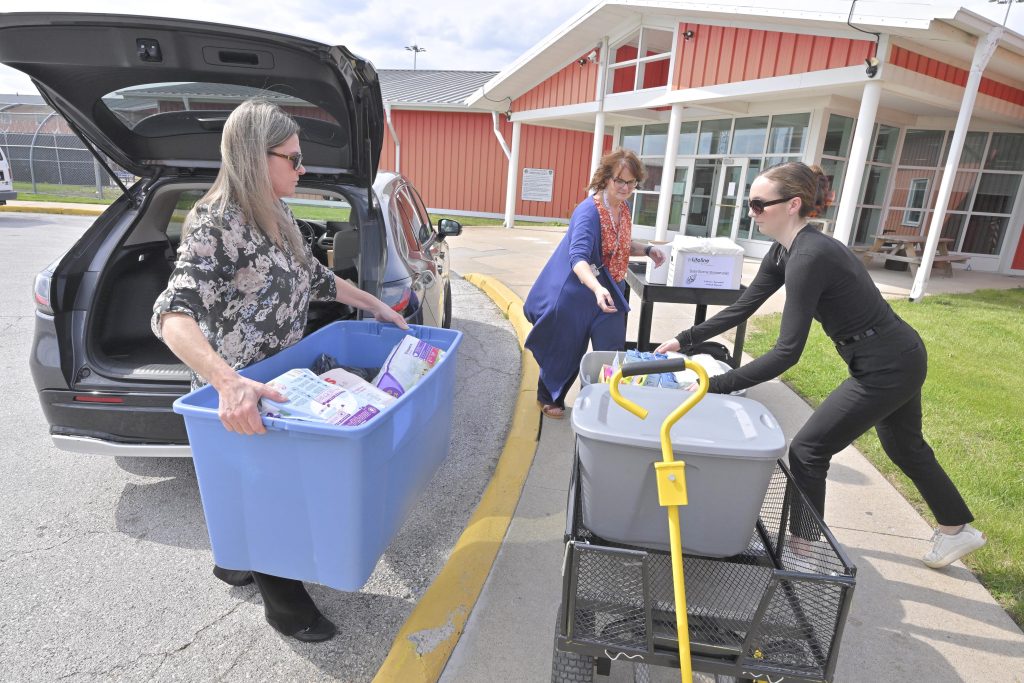
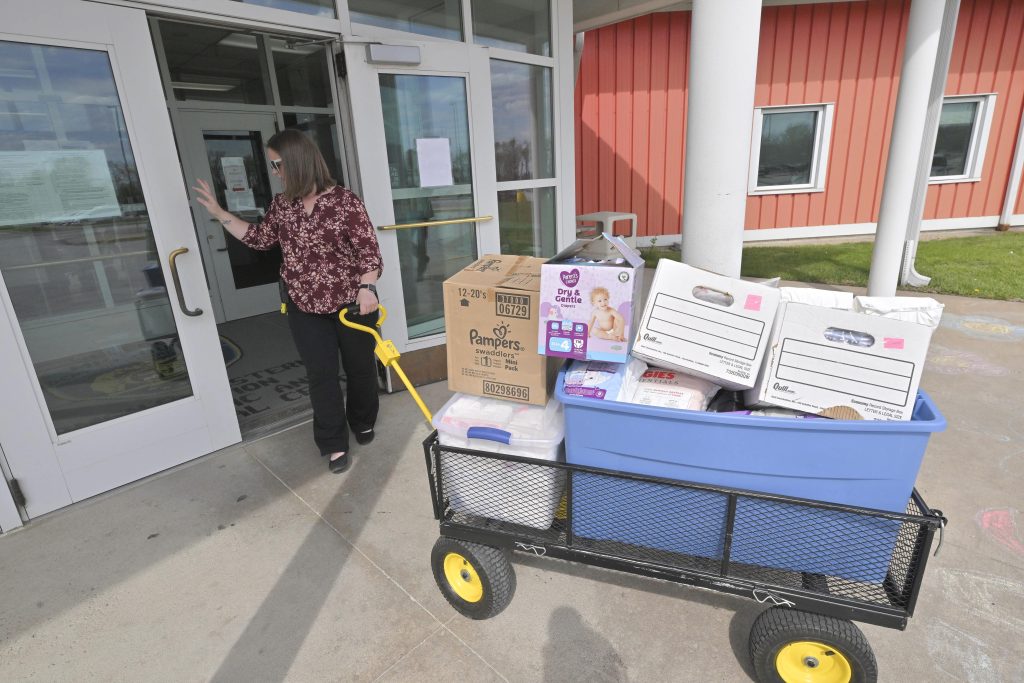
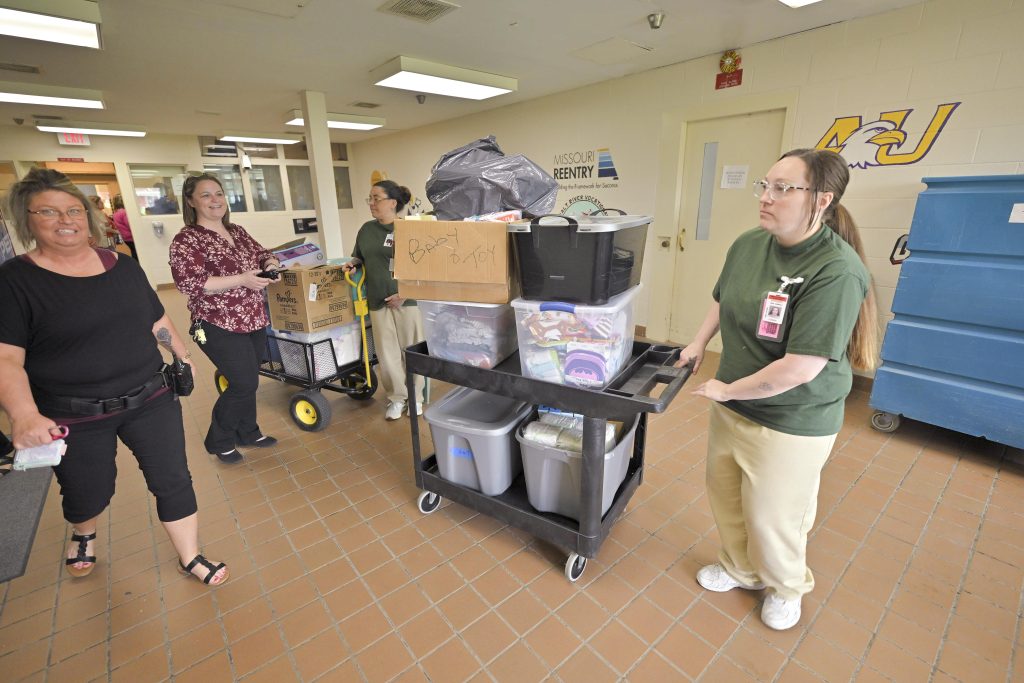
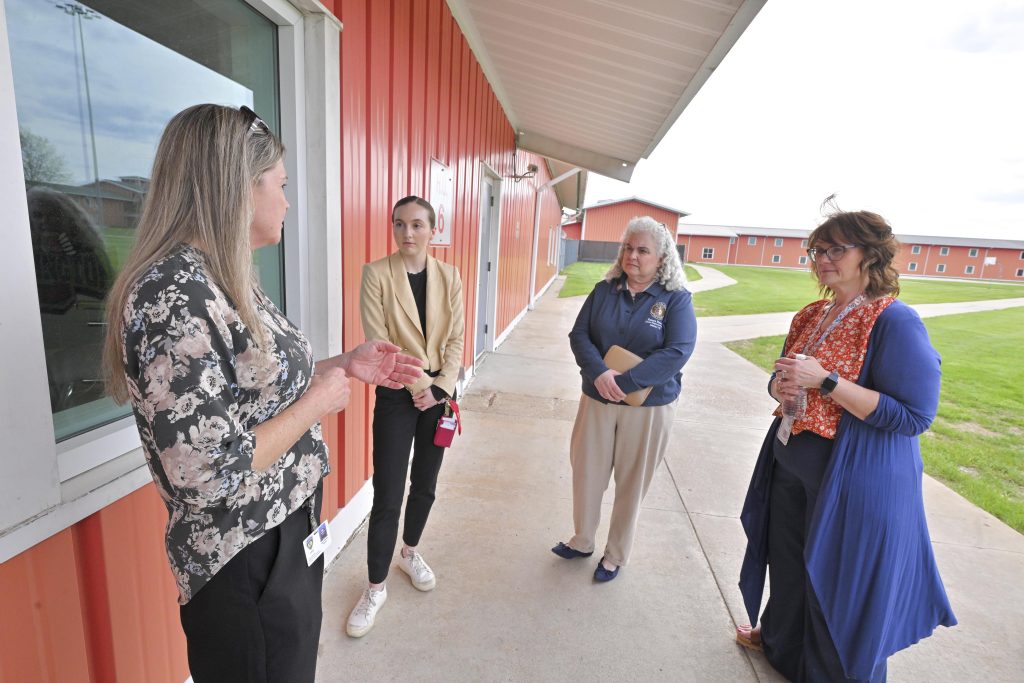
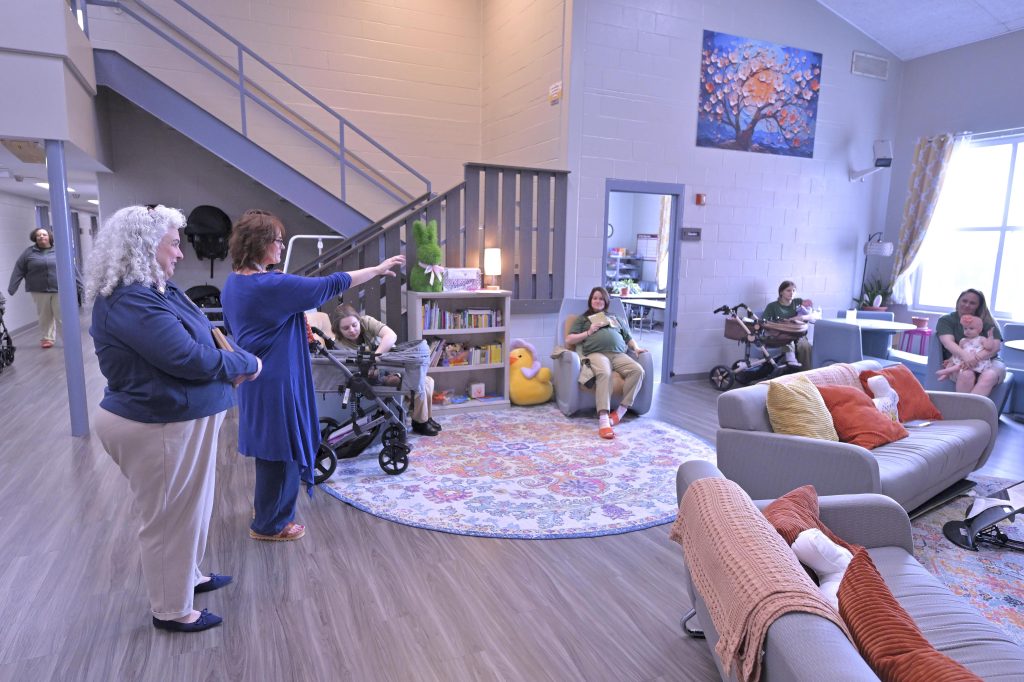
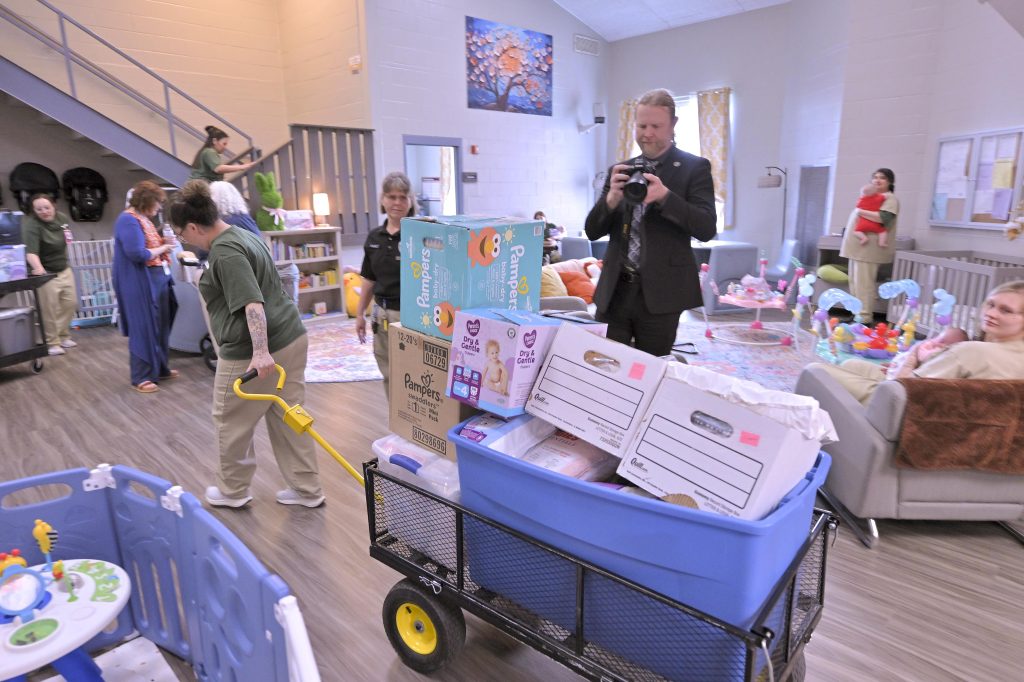
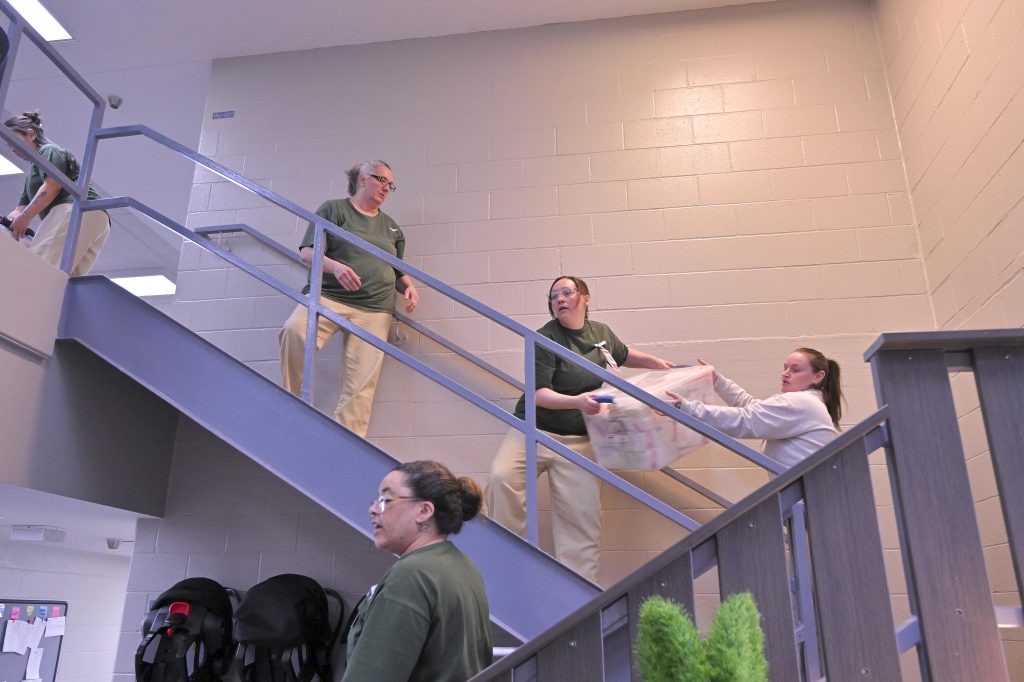
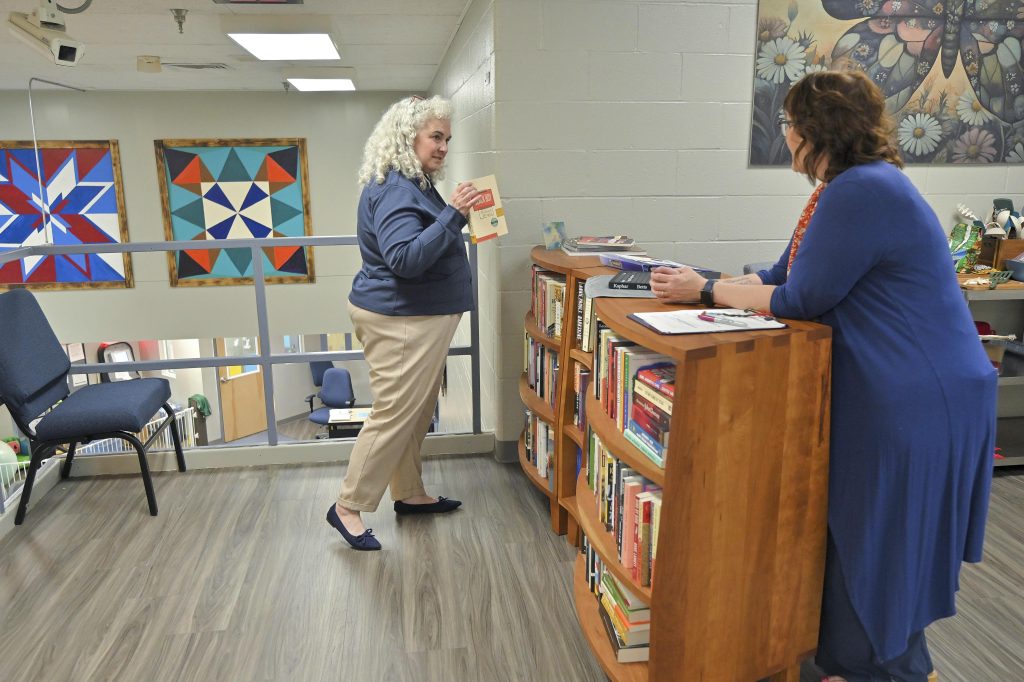
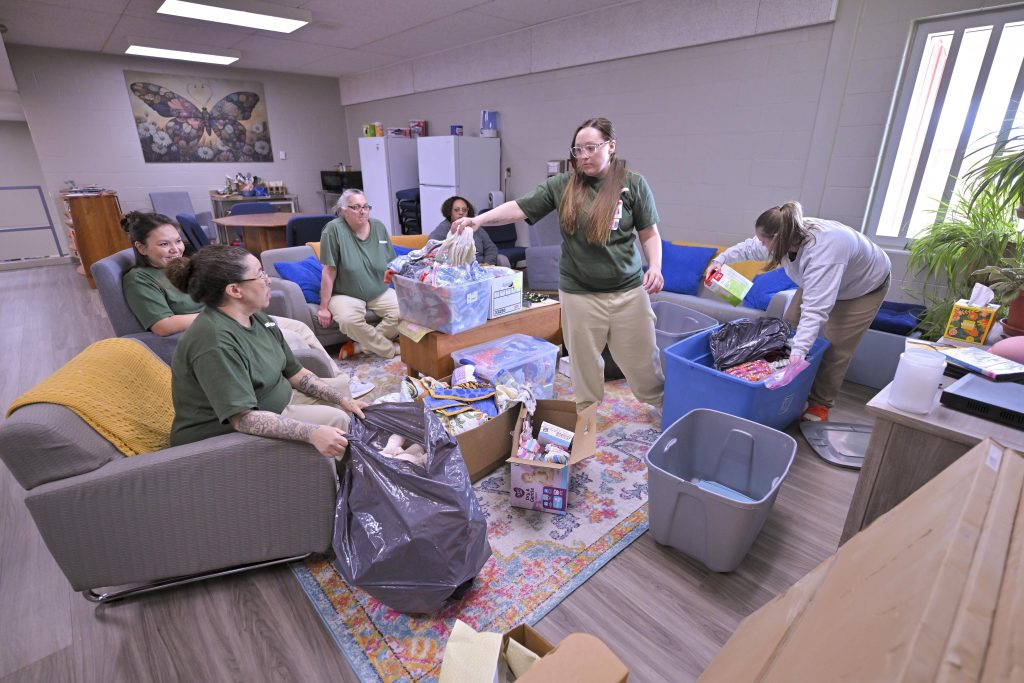
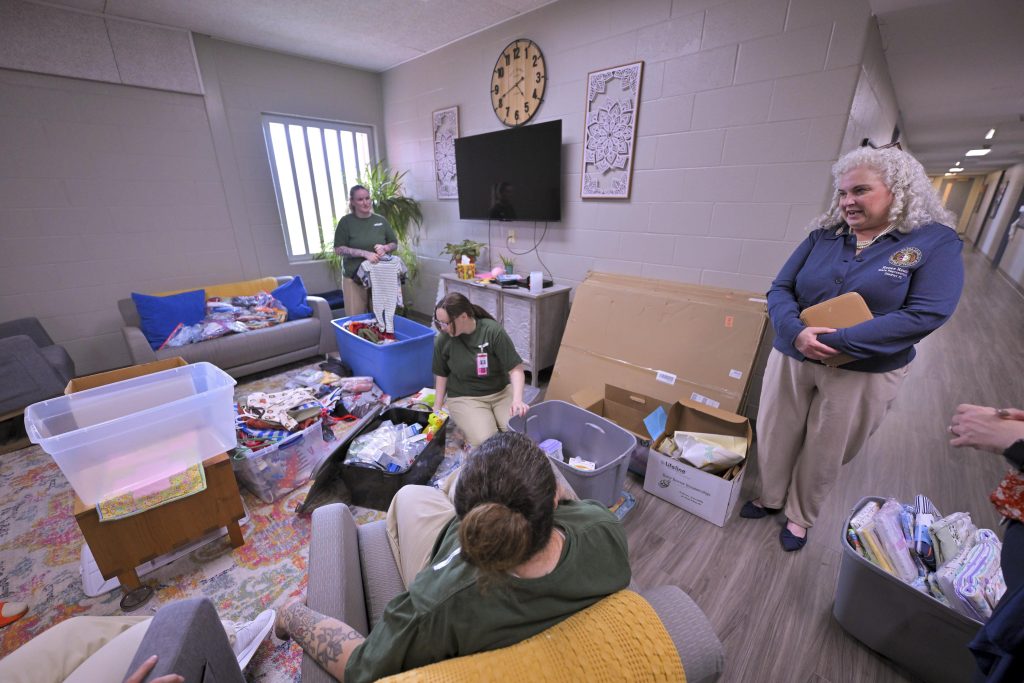
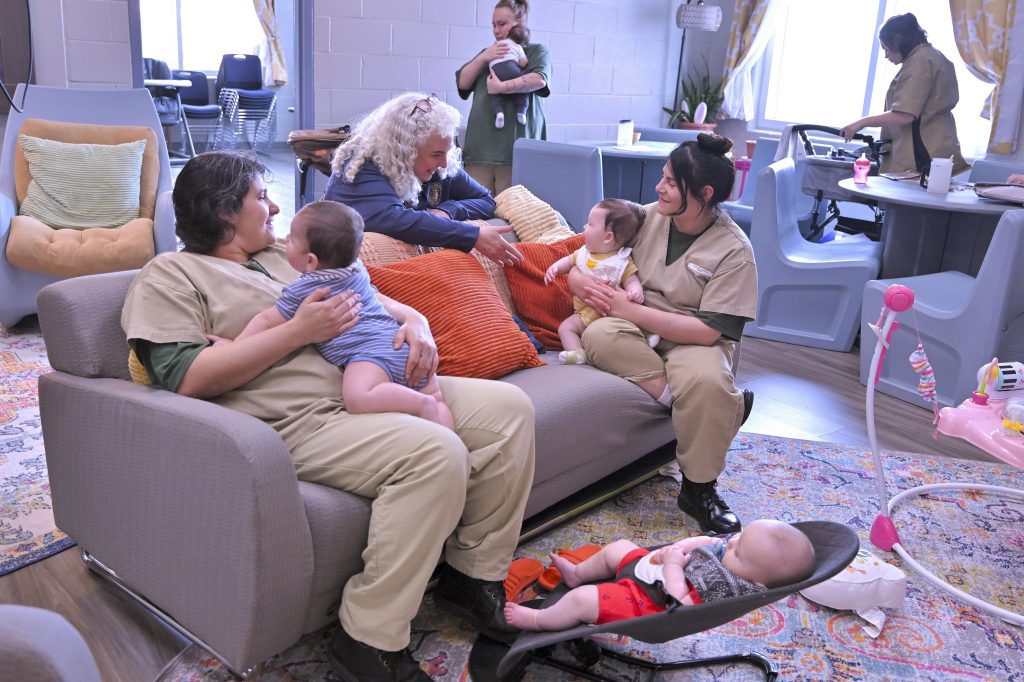
Members of the Missouri House of Representatives donated two carloads of clothing, food, toys, and other items for the mothers and babies in the nursery at the Women’s Eastern Reception, Diagnostic, and Correctional Center.
Representative Renee Reuter (R-Imperial) organized the drive, and had the opportunity to tour the facility and see how it is allowing incarcerated mothers bond with their babies, and learn the skills they will need in order to thrive and raise their families.
Most people thought it was a joke upon hearing it for the first time, even the man who went on to champion it through the legislature. It was an idea brought before the Missouri House four years ago, to put a nursery in one of the state’s women’s prisons.
That idea was no joke, and that nursery is about to mark one year in operation. Visitors to the Women’s Eastern Reception, Diagnostic, and Correctional Center (WERDCC) in Vandalia say the nursery has changed the feel of the entire institution—and of everyone in it.
Video by Matthew Markivee, Missouri House Communications – Story continues below
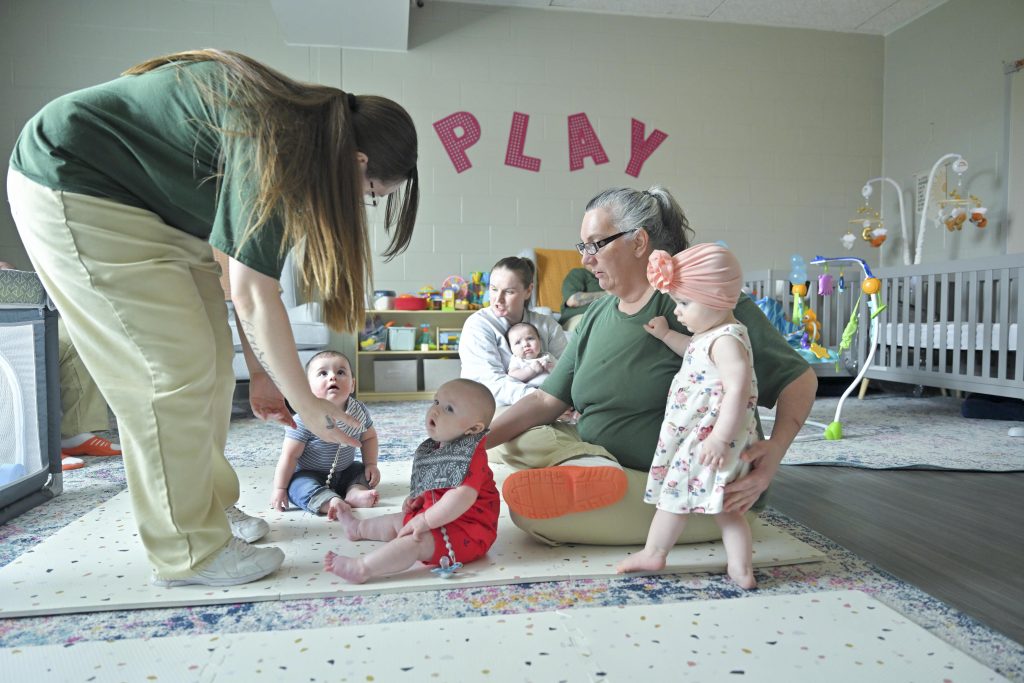
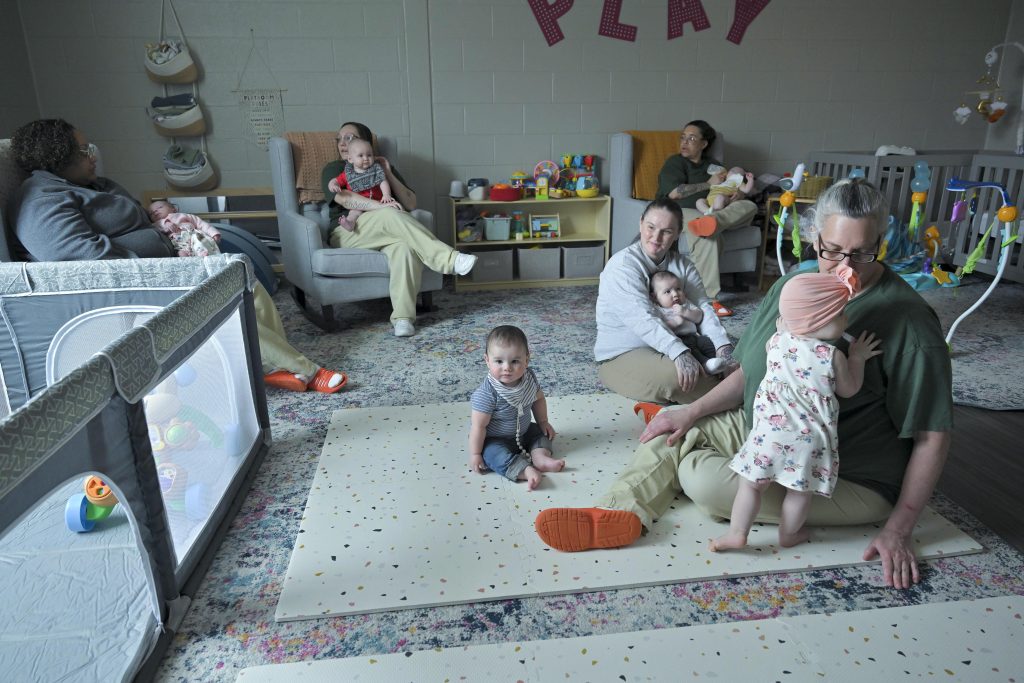
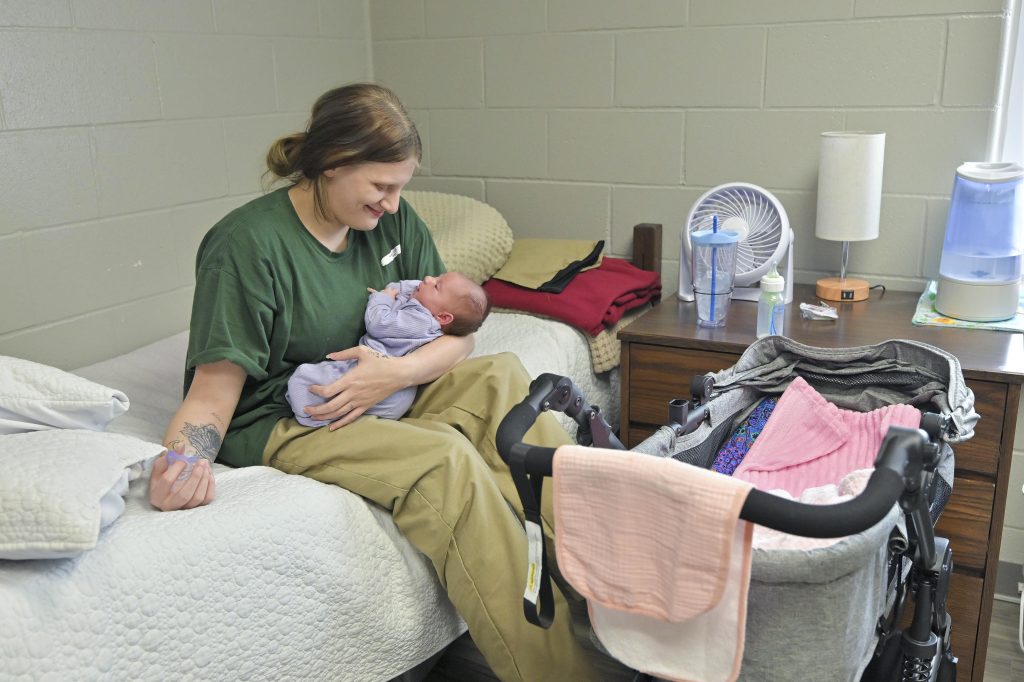
Cook and Allen found themselves in a fully reimagined wing of WERDCC’s Housing Unit 1, now dubbed “1A Nursery Wing.” Cells that once held up to six incarcerated women apiece have been repurposed. Most now house one or two mothers and their babies. Another cell has been converted into a kitchen, and others store supplies for mothers and babies, both for their stay and for when they leave.
There is an impressive supply of baby clothes; shelves full of formula and hygiene products; car seats and blankets; and stacks of diapers. Almost all of it is provided through donations.
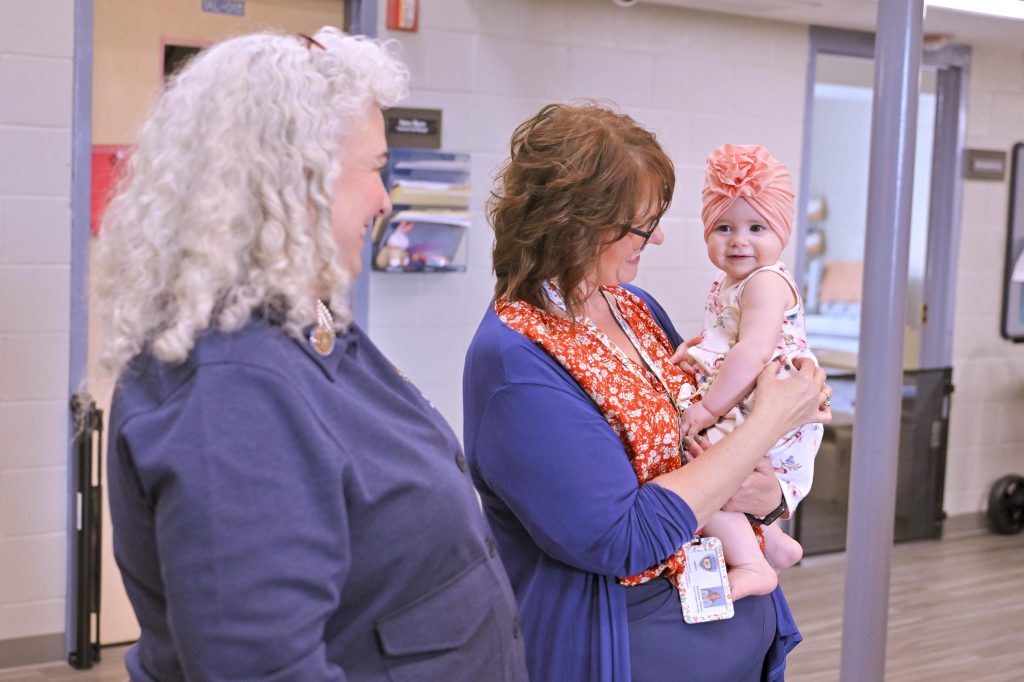
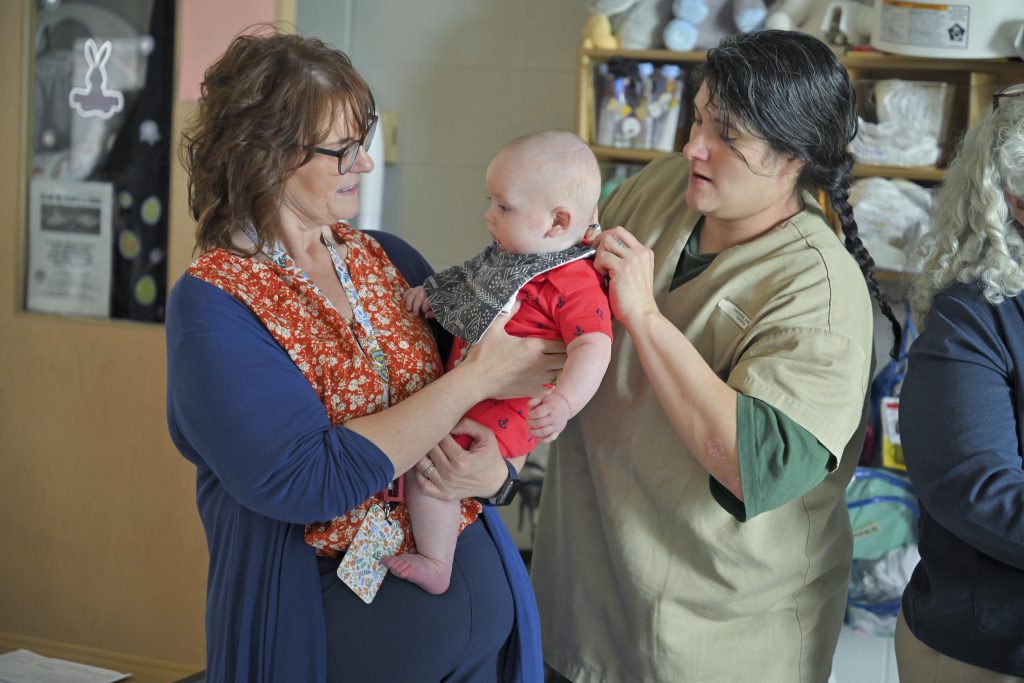
Program Director Kim Perkins introduces Representative Bill Allen to one of the babies in the nursery at WERDCC in Vandalia. (Photo: Tim Bommel, Missouri House Communications)
The representatives found the women in the nursery—some mothers, some caregivers—to be candid and open about their lives. Several said the nursery is giving them something to work toward.
That is what legislators four years ago heard the nursery would do: stem recidivism. They were told that forming bonds in the first few months after birth is just as important for mothers as it is for babies. Bill sponsors and experts testified that by allowing incarcerated mothers to remain with their babies, the likelihood of reoffending decreases dramatically.
Representative Bennie Cook meets with some of the mothers and babies in Missouri’s first prison nursery, at WERDCC in Vandalia. (Photo: Tim Bommel, Missouri House Communications)
Tara Carroll, another of the caregivers in the nursery, spoke from experience about why programs like these can make a difference.
Carroll and Johnson have each experienced being pregnant and incarcerated before the nursery was an option.
Representatives Bill Allen (left) and Bennie Cook (right) called the nursery at WERDCC “Amazing,” and said they are anxious to see data on how well it performs. (Photo: Tim Bommel, Missouri House Communications)
Johnson and Carroll are grateful to be a part of a different reality for the moms who have been accepted into the nursery program, moms like Kathy Briggs.
“Kat,” as she is known around the nursery, was 28 and “on the run” from authorities when she found out she was pregnant. Having had two previous miscarriages, she turned herself in, believing custody would give her the best chance of bringing the pregnancy to term. She soon learned she was carrying twins and resigned herself to the belief that she would have to place them for adoption—until the judge in her case, Newtown County’s Kevin Selby, had other plans.
Found their Voices: Tara Carroll and Brianna Johnson share their experience as incarcerated mothers with their fellows in the nursery. (Photo courtesy: Matthew Markivee, Missouri House Communications)
Briggs’ initial reaction was disbelief, but that changed once she walked into 1A Nursery Wing.
Discussions of criminal justice often include talk of breaking cycles of abuse, poverty, drug use, neglect, and other factors that contribute to incarceration across multiple generations. Legislators in 2022 were told the nursery program could help break such cycles.
Asked about this, Briggs speaks up before the question is finished. She described a childhood surrounded by drug abuse. She witnessed and later experienced domestic and sexual violence. Briggs said that with what she has learned in the nursery, her daughters, Lyric and Melody, will never experience those things.
Kathy Briggs sits with her two daughters, Lyric (in her lap) and Melody, along with case manager Kim Immel. Since she was interviewed, Briggs has been released and she and her daughters are doing well so far. (Photo: Tim Bommel, Missouri House Communications)
Briggs is eager to tell her story, especially about how becoming a mother and her time in the nursery have changed her outlook. She points to a prominent tattoo on the side of her face that reads “D.N.R.,” short for Do Not Resuscitate.
Her eyes welling with tears, Briggs glanced at one of her daughters and said “DNR” is no longer the message she wants to portray, and she is looking for ways to pay for getting the tattoo removed.
Before and after: “A” Wing of 1 House at WERDCC a little more than one year ago, before it was renovated; and now, after being transformed into Missouri’s first prison nursery. (Photos: Top – Missouri Department of Corrections and Bottom – Tim Bommel, Missouri House Communications)
The nursery’s social workers say Briggs and many of the mothers are beginning to think, for the first time in years—or ever—about a future. Carroll said that after this experience she wants to become a doula, and she believes this incarceration—her seventh—will be her last.
The nursery program is not available to all pregnant incarcerated women. Mothers and caregivers must pass a screening that includes a review of disciplinary history, physical and mental health, and participation in other Department of Corrections programs. Women with a history of violent sexual offenses or crimes against children are ineligible.
The program teaches more than childcare. It covers life skills so that mothers returning to their communities can care for themselves, their children, and maintain a home. Several women said they had never been taught such skills.
Reps. Bill Allen (left) and Bennie Cook (right) visit with Program Director Kim Perkins the cell renovated into a kitchen, one of the places where mothers in the nursery can learn skills to care for themselves and their babies. (Photo: Tim Bommel, Missouri House Communications)
Another thing many of them had not learned before, Johnson said, was pride.
When asked about the nursery, Department of Corrections Director Trevor Foley’s eyes brighten and he smiles widely. He said the nursery represents the culture change the Department has been working toward.
Representatives Bennie Cook (in red) and Bill Allen (in grey suit) meet with Program Director Kimberly Perkins in the nursery at WERDCC in Vandalia.
Since opening in March 2025, 15 mothers with 16 babies have entered the program. Currently, the nursery houses five mothers and babies, along with one expectant mother. Of those who have completed the program, one mother has reoffended. The rest are back in their communities, building stable lives for themselves—and for their children—many for the first time.
In November, the man who carried the original legislation allowing the creation of the nursery was able to see it in person.
Danielly Izquierdo is gaining confidence and working toward a certification in Culinary Arts, with plans to work in the restaurant industry when she gets out in September, 2026. Her son August is a “very chatty and happy” 5 month old.
The idea was brought to Bruce DeGroot ahead of the 2022 session by Liza Weiss, founder of Missouri Appleseed. At first he thought she was joking, but over time he warmed to the idea.
DeGroot filed House Bill 1897 and championed the issue through the House where it received nearly unanimous support. He said the proposal proved to be an easy sell, both for its benefit to incarcerated mothers and their babies and for the economic benefit to taxpayers of reducing recidivism. The language of HB 1897 was eventually included in Senate Bill 683, which became law.
When DeGroot and Weiss visited the nursery in November, someone mentioned the role they played in its creation. The mothers and caregivers gathered to thank them. One of them was Kathy Briggs.
In 1A Nursery Wing, cells that used to hold up to 6 incarcerated women each have been modified to accommodate one or two mothers and their babies. (Photo: Tim Bommel, Missouri House Communications)
As word spread about the nursery before it became reality, some staff and many incarcerated women in Vandalia were skeptical. Perkins said those attitudes have shifted. The program is now fully supported and has raised morale throughout the institution.
Back inside 1A Nursery Wing, the moms and caregivers say they are grateful for the family they have found.
The nursery has boosted morale throughout WERDCC and staff are enthusiastic about working in it, including CO Jeffrey Patton, who mothers have nicknamed “Pawpaw Patton.” (Photo: Tim Bommel, Missouri House Communications)
Those wishing to make a physical donation to the nursery such as diapers or blankets can contact Program Director Kim Perkins at Kimberley.Perkins@doc.mo.gov or call 573-594-6686 Ext: 2723. To donate a check or money order, mail it to:
Correctional Center Nursery Program Missouri Department of Corrections P.O. Box 236 Jefferson City, MO 65102