Backers say bill to allow reassignment of birth control devices would save money, increase access

Proponents say a bill in the Missouri House would expand access to birth control and save the state hundreds of thousands of dollars a year.

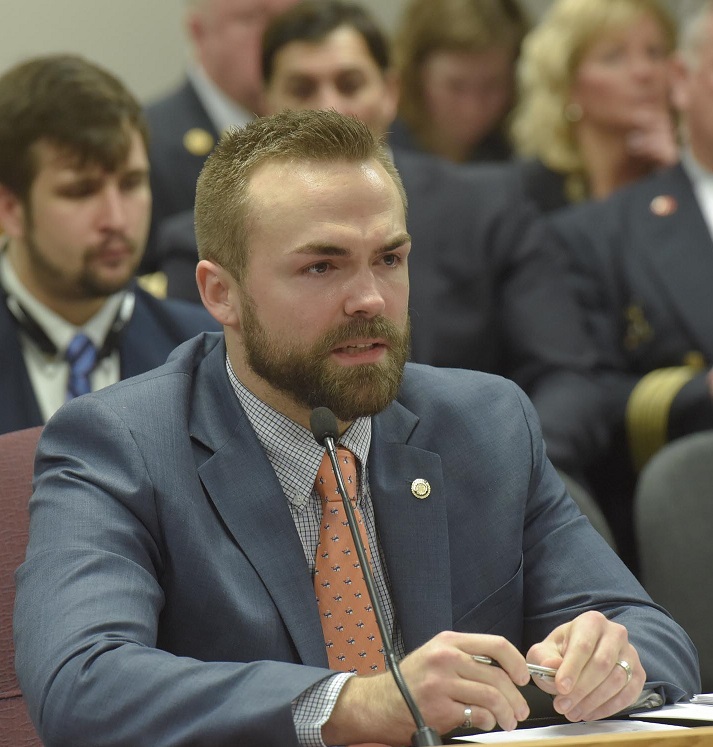
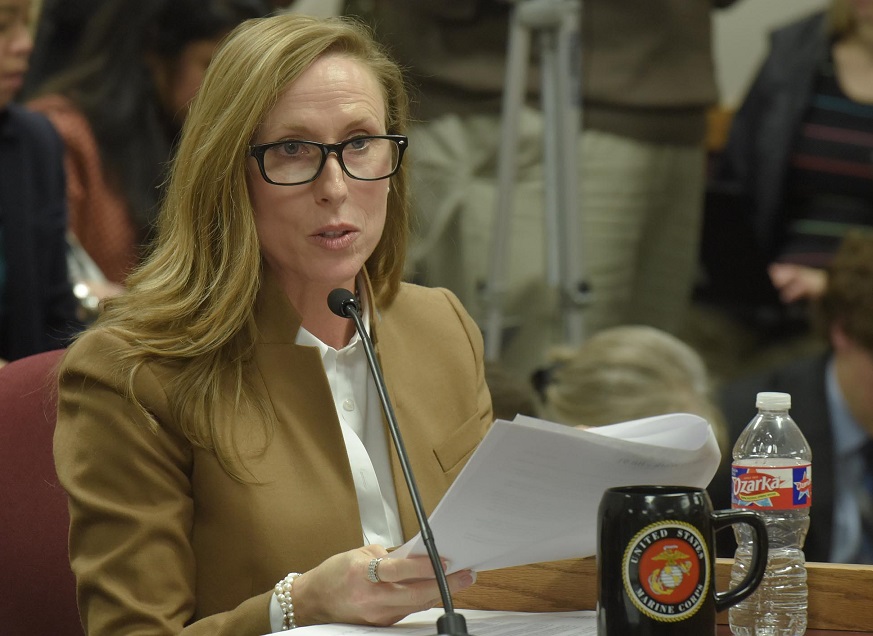
Representative Shamed Dogan (photo; Tim Bommel, Missouri House Communications)

House Bill 1499 would allow health care providers to use a long-acting contraceptive device for a patient other than the one for whom it was initially prescribed.

In Missouri when a woman goes to a health care provider and elects to use a long-acting reversible contraceptive (LARC), her provider must order that device and implant it on a subsequent office visit.  Often women don’t return to have the device implanted, and Missouri law doesn’t allow that device to be used by another patient – it must be returned to its manufacturer and is often destroyed.

In Fiscal Year 2017 approximately 1,800 LARCs were so “abandoned” in Missouri.  About 1,100 of those could have been used in other patients, saving the state approximately $220-thousand dollars.

Executive Director of NARAL Pro-Choice Missouri, Alison Dreith, told the House Committee on Health and Mental Health Policy, “By redistributing the device two things can happen.  Money is saved.  LARC devices are very expensive and this allows for the product to be utilized which overall saves the state money; and due to having stock on their shelves that can be used for another MO Health Net patient, providers are able to insert the IUD or implant that same day rather than having to wait for the person to return.”

Bill sponsor Representative Shamed Dogan (R-Ballwin) said the issue is one of fiscal responsibility.

“We’re wasting hundreds of thousands of dollars on pretty expensive birth control devices when in any other case with a pharmacy, with a product that someone orders and they don’t pick it up, you can reassign that to another patient,” said Dogan.  “This bill just allows MOHealthNet to do that with these devices and it has the potential savings to the state of a quarter of a million dollars a year.”

The proposal was passed out of the House in 2017 as an amendment to other legislation but did not become law.  No one testified in opposition to it in the Committee’s hearing.

The committee has not voted on HB 1499.

Bill would ease background checks on potential in-home care workers

The state House is again being asked to make it easier for people with minor criminal offenses to apply and be hired for jobs in the in-home care field.

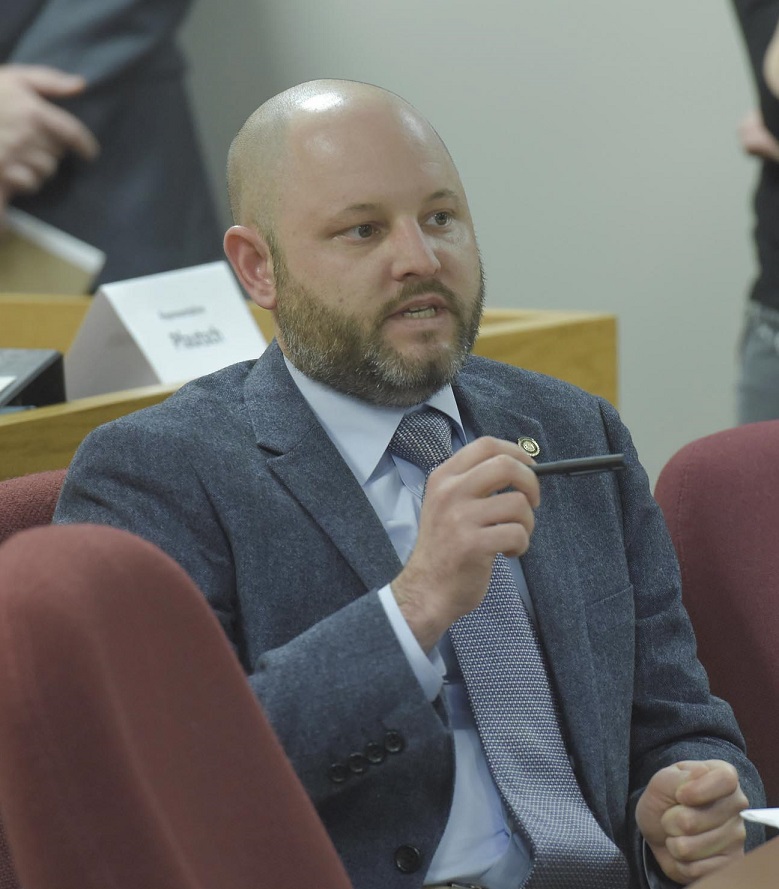
Representative Cody Smith (photo; Tim Bommel, Missouri House Communications)

When an applicant undergoes a background check, any finding results in a review that can take multiple weeks.  That can include crimes that occurred decades ago, or that would be considered minor or unrelated to security and healthcare.

According to House Bill 1350 sponsor Cody Smith (R-Carthage), more than 75-percent of reviews result in waivers that would clear the applicant to work, but reviews take so long that most applicants find other jobs during the delay.

“Once the provider wants to hire them, they simply can’t wait the amount of time it takes to get through this process – can’t wait that long to get into the workforce and start making money,” said Smith.

Smith said the issue creates problems not just for applicants but for in-home care providers, many of whom are short-staffed.

“That creates hardships for the providers, their clients, and the folks that would like to have those jobs,” said Smith.

Elisa Pellham, a provider with Integrity Home Care and Hospice, told the House Committee on Health and Mental Health Policy that many potential employees would come from other health industry jobs in which they don’t face these “very burdensome” checks – nursing homes, hospitals, or mental health facilities.

“So they really question why in home care do I have to then fill out this lengthy form that, again, may take five to six weeks to get the results back, so it is burdensome on the employee and burdensome on that provider,” said Pellham.  “Again they’ll just maybe go back to a health care entity that doesn’t require it and then home care, could lose a really good caregiver or nurse.”

HB 1350 would change background check requirements to remove those minor or irrelevant violations from being barriers to employment in in-home care positions.

The legislation would specify what offenses a person must have been found guilty of or pleaded guilty to for their employment by an in-home service provider to be illegal.  Such employees could also not be named on the Department of Health and Senior Services’ employee disqualification list, the Department of Mental Health’s disqualification registry, or the child abuse and neglect registry.

Smith said if his proposal passes the public should not be concerned about who could be hired.  He said background checks would remain very stringent, “To make sure that [in-home care providers] are qualified to be in homes caring for people who are often times very vulnerable.”

The committee has not voted on HB 1350.

Missouri House again fast-tracking ban on lobbyist gifts to legislators

Missouri House leadership is working to again make a proposed ban of gifts to lawmakers the first bill of the session to leave that chamber.

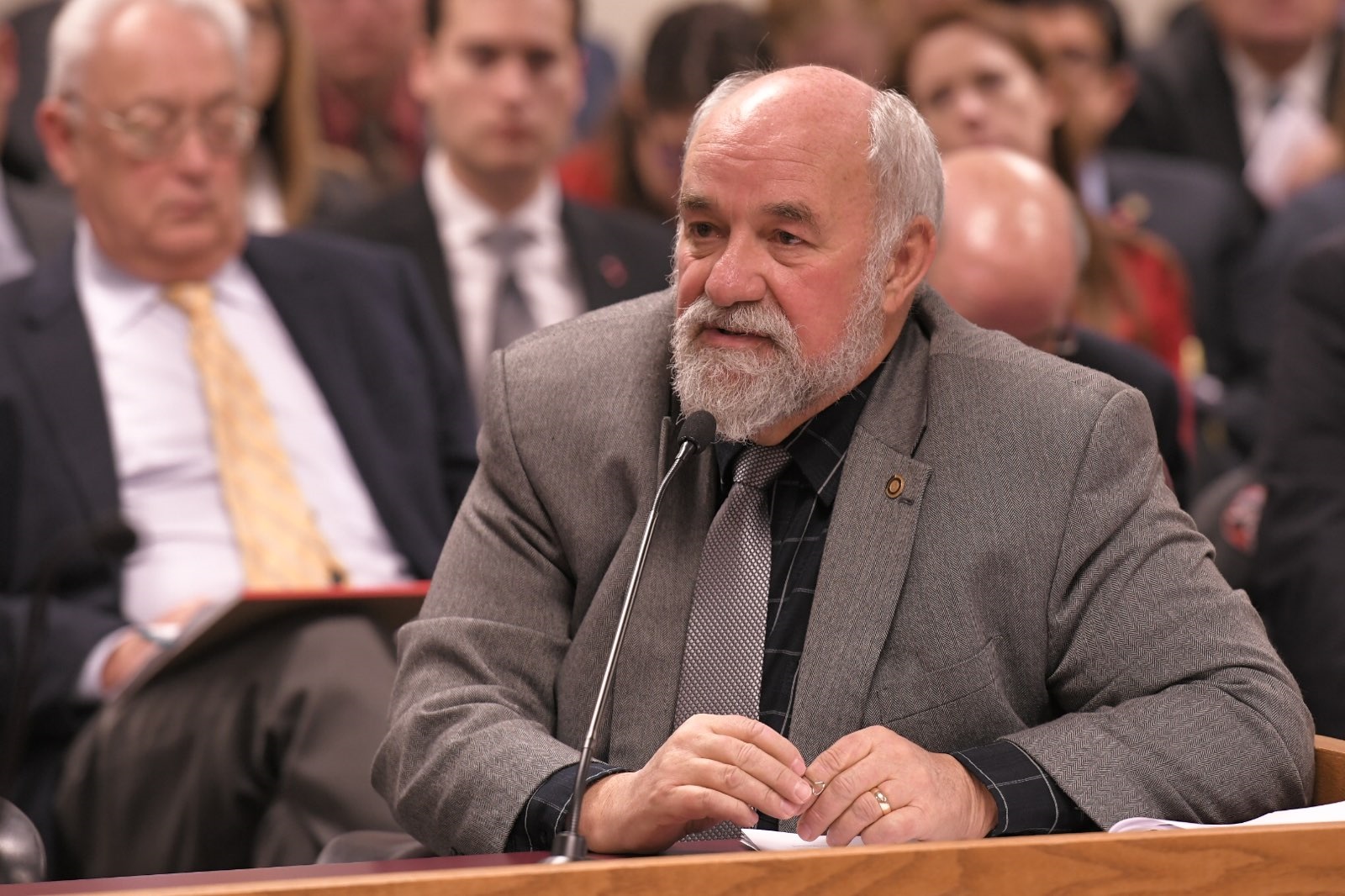
Representative Justin Alferman (photo; Tim Bommel, Missouri House Communications)

Representative Justin Alferman (R-Hermann) is sponsoring House Bill 1303 which is based on the gift ban proposal passed out of the House in 2017.  That bill, HB 60, was the first sent out of the House in 2017 but was never voted on in the Missouri Senate.

On Monday two House Committees held hearings on, and voted to pass, HB 1303.  It is expected to be debated Wednesday by the full chamber and could be sent to the Senate on Thursday, in keeping with House Speaker Todd Richardson’s (R-Poplar Bluff) statement on the opening day of the session that he expected that bill to be voted out this week.

House Democrats questioned several provisions in the legislation including one that aims to restrict the cost of gifts that would still be allowed under the legislation – things like plaques and awards.

Representative Tracy McCreery (photo; Tim Bommel, Missouri House Communications)

St. Louis Democrat Tracy McCreery was concerned that the language of the bill would lead to fewer items falling under mandatory reporting by lobbyists, instead being included in legislators’ personal financial disclosures.  She said those disclosures by legislators are less accessible by the public.

“What I’m trying to do is make sure by fixing one thing we’re not opening up another opportunity for abuse where all of a sudden things are considered to be awards,” said McCreery.

“Honestly, Representative, in dealing with this type of ethics reform it’s always going to be whack-a-mole,” Alferman told McCreery.  “Anyone who is decisively trying to circumvent ethics laws is already an unethical person and it’s really hard to be able to think about every which way those type of individuals are going to circumvent the law.  I’m trying to capture the 98-percent of problems that will be alleviated with this bill.”

Amendments offered by McCreery and other Democrats were voted down along party lines, but the bill was passed out of the Committee on General Laws 12-0.  One Democrat said that even without the changes they wanted to see, the bill would still be an improvement over current law.

HB 1303 would still allow lobbyists to make expenditures to the entire General Assembly – things like a dinner to which every member of the House and Senate are invited.  Members would have to have at least 72-hours’ notice before such an event, and it must be held in-state, so that all lawmakers would have the opportunity to attend.

“I just don’t want us to get into a ‘gotcha’ moment for going to something like a Missouri Chamber dinner or something of that nature that we’ve all been invited to.  I don’t think anyone’s going to say that there’s an influence being levied at those large events.  You don’t have the one-on-one interaction like you do if a lobbyist takes you out for a dinner where 100-percent of their focus is on you,” said Alferman.

Last year’s legislation, HB 60, was passed out of the House 149-5.  Alferman expects similarly strong, bipartisan support for HB 1303.

Transportation Task Force proposes fuel tax increase, readies report to legislature

The 21st Century Missouri Transportation System Task Force is proposing an increase in the state’s fuel tax to support transportation infrastructure.

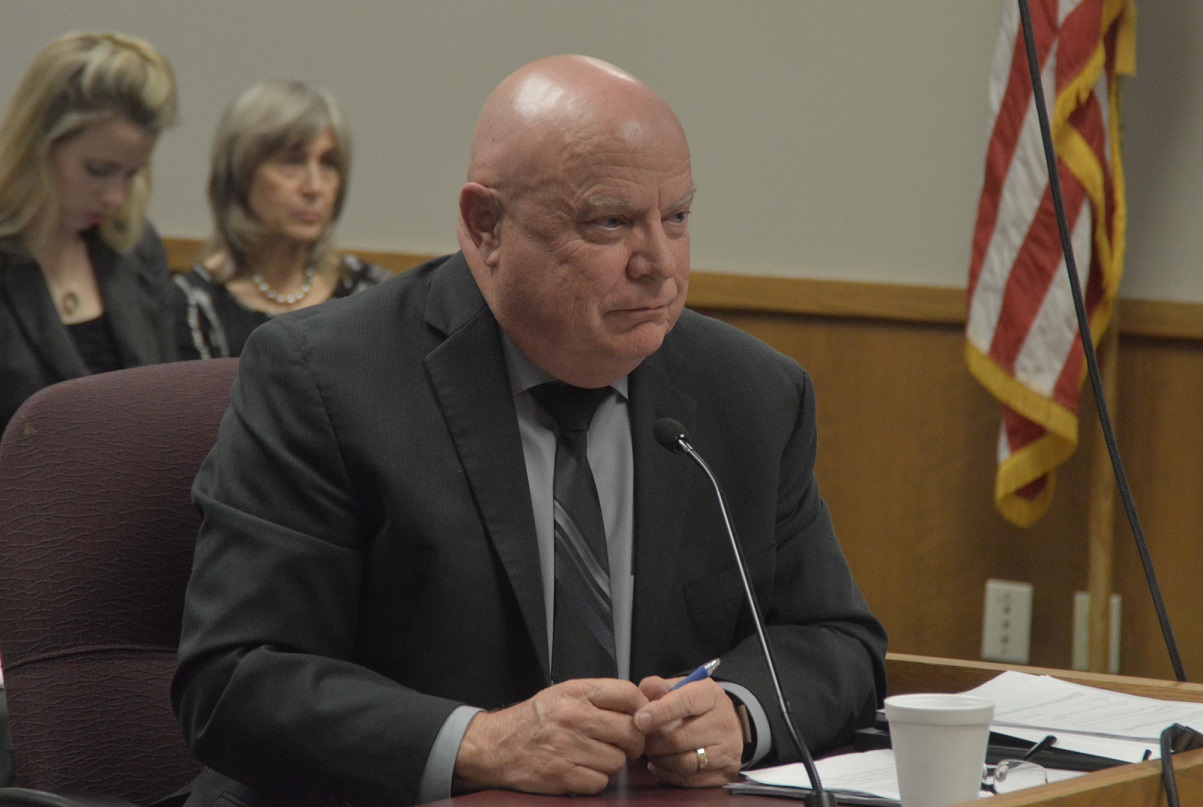
Representative Kevin Corlew (photo; Tim Bommel, Missouri House Communications)

The Task Force met on Tuesday to finalize the recommendations that will go into the report it will release before the legislative session begins January 3.  It says an increase of 10 cents in the tax on gasoline and of 12 cents in the tax on diesel would generate about $430-million annually for roads and bridges.  $43-million of that would go to counties and $64.5-million would go to municipalities.

Such an increase would have to be put before Missouri voters.

“We really do need an immediate impact investment in transportation to move forward, and to really meet a lot of needs that have been arising over many years of neglect in terms of funding,” said the Task Force’s chairman, Kansas City Republican Kevin Corlew.  “The first thing will be let’s make sure we give our transportation system – the people of Missouri – the shot in the arm in terms of transportation infrastructure that we need.”

The Task Force’s draft report said Missouri’s fuel tax burden is low – 46th in the nation – and the proposed increase would amount to an additional $5 per month for the average Missouri driver.

The report also recommends the implementation of a revenue stream dedicated to multimodal transportation (railways, aviation, mass transportation, ports, waterways, and transportation for the elderly and disabled).  The Task Force suggests restructuring Missouri’s Timely Filing Discount on retail sales or withholding tax and/or the discount given to companies that file employee withholding taxes on time.

“Recognizing that all of us benefit from a transportation system and particularly our retail businesses – and they’ve all come around and testified to us, many business groups, on the importance of it – we feel like that’s an area where there’s no additional taxation but we could restructure that … and not suggesting that we do away completely with that,” said Corlew.

He said a restructuring of the Timely Filing Discount could generate $50- to $70-million, which is the range of amounts the Task Force identified as enough to enhance multimodal transportation.

The Task Force also discussed a need to make transportation revenue sustainable long-term.  Recommendations to that end include increases in usage fees for electric and hybrid vehicles; increases in license, registration, and other non-fuel user fees; exploration of additional taxation of internet sales; and tolling on major bridges.

Other recommendations address safety, exploring and supporting innovation, and considering legislative action to remove barriers to various types of projects, including public-private partnerships.

Corlew said, as he has before, that this Task Force was more than, “just another government study … That’s why we worked extraordinarily hard to find a consensus on some of these solutions, that’s why we reached out to Missouri citizens at our meetings and individual members reached out to their communities at home to get the ideas.”

“We are fully committed to making sure that we really do move our transportation system forward and work as hard as we can to make sure that these recommendations are put into place,” said Corlew.

The Task Force includes 23 members from the state House and Senate, the Governor’s office, members of state agencies including the Departments of Transportation and Economic Development and the Highway Patrol, and representatives of business organizations.  It could continue meeting through the end of 2018.

Democrats propose multi-pronged attack on opioid abuse

Missouri House Democrats say the fight against opioid abuse is about more than passing a statewide prescription drug monitoring program.  They today unveiled a slate of legislation that would attack the problem by addressing a number of other issues.

House Democrat Leader Gail McCann-Beatty and Representative Gina Mitten speak about their caucus’ multi-bill approach to attacking opioid abuse in Missouri. (Photo; Chris Moreland, Missouri House Communications)

“The opioid disorder crisis is multi-faceted,” said House Democrat Leader Gail McCann-Beatty (Kansas City).

Democrats continue to support passage of a statewide prescription drug monitoring program to track the use of prescription narcotics.  Such legislation has advanced farther through the legislative process in each of the past few sessions, but fallen short of passage.  Last year St. Louis Democrat Fred Wessels sponsored such legislation that was combined with a bill sponsored by Sikeston Republican Holly Rehder and fell just short of final passage.  Both representatives will sponsor such legislation again this year.

In addition, Democrats have filed bills that would require pharmacies to post information about methods and locations for the safe disposal of unused medication; require for medical professionals with prescribing authority at least four hours of training on the misuse and abuse of prescription drugs and recognizing addiction in patients; require the Missouri Department of Health and Senior Services to mirror federal regulations for prescribing opioids for chronic pain; require insurance coverage of medication assisted treatment and remove insurer-proposed barriers to addiction services; establish a sterile needle and syringe exchange pilot program; require the Show-Me Healthy Babies program to cover substance abuse treatment for women up to one year post-partum; and expand the use of CBD or hemp oil to include being used as a pain management alternative for those with a history of opioid abuse.

“Substance disorders need to have an all-of-the-above approach and what we’re proposing here is just that.  We’re not only talking about PDMP.  We’re talking about a number of other options; tools that should basically be put in the toolbox of not just the medical community but our entire community,” said Representative Gina Mitten (D-St. Louis).

Mitten is sponsoring the bills that deal with safe disposal of abused prescription medication and additional training for prescribers.

Missouri is the only state in the nation without a statewide prescription drug monitoring program.  Many counties in the state are participating in a program initially launched in the St. Louis region, and Governor Eric Greitens (R) signed an executive order creating a tracking program for some prescription information handled by one benefits provider.

The legislation discussed today by House Democrats is for the 2018 legislative session, which begins January 3.

Bill would push 17-year-olds to juvenile court system

A House Republican will again this year propose that Missouri increase the age at which young offenders can be tried in Missouri’s adult courts.

Representative Nick Schroer (photo; Tim Bommel, Missouri House Communications)

17-year-olds can be prosecuted in adult courts.  O’Fallon Representative Nick Schroer wants to “raise the age” to 18.  He said the bill has broad, bipartisan support.

“In the state of Missouri you have to be 18 to enter into a contract without parental consent.  You have to be 18 to buy cigarettes, you have to be 18 to join the military, buy a lottery ticket, or even vote.  You even have to be 21 to purchase or consume alcohol in our state,” said Schroer, “but there is one place where juveniles are still treated as adults – in our courtrooms.”

Schroer on Friday pre-filed House Bill 1255, which mirrors House Bill 274 from the 2017 session.  He said by passing it and increasing that age to 18, Missouri would save money by reducing recidivism; would allow more offenders to use the resources of the juvenile justice system to hold them accountable and rehabilitate them; and would strengthen Missouri’s workforce and economy by keeping 17 year-olds from having criminal records.

Schroer said his bill would also protect the rights of Missouri parents.

“When a 17-year-old is arrested currently, parents are excluded from being informed of what is going on.  They do not have a right to be involved in the interrogation, they do not have a right to be involved in the court process,” said Schroer.

One of the hang-ups of past “raise the age” legislation has been the projected cost to Missouri.  Schroer said those estimates have been inaccurate.  He said in the 45 states that have passed similar laws, their projections of cost were also high but once the laws were in place, the actual costs were far lower and some states saved money.

“That is why I am happy to announce that with the many different fiscal notes that were associated with this bill in 2017, I am reaching out to Missouri State University to take a look at what the true economic impact of this legislation would be,” said Schroer.  “I am confident that once this report is done that it will show what the 45 other states have shown – that raise the age legislation reduces crime, saves taxpayer dollars, and keeps Missourians safe.”

Schroer said it should be a goal to keep young people out of Missouri’s adult court and prison system.

“When you put a young person, with their brain still developing, you put them in a system where they’re going to learn the traits in the adult system … they’re going to learn how to scheme, the ways of the criminal, so-to-speak,” said Schroer.  “When they come out with a criminal record, it’s hard for them to get a job; it’s hard for them to make ends meet.  When their back’s against the wall they’re going to go to what they know.  In these situations a lot of these kids that have been put through the adult system what they know is how to commit crime.”

Schroer said his legislation would allow minors who have committed heinous or repeated offenses to be certified as an adult.

HB 1255 is one of 13 bills Schroer filed today, and one of hundreds pre-filed for the 2018 legislative session which begins January 3.

House lawmaker honored for work on newborn screenings legislation

A Missouri House member has been recognized for her work to screen Missouri newborns for two life-threatening diseases.

Representative Becky Ruth received the “Abbey” RareVoice Award for State Advocacy from Rare Disease Legislative Advocates at a ceremony in Washington D.C., November 15, 2017. This was for her work on House Bill 66, the language of which was added to a larger bill and became law.

Representative Becky Ruth (R-Festus) sponsored legislation that became law this year that will expand newborn screenings to look for spinal muscular atrophy (SMA) and mycopolysaccharidosis II (MPS II), otherwise known as Hunter syndrome.  Missouri becomes the first state to offer newborn screenings for those conditions.

For her work, Rare Disease Legislative Advocates presented Ruth with the “Abbey” RareVoice Award for State Advocacy.  She received the award at a ceremony Wednesday in Washington, D.C.

“I’m very, very honored to receive this award.  I actually cried whenever I got the news that I had been chosen for the award,” Ruth said.  “I always go back to giving credit, though, to my grandson Brady.  He’s the reason why we have expanded newborn screening in our state.  He’s the reason why Missouri is actually number one when we look at newborn screening throughout our entire country – even internationally.”

Both genetic diseases can be fatal, but children can have better outcomes the earlier each are detected.  Ruth said that’s what is truly rewarding about sponsoring her legislation.

“Children with these diseases – they’re going to go through a whole myriad of diagnoses just trying to find out what’s wrong with them, and when they are finally diagnosed it’s pretty severe by that point.  These children will eventually die,” said Ruth.  “With the early intervention with the newborn screening, we’re going to actually be able to save their lives.  They’re going to be able to go on and live very healthy, normal lives.”

Ruth became involved in issues regarding newborn screenings after her grandson, Brady Alan Cunningham, was diagnosed with Krabbe.

Ruth credits Grace Grutter and Leslie Derrington, two mothers of children with SMA who testified during legislative hearings on her language, for helping push it to passage.

Ruth became interested in sponsoring her 2017 legislation after attending a conference on Krabbe, the genetic disease her grandson, Brady Alan Cunningham, had.  It was his condition that helped spur passage of House Bill 716 in 2009 which expanded newborn screenings for that and other conditions.  Ruth’s legislation this year expanded on what the 2009 bill accomplished.

Her bill means that screenings will be conducted for all Missouri newborns whose parents don’t opt out of them.  The bill gives until 2019 for screenings to start, but Ruth said there is a chance they will begin earlier.

Task Force on Dyslexia issues recommendations for dyslexia screenings of Missouri students

A Legislative Task Force on Dyslexia has completed its work and released recommendations for having Missouri public school students screened for dyslexia.

Representative Kathy Swan (left) listens as Kim Stuckey, Director of Dyslexia Specialists at the Department of Elementary and Secondary Education, discusses the report of the Legislative Task Force on Dyslexia. (photo; Chris Moreland, Missouri House Communications)

The Task Force’s report to legislative leaders and the governor recommends that all students in kindergarten through grade three be screened for dyslexia and related disorders beginning in the 2018-19 school year.  It also recommends that students who have not been previously screened, and who have been identified as “struggling” in literacy, be screened.

The Task Force was chaired by Cape Girardeau representative Kathy Swan (R), who said early identification of reading difficulties is key to helping children get the education they need.

“By identifying and addressing this reading failure, students will not only be successful in school but successful in life.  If our children do not learn to read they will, and cannot, read to learn,” said Swan.  “This small investment today will have long-term benefits for not only students and families but for the economic and social benefits of our communities and for our state.”

It is also recommended that schools require two hours of in-service training in assessing reading difficulties.  Currently schools are required only to offer such training.

Swan said it is also important that Missouri colleges’ and universities’ teacher education programs address dyslexia characteristics, identification, and intervention.

Task Force member Erica Lembke chairs the Department of Special Education at the University of Missouri.  She said she is excited about what the recommendations could mean for teacher education programs.

Erica Lembke, chair of the Department of Special Education at the University of Missouri, comments on the report of the Legislative Task Force on Dyslexia. (photo; Chris Moreland, Missouri House Communications)

“It’s critically important that this content is delivered and infused in our teacher preparation courses at the colleges and universities in Missouri,” said Lembke.

The Task Force’s report says the Department of Elementary and Secondary Education (DESE) should recommend a process for universal screening that includes a multi-tiered support system.  It stresses that districts should make clear to parents that a positive screening for dyslexia is not a diagnosis.

The Task Force was created with the passage of House Bill 2379 in 2016.  It required that public schools in Missouri screen for dyslexia and related disorders, and established that DESE would develop rules for screenings based on the Task Force’s recommendations.

Earlier story:  Legislative Task Force on Dyslexia holds first hearing, Rep. Swan selected as chair

Westchester Elementary students reject mock legislation to eliminate recess

An attempt to eliminate recess in the Westchester Elementary School was unanimously defeated today in the Missouri Capitol, by a legislative committee made up of members of its 4th grade class.

Students Keaton Bradshaw (left, holding base of microphone), Jacob Whitson, and Keaton Coldwater testified against a mock bill that would have eliminated recess at their school, Westchester Elementary, while 4th grade teacher Brigette Ryan (left) listens.

The class held a mock hearing on the proposal, giving its students a chance to learn more about how the legislative process works.

The hearing was chaired by Kirkwood Democrat Deb Lavender, whose district includes Westchester Elementary.

“How many of you were upset when I told you there had been a bill filed to take away recess?” Lavender asked the students, who all put their hands up in response.  “And even when I told you I was just kidding you were still a little upset because it might be true, right?”

Lavender explained that sometimes people come to the Capitol to testify on real bills that they have a concern about, just as students today testified about this made-up legislation.

The students had prepared in the weeks leading up to the mock hearing learning how the legislative process works and preparing to make their case against the banning of recess.

The mock bill was introduced by 4th grade teacher Jeni Ono, who presented the arguments for this made-up proposal.

“According to an article in Education World, students need to prepare by spending more time on academics in order to perform well on standardized tests, and we need those test scores to be as high as possible,” said Ono.  “To be successful in life children need academic learning.  Trimming a few minutes off of recess or even eliminating it altogether won’t hurt children at all.  They get a lot of time at home, after school hours to get physical activity in the day.”

No one spoke in favor of eliminating recess except Ono and her fellow 4th grade teacher Brigette Ryan.

Children argued that recess gives them time in sunlight during which they are exposed to healthy Vitamin-D, that it gives them time to interact socially, and that studies have shown that children need time for unstructured play in order to thrive.

4th grader Keaton Coldwater said sometimes kid need a break just like adults.

“When you’re in class sometimes it gets uncomfortable, and you just want to get outside and do something other than just sit in class, so it reduces stress.  If you’re stressed about something you just get outside and play,” said Coldwater.

The student committee held a vote and the mock bill to eliminate recess was defeated 11-0.  Lavender noted this was the third year such a proposal had been offered and defeated, and she expects it will come up again for future students to consider.

House Budget Committee unhappy with how Greitens administration created drug monitoring program

State House Budget Committee members are not pleased with how Governor Greitens’ (R) administration paid for a new prescription drug monitoring program.

The Missouri House Budget Committee (photo; Tim Bommel, Missouri House Communications)

The Governor created the program with an executive order issued in July.  It includes a $250,000 no-bid contract with Express Scripts, under which that company provides data to the Missouri Department of Health and Senior Services.  The Department uses that data to try to identify prescription drug abusers.

Legislators on the budget committee are frustrated that the administration created and found a way to pay for that program without their input or approval.

Versailles Republican David Wood said it looks bad for this new program to have been announced at a time when the governor has withheld money from other state programs, and after the legislature refused to fund many things saying the state is in a tight budget year.

“It makes me look like a liar,” said Wood.

The Office of Administration’s budget director, Dan Haug, told legislators the money came from additional federal funds for the Children’s Health Insurance Program (CHIP) that the state had not anticipated it would get.  He said the administration was free to use that money as it saw fit, and used it to address what it sees as a crisis:  prescription drug abuse.

Yukon Republican Robert Ross said the administration circumvented the legislature’s authority and used money that could have supported other state needs, including some the legislature voted to pay for but that later saw the governor withhold the funding.

Budget Director for the Greitens’ Administration, Dan Haug, took the brunt of criticism from House Budget Committee members over how the administration paid to create a prescription drug monitoring program. (photo; Tim Bommel, Missouri House Communications)

“You are taking that money away from someone else,” said Ross.  “Now we could have that discussion of whether it’s more deserving to go to the kids, or whether it’s more deserving to go to the seniors, or whether it’s more deserving to go to those with disabilities, but at the end of the day you are taking that money from one of these other groups.”

Criticism came from both supporters and opponents of prescription drug monitoring with those on both sides saying their problem was not with the program the governor launched, but with how he launched it.

It also came from both political parties.

Springfield Democrat Crystal Quade told Haug it was “extremely frustrating” that CHIP money was used in a way that the legislature had no say in.

“I hope that as you all continue to come up with these new ideas to address this crisis that you bring them to use before you start moving money around,” said Quade.

House Budget Committee Chairman Scott Fitzpatrick (R-Shell Knob) suggested the administration should not move forward with its drug monitoring program, and to instead bring it as a proposal to the legislature during the next budget process.  He urged administration officials to halt the transfer of that CHIP money to pay for the program, and to not sign a contract with Express Scripts.

“My suggestion would be to not do that,” said Fitzpatrick.

Fitzpatrick called the use of that money, without the legislature’s approval, a “breach of trust.”