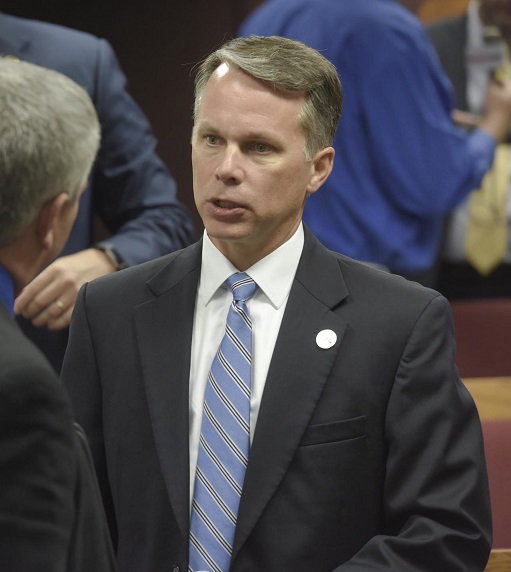
State House Budget Committee members are not pleased with how Governor Greitens’ (R) administration paid for a new prescription drug monitoring program.
The Missouri House Budget Committee (photo; Tim Bommel, Missouri House Communications)
The Governor created the program with an executive order issued in July. It includes a $250,000 no-bid contract with Express Scripts, under which that company provides data to the Missouri Department of Health and Senior Services. The Department uses that data to try to identify prescription drug abusers.
Legislators on the budget committee are frustrated that the administration created and found a way to pay for that program without their input or approval.
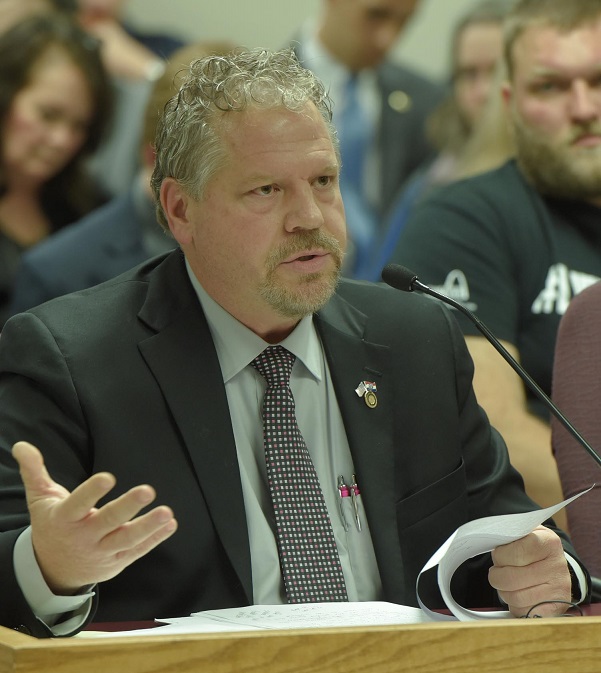
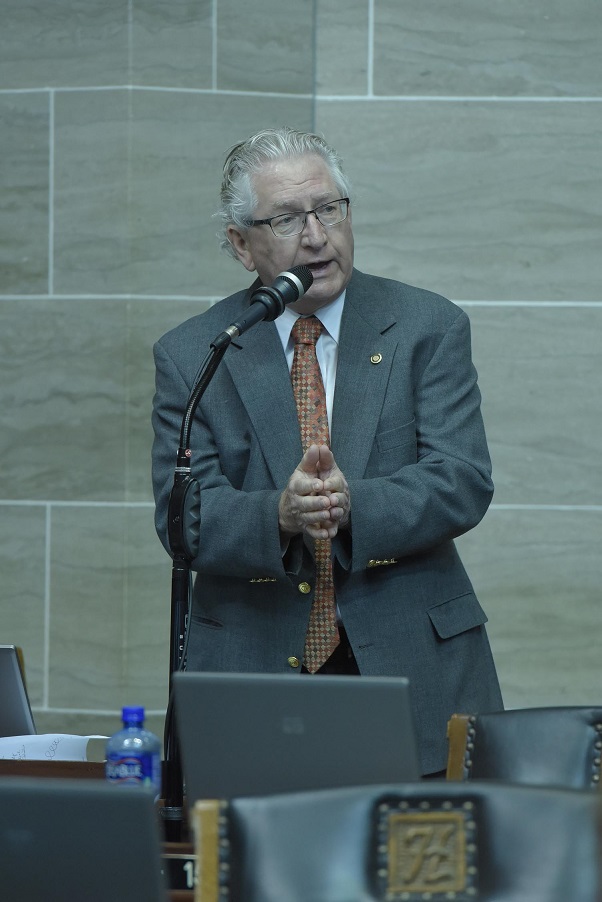
Versailles Republican David Wood said it looks bad for this new program to have been announced at a time when the governor has withheld money from other state programs, and after the legislature refused to fund many things saying the state is in a tight budget year.
The Office of Administration’s budget director, Dan Haug, told legislators the money came from additional federal funds for the Children’s Health Insurance Program (CHIP) that the state had not anticipated it would get. He said the administration was free to use that money as it saw fit, and used it to address what it sees as a crisis: prescription drug abuse.
Yukon Republican Robert Ross said the administration circumvented the legislature’s authority and used money that could have supported other state needs, including some the legislature voted to pay for but that later saw the governor withhold the funding.
Budget Director for the Greitens’ Administration, Dan Haug, took the brunt of criticism from House Budget Committee members over how the administration paid to create a prescription drug monitoring program. (photo; Tim Bommel, Missouri House Communications)
Criticism came from both supporters and opponents of prescription drug monitoring with those on both sides saying their problem was not with the program the governor launched, but with how he launched it.
It also came from both political parties.
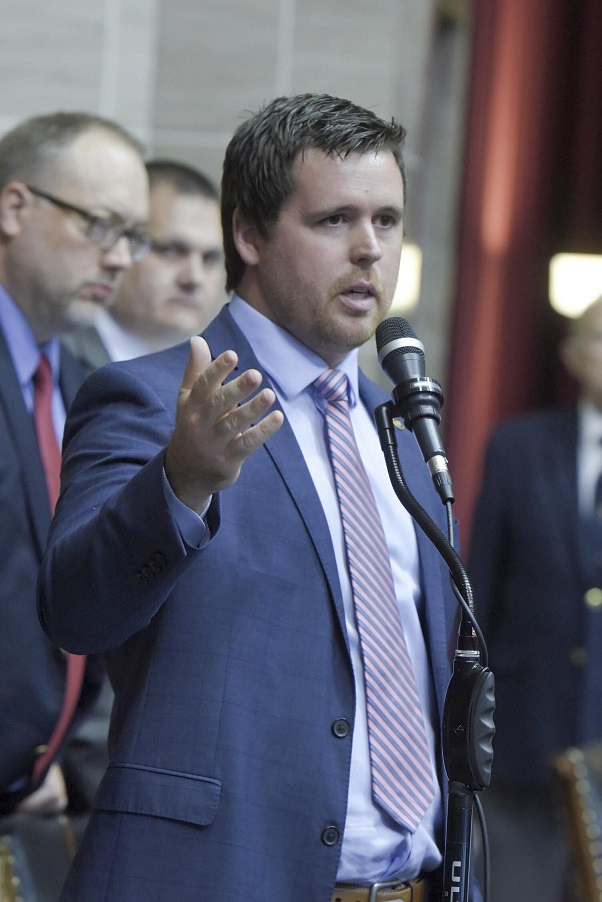
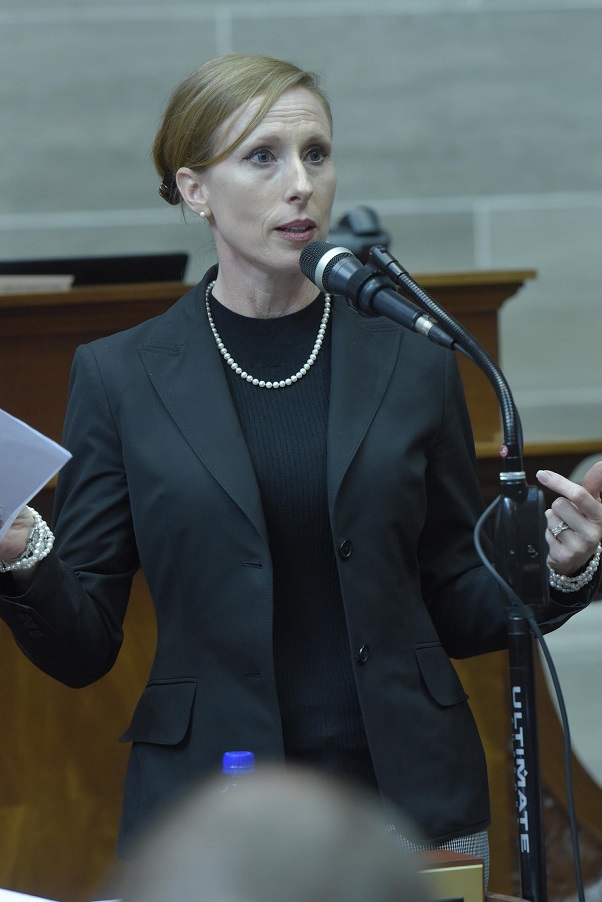
Springfield Democrat Crystal Quade told Haug it was “extremely frustrating” that CHIP money was used in a way that the legislature had no say in.
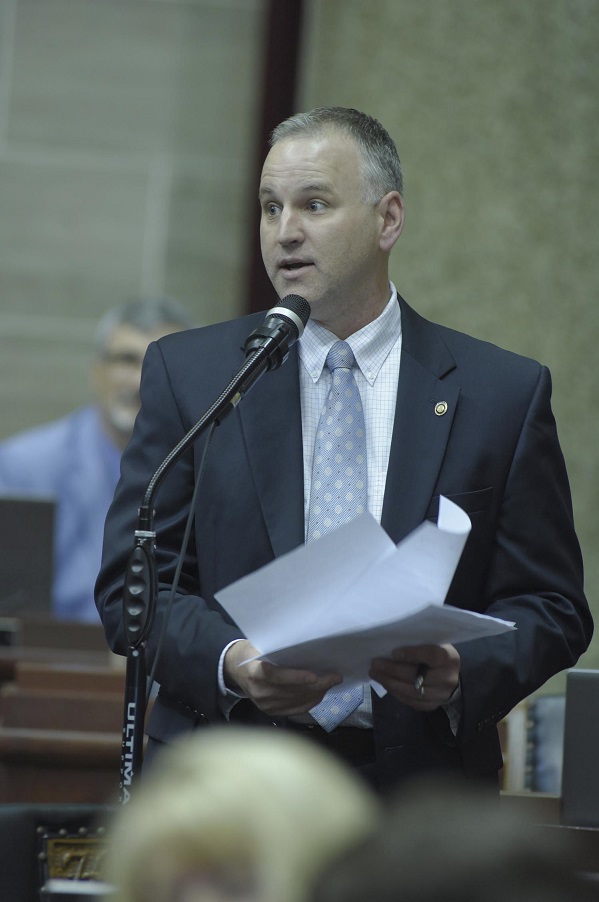
House Budget Committee Chairman Scott Fitzpatrick (R-Shell Knob) suggested the administration should not move forward with its drug monitoring program, and to instead bring it as a proposal to the legislature during the next budget process. He urged administration officials to halt the transfer of that CHIP money to pay for the program, and to not sign a contract with Express Scripts.
Members of the state House Budget Committee have told the Greitens Administration they aren’t pleased with how it paid to keep operating metal detectors in the State Capitol.
House Budget Committee Chairman Scott Fitzpatrick (photo; Tim Bommel, Missouri House Communications)
The state legislature passed a budget that approved paying for additional police officers to patrol the Capitol while the metal detectors, which were installed shortly before Eric Greitens (R) became governor, would be removed. Greitens’ administration has paid contract workers to continue operating those detectors using money out of a fund for building maintenance.
Lawmakers on the budget committee expressed frustration not only at how the administration is paying for those contract workers, but also at Greitens’ continued support for using metal detectors.
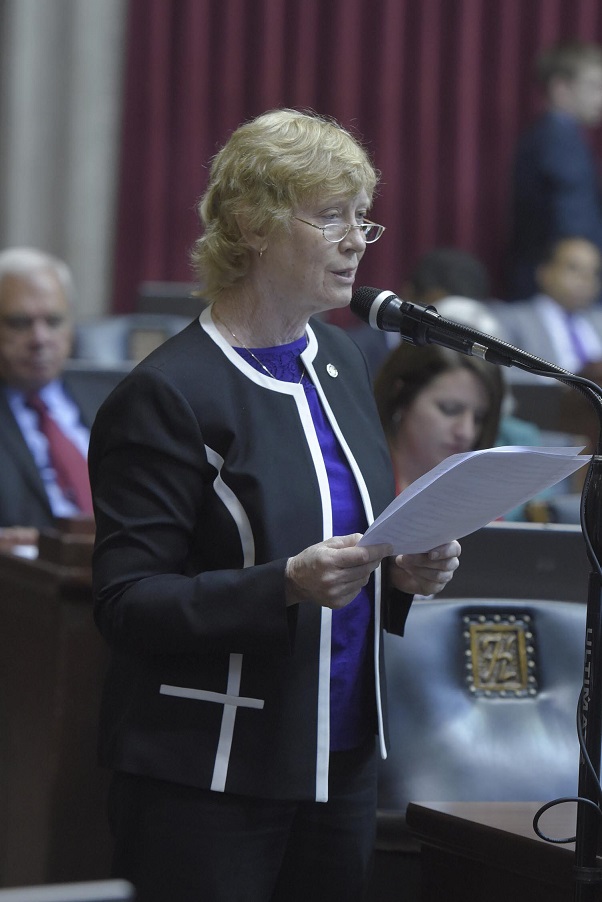
Representative Kathie Conway (R-St. Charles), who chairs the House Appropriations Subcommittee on Public Safety, was critical of the administration’s decision to use money from the maintenance fund to pay to staff the detectors – a step that was done without the legislature knowing about it or approving it.
Not all budget committee members were as upset with the administration’s actions.
Kansas City Democrat Greg Razer asked Greitens’ Office of Administration Commissioner, Sarah Steelman, what would happen if the detectors are removed and an incident occurs at the Capitol.
Sarah Steelman is the Commissioner of the Office of Administration, under the administration of Governor Eric Grietens. She testified to the House Budget Committee that the administration wants to keep metal detectors in the Capitol. (photo; Tim Bommel, Missouri House Communications).
Fitzpatrick said he is, “somewhat indifferent,” about the metal detectors being in place, but he remains frustrated about the administration funding the staffing of those without the legislature’s approval.
He did say he does not want to see Capitol Police officers staffing those detectors after the legislature approved money for more officers to be hired so the Capitol halls would be patrolled.
The Missouri legislature did not act to override any of Governor Eric Greitens’ (R) vetoes of its legislation in the veto session that began Wednesday at noon.
Representative Deb Lavender came up with an earlier version of a “fund sweep” plan when the House was working on a proposed state budget. (photo; Tim Bommel, Missouri House Communications)
The House was asked to consider overriding one veto; that of House Committee Bill 3. That bill would have reduced cuts to reimbursement rates for nursing homes and in-home care providers by taking $35-million from surpluses in multiple state funds. Governor Greitens called the proposal unconstitutional and a one-time fix to a long-term issue.
House and Senate leadership confirmed Wednesday those chambers would work together to create within three weeks a new funding solution to preserve care for the more than 8,000 Missourians who would be impacted by those cuts.
The House voted not to overturn that veto, 49-106, with most Republicans voting to sustain.
Kirkwood Democrat Deb Lavender was the chief architect of the idea of a “fund sweep,” as called for by HCB 3. She made the motion to overturn the veto.
House Budget Committee Chairman Scott Fitzpatrick is charged with representing the House in developing a new funding plan to preserve services for more than 8,000 disabled and elderly Missourians. (photo; Tim Bommel, Missouri House Communications)
House Republicans said voting to override the veto wouldn’t accomplish anything because the wording of HCB 3 gives the Greitens’ administration the option of sweeping those funds, so he could still elect not to do it even if the bill were passed.
If they are successful, the legislature would next be asked to consider voting to call itself into special session to consider that plan. That would require approval by at least three-fourths of the legislators in each chamber.
Democrats were not convinced that the answer is to wait for a new plan to be developed.
The House adjourned with no motions having been made to consider overrides on any other vetoes. The Missouri Senate did not send the House any veto overrides to consider.
The sponsor of Missouri’s new law providing some immunity for those seeking help for overdose victims says he’s achieved all he set out to do, and is looking for other ways to help substance abusers.
Representative Steve Lynch (photo; Tim Bommel, Missouri House Communications)
Senate Bill 501 contained language offered by Representative Steve Lynch (R-Waynesville). It provides immunity to anyone seeking medical help for themselves or anyone else who is overdosing, from crimes including possessing small amounts of drugs; probation, parole, or restraining order violations; and underage drinking.
Lynch said that combined with other laws allowing first responders, friends, and loved ones of abusers to have and administer naloxone – a drug that counteracts opioid overdoses – could save lives. Lawmakers considering the bill heard that often a person will die of an overdose or from drinking too much because others don’t call for help out of fear they will be prosecuted for crimes or face other consequences.
Having sponsored now a series of laws aimed at saving the lives of overdose victims, Lynch is now wondering what the next such issue to tackle might be. He’s meeting with the advocacy groups he’s worked with before in looking for the next steps that could be taken.
Meanwhile, Lynch says there must be an awareness campaign so that people with drug problems know about the laws that have been passed in recent years and can take advantage of them.
The immunity law is often called the “Good Samaritan” law, or “Bailey and Cody’s Law,” for two overdose victims whose parents believe having it in place might have saved their children’s lives.
A state representative has been “frustrated” in his effort to speed up a determination of what happened to 15 Missourians in the Vietnam War. The federal government, meanwhile, is looking for DNA from the families of two of those men.
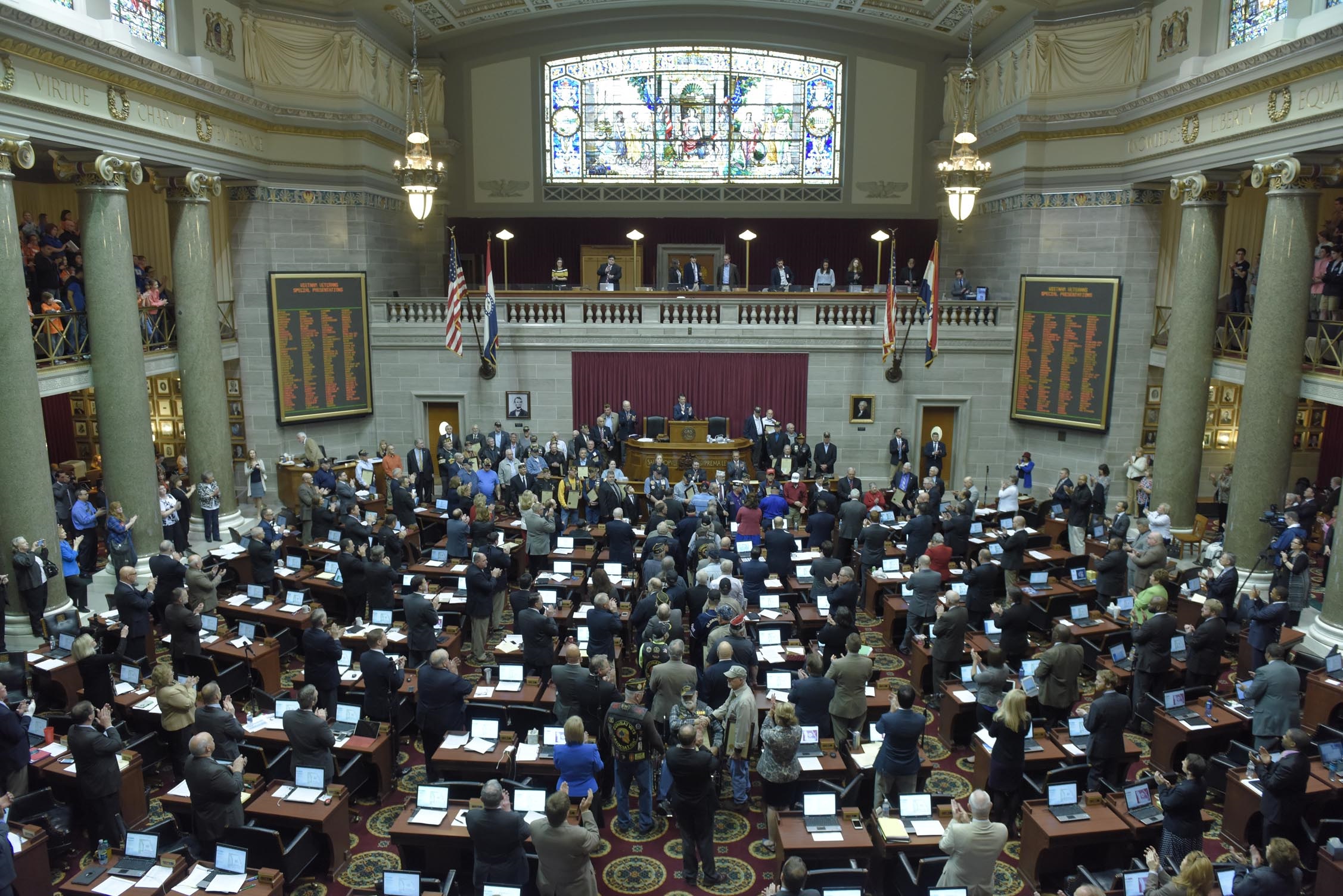
The Missouri House honors Vietnam Veterans with resolutions and a standing ovation, on March 31, 2017. (photo; Tim Bommel, Missouri House Communications)
The legislature in May passed House Concurrent Resolution 35, which asked the federal government to make it a priority to determine what happened to 15 Missouri men presumed killed in that war. This week Missouri House members received a response to that Resolution from Fern Sumpter Winbush, the Acting Director of the Defense POW/MIA Accounting Agency (DPAA).
In a letter Mrs. Winbush summarized the Agency’s efforts to account for the 15 men named in HCR 35 and described the process that goes into learning the final disposition of missing U.S. military personnel. She also noted that the Department has DNA for 13 of those 15 Missourians, to which it can compare DNA from unidentified human remains, but it has no DNA samples for Lieutenant Commander Charles Weldon Marik of Oakland and Captain Dwight Gray Rickman of Joplin.
Read more about Lt. Commander Marik and Capt. Rickman at the bottom of this article
Representative Tom Hurst offered HCR 35 after hearing the story of the family of Private First Class Paul Alfred Hasenbeck, and their effort to find out what happened to him in Vietnam. (photo; Tim Bommel, Missouri House Communications)
Hurst said he is learning what impact efforts such as this resolution actually have when they reach Washington D.C. In this case he said he has received one letter basically acknowledging that HCR 35 has been received.
Hurst said he will look for other avenues to push for resolution in the cases of these 15 men and that could include asking Governor Eric Greitens (R), himself a former Navy SEAL, to get involved.
Hurst said much of that difficulty lies not with the U.S. Government but with the government in Vietnam, where there could be roadblocks to locating remains or belongings or to retrieving some believed to already have been located.
Representative Pat Conway (photo; Tim Bommel, Missouri House Communications)
Meanwhile Conway, Hurst, and other legislators are hopeful that relatives of Captain Rickman and Lieutenant Commander Marik can be found and put in touch with the Marine or Navy casualty offices that could potentially secure a DNA sample from them. Anyone in those families or who knows of them could contact the Missouri House Communications Office, attention Mike Lear, for help.
The other 12 men listed in HCR 35 who fought in Vietnam and are presumed dead are: Private First Class Paul Alfred Hasenbeck, First Lieutenant Steven Neil Bezold, Chief Warrant Officer 2 Donald Martin Cramer, First Lieutenant William R. Edmondson, Private First Class Dickey W. Finley, First Lieutenant Frederick William Hess Jr., Major Carl D. Miller, First Lieutenant Bernard Herbert Plassmeyer, Lieutenant Colonel Dayton William Ragland, Captain Robert Page Rosenbach, Captain John W. Seuell, First Lieutenant George Craig Smith, and Sergeant Randolph Bothwell Suber.
Captain Dwight Gray Rickman
On Christmas Day, 1972, Marine First Lieutenant Dwight Gray Rickman was the observer on an observation plane on a reconnaissance mission over southern Vietnam. During the flight radio contact with the plane was lost and it never returned to base. Search and rescue efforts failed to find the plane or its crew. Years later Rickman was promoted to Captain.
The Department of Defense investigated the case seven times in Vietnam, including the excavation of two possible burial sites, but Rickman’s remains have not been found and he remains unaccounted for.
Lieutenant Commander Charles Weldon Marik
On June 25, 1966, Navy Lieutenant (Junior Grade) Charles Weldon Marik was the bombardier/navigator on a fighter jet flying a combat mission over northern Vietnam. The plane was hit by enemy fire and both Marik and the pilot ejected over the South China Sea. The pilot was recovered but Marik was never found. He was later promoted to Lieutenant Commander.
In the 1990s, Department of Defense teams met with residents of coastal villages in case anyone remembered Lieutenant Commander Marik’s remains washing ashore. No evidence to that end was found and he is believed to have been lost at sea.
A recent report from Missouri Auditor Nicole Galloway (D) found that former governor Jay Nixon (D) overspent on his office and used taxpayer money for personal food and security.
House Budget Committee Chairman Scott Fitzpatrick (photo; Tim Bommel, Missouri House Communications)
The audit said Nixon delayed paying bills and shifted costs to other government agencies – practices legislative budget makers in both parties often criticized Nixon for.
The audit found that, for example, flights by Nixon or his staff were paid for by the Department of Economic Development, though not all business on those flights was related to DED and Department officials often weren’t on those flights.
Fitzpatrick, who began serving as budget chairman in August, 2016, said this year’s state spending plan aims to prevent future governors from using similar tactics.
Those changes were made under a Republican-controlled legislature even though a Republican – Eric Greitens – is now governor. Fitzpatrick said he wants to see all future governors prevented from similar uses of state dollars.
Fitzpatrick said Governor Greitens’ staff was very “cooperative” in making those changes in the budget, and he hopes the Greitens administration will never get to the point at which the legislature must respond to inappropriate use of state dollars.
Fitzpatrick believes the state Constitution is clear regarding how the governor’s office can and cannot use tax dollars. He thinks previous budget chairmen and legislatures were not stern enough in taking Nixon to task over the practices found in the audit.
Missouri now has a prescription drug monitoring program but it’s not the kind of program one state legislator has been proposing for years, and she says hers is still needed.
Representative Holly Rehder (photo; Tim Bommel, Missouri House Communications)
Representative Holly Rehder (R-Sikeston) calls the PDMP Governor Eric Greitens (R) launched Monday with an executive order, “outside the box thinking,” that will, “work really well.” She said Missouri counties should not, however, stop pursuing a program like the one she has promoted.
Prior to Monday, Missouri was the only state without a PDMP. Such programs aim to fight opioid addiction and “doctor shopping;” the visiting of multiple doctors while attempting to obtain as much as possible of drugs to be abused.
Greitens on Monday directed the Department of Health and Senior Services to track the prescribing and dispensing of schedule II-IV controlled substances. It will look for cases in which such drugs are being inappropriately prescribed or dispensed.
Unlike with Rehder’s proposed plan that data will not be available to doctors so they can look for signs of abuse and act to, among other things, offer help to abusers.
Several counties in Missouri, St. Louis County being the first, have adopted their own monitoring programs that are more like those proposed by Rehder. She said since Monday she has been working to urge other counties not to back down from plans to adopt a program like St. Louis County’s.
Rehder said around 60-percent of Missouri’s population is already living in an area that has a monitoring program. She plans to keep urging counties to adopt one, and depending on the success of that effort, she might again propose legislation to create a statewide monitor when the legislature is in session in 2018.
Missourians can keep using state licenses at federal facilities and airports through October 10, but it could be up to two years before Real ID compliant Missouri IDs are available under a law effective next month.
Representative Kevin Corlew (photo; Tim Bommel, Missouri House Communications)
The federal Real ID Act was passed after the September 11, 2001 terrorist attacks. Missouri in 2009 adopted a law barring compliance with that Act based on concerns about citizens’ privacy because the Act required them to produce source documents to be stored electronically.
The federal government granted an extension giving the state through October to comply with the Real ID Act. Governor Eric Greitens (R) signed into law last month a bill that would give those Missourians who want Real ID compliant licenses the option of getting one.
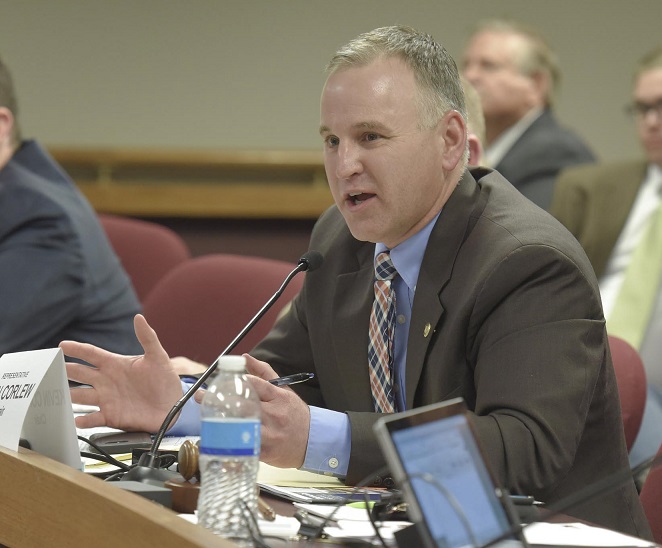
The bill’s sponsor, Kansas City Republican Kevin Corlew, said Missouri will continue seeking federal extensions until everything is in place to make compliant IDs available. He said in considering further extensions the Department of Homeland Security will look for evidence that Missouri is moving toward compliance, and the beginning of implementation of House Bill 151 will provide that.
Missouri will need to seek another waiver by January, or at that time current Missouri licenses would not be accepted to get through federal security.
Eventually Missourians who want or need to be able to get through federal security will have to have Real ID compliant licenses. HB 151 lets those Missourians get such IDs. Those who don’t need them won’t have to go through the Act’s more stringent proof-of-identity requirements if they don’t want to.
Corlew said it’s not clear how soon compliant Missouri licenses will be available.
Corlew said there’s nothing Missourians need to do or be concerned about right now, but said those with further questions should contact their local representative or senator, or the Department of Revenue.
The state budget that went into effect July 1 could lead to fewer impaired driving checkpoints but more periods of increased law enforcement presence on Missouri roads.
Representative Scott Fitzpatrick (photo; Tim Bommel, Missouri House Communications)
Under language the House proposed no money controlled by that budget can be used on checkpoints. Specifically, $20-million available for grants that law enforcement agencies have used to fund various efforts now cannot be used for checkpoints.
Supporters said data from the Department of Transportation show that periods of having more officers on the roads, often called “saturation efforts,” get more results for the money invested.
MODOT reported that in the year that ended July 1, 2016, saturation efforts resulted in 3,055 arrests at a cost of $704 per arrest, compared 1,201 arrests at checkpoints at a cost of $1,047 per arrest. Over the three years through July 1, 2016, saturation periods yielded 9,288 arrests at $704 apiece compared to 4,152 arrests at checkpoints costing $919 each.
A comparison by House staff of states in which checkpoints are legal with states in which they are not found that the latter had a slightly lower number of drunk driving fatalities per capita.
House Budget Committee Chairman Scott Fitzpatrick (R-Shell Knob) said the new language was about making the most effective use of Missouri budget dollars and taking the most effective action toward making roads safer.
Representative Kathie Conway (photo; Tim Bommel, Missouri House Communications)
The prohibition was strongly opposed by St. Charles Republican Kathie Conway, who chairs the budget subcommittee on Public Safety. She argues it’s misleading to say saturation patrols yield more arrests.
Conway said saturation efforts and checkpoints work together, first by publicizing checkpoints on social media and traffic announcements.
From now through June 30, 2018, Missouri law enforcement agencies can still conduct checkpoints, but would have to pay for them through means other than these grants.
A legislature-created task force has held its first hearing toward the goal of finding a long-term solution for Missouri’s need for transportation funding.
Representative Kevin Corlew (photo; Tim Bommel, Missouri House Communications)
The 21st Century Missouri Transportation System Task Force was created by the adoption of HCR 47, offered by Kansas City Republican Kevin Corlew. He chairs the Task Force.
The task force heard a presentation from the Director of the Department of Transportation Patrick McKenna in which he outlined the funding issue facing the state’s transportation system.
McKenna also reiterated what many lawmakers already know about Missouri’s bridges – many are in need of repair. He said about 1,300 have restrictions on how much weight can be on them because of their condition. 866 more bridges are considered to be in “poor condition.”
Missouri Department of Transportation Director Patrick McKenna (photo; Tim Bommel, Missouri House Communications)
Task force members and those who testified, not including McKenna, shared the opinions that have framed the transportation funding debate in recent years. Some spoke for or against increasing Missouri’s motor fuel taxes. Others spoke about other possible solutions such as different ways of utilizing the tax money the Transportation Department already receives. Still others commented on the possibility of public-private partnerships and tolling.
Ron Leone, the executive director for the Missouri Petroleum Marketers and Convenience Store Association, told the committee he didn’t expect it to come up with any new possible solutions beyond those that have been debated before.
Corlew said one reason he proposed this task force was because the legislature wasn’t making much progress towards a transportation funding solution in recent sessions.
Corlew intends for the task force to have proposals ready for consideration by the legislature in its 2018 regular session. It will hold more sessions throughout the state in the next few months.