Missouri House Republicans spoke to reporters and fielded questions after the House wrapped up work for the week.
House Democrat Media Conference 02-27-2025
Missouri House Democrats spoke to reporters and fielded questions after the House wrapped up work for the week.
Restoration of Voting Rights to those on Probation and Parole is Proposed
An effort to allow people on probation and parole to vote has been renewed for a third legislative session.
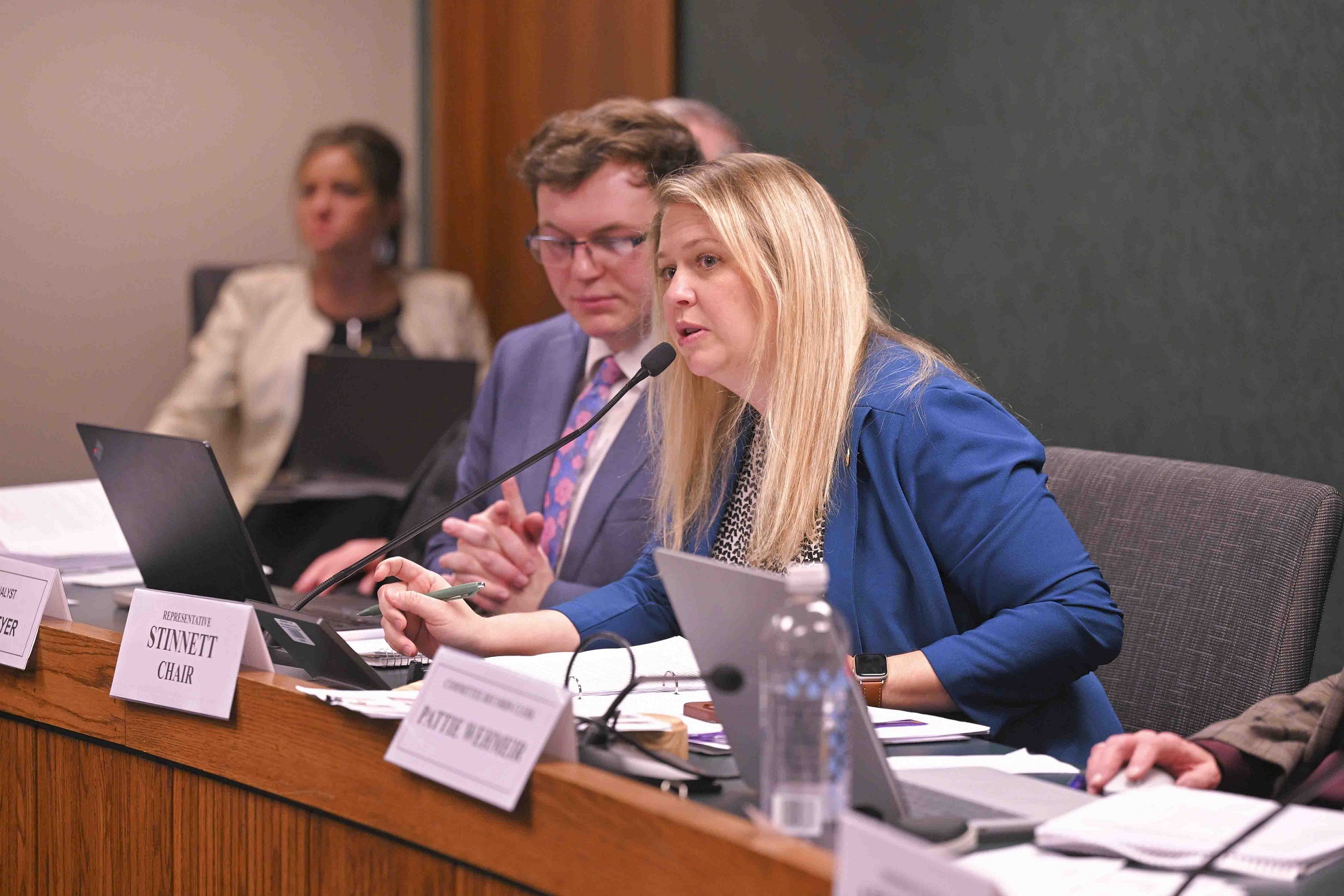
Springfield Republican Melanie Stinnett has filed the language of House Bill 617 since she was first elected. It would lift the prohibition on voting rights for those on probation and parole for a felony conviction, unless their conviction was for a crime related to voting or elections.
“It is, in my opinion, a small bite that makes a big difference,” Stinnett said. “It’s really my belief that we should be hoping that these individuals can reenter our communities and be successful members of our communities, and one piece of that is civic engagement.”
Stinnett’s bill has received broad support in the past two years, despite falling short of becoming law. She agreed to carry it largely because of an encounter she had while knocking doors during her first run for the House.
A short time later, the man caught up with her.
After meeting several more voters who were in a similar situation, and some thought and reflection, Stinnett said she was quick to agree to carry the proposal.
“I said you don’t even have to sell me on it. I saw the impact in my community and I think it’s a worthwhile bill to carry and look into, and so we’ve really pushed it pretty significantly over the past two years,” Stinnett said. “We’re not just talking about voting for president, right? We’re talking about voting for school board, we’re voting for local taxes, we’re voting for city council, and these things that we talk about are impacting our everyday lives. These individuals who have done their time, been incarcerated, and been released don’t have the ability to contribute to their community in that way.”
To exempt those guilty of violating election law makes sense for obvious reasons, Stinnett said, but she has seen no reason to have additional exclusions.
House Bill 617 has not been assigned to a committee. Stinnett is hopeful it will soon begin moving through the legislative process.
VIDEO: House Equality Caucus media conference for 02-20-2025
The legislators of the Equality Caucus spoke to reporters and answered questions.
VIDEO: House Republican media conference for 02-20-2025
House Republicans spoke about the week’s work, previewed legislation to be considered next week, and answered questions.
VIDEO: House Democrats’ media conference for 02-20-2025
Missouri House Democrats spoke to reporters and fielded questions after the House wrapped up work for the week.
Bill to set Marriage Age at 18 clears House Committee
A proposal to eliminate state-recognized marriage for those under the age of 18 has been advanced by a House Committee. Several lawmakers expressed support for the change as a way to protect children, especially from traffickers. Others expressed hesitation about creating a roadblock to young couples who genuinely want to be wed.
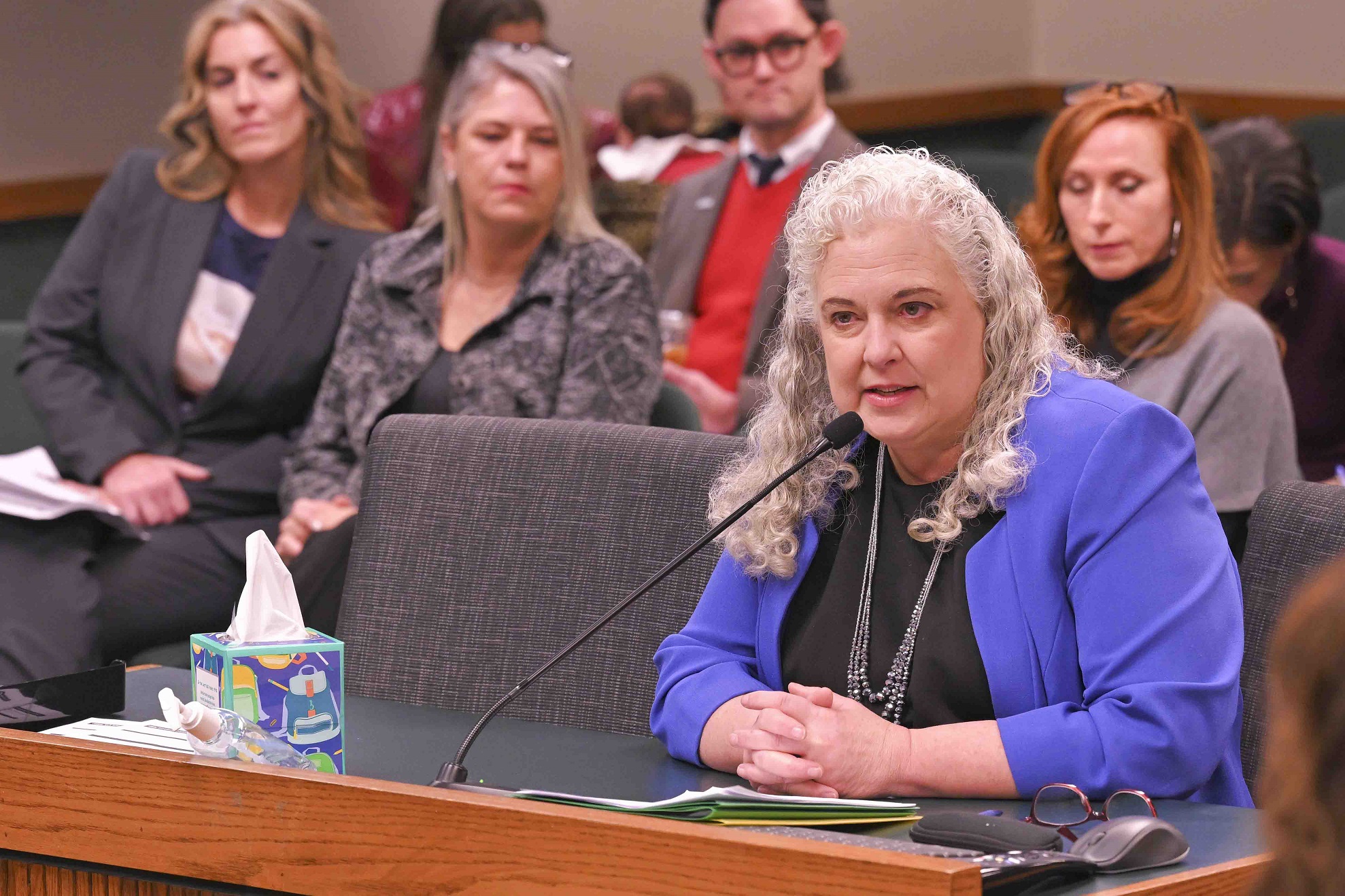
Missouri law was changed in 2018 to allow the issuance of marriage license to those 18 and older, and to those between 16 and 18 with parental consent. No licenses may be issued to couples in which either party is younger than 16.
The sponsor of House Bill 1200, Representative Renee Reuter (R-Imperial), said the 2018 change was an improvement, but it did not go far enough.
“There are problems in Missouri with human trafficking and … marrying young people off is one way to lock them in to sex trafficking for a while,” Reuter told the Committee on Children and Families. “We have to protect people from being trafficked, and so because of that I think we need to look at the law a little differently and I think we need to protect these women, mainly women, who are being damaged by the marriage laws that we have today.”
She said people who get married younger than 18 are trapped.
“One cannot get divorced in the State of Missouri until you’re over 18, so should you get married at 16, you’re stuck in that marriage because there’s no way to divorce until you’re 18,” added Reuter, who is an attorney.
Reuter cited the stories of women who married when younger than 18 and found themselves in situations of abuse from which they couldn’t escape.
Some on the committee expressed opposition, saying they know people who were wed when younger than 18.
“I have multiple friends who have been married at 16, 17 years old and have amazing marriages,” said Representative Mike Costlow (R-Dardenne Prairie), but he said that was only part of his objection. His greater concern, he said, was about legal recognition for young families.
Some, like Carthage Republican Cathy Jo Loy, wondered whether the legislation could include an exception for marriages that are not in some way coerced.
Representative Ann Kelley (R-Lamar) said HB 1200 could result in a law that misses its target.
Upon hearing those concerns, Reuter suggested that her colleagues consider another way to look at such situations.
Ozark Republican Jamie Gragg said the bill is in line with what has been the focus of the Committee on Children and Families in recent years.
The Committee’s top Democrat, Raychel Proudie (Ferguson), said there are parallels between what this bill seeks to address, and the fact that judges in Missouri typically refuse to finalize a divorce if one party in the marriage is pregnant. That has effectively prevented pregnant women in abusive relationships from being able to divorce their partner.
Proudie is one of the sponsors of a bill to deal with that situation, which was recently advanced by the Children and Families Committee.
Committee chair Holly Jones (R-Eureka) illustrated a further point in support of HB 1200. She asked Reuter, “Is there another contract that we can enter into under the age of 18 that’s legally binding?”
“I am not aware of any,” Reuter said.
A Senate version of this legislation made it to the House in April last year but did not reach the Governor’s desk.
In spite of the concerns that were voiced, HB 1200 was passed out of the committee with a 15-0 vote. The legislation now goes to another committee which could vote to send it to the full House.
VIDEO: Bills would require Cardiac Emergency Response Plans in Schools
Representative Sherri Gallick (R-Belton) spoke to members of the media this morning about House Bill 232, her proposal to require public schools to have plans for personnel to respond to cardiac arrest incidents. Also speaking were Senators Tracy McCreery (D-St. Louis County) and Kurtis Gregory (R-Marshall), who have sponsored the same measure in their chamber.
Video Credit: Missouri Senate Communications
VIDEO: House Members Threaten Budget of State Public Defender over Hiring of Man Convicted in Relation to Stepdaughter’s Murder
Some members of the House Budget Committee said on Thursday they would vote down the entire state Public Defenders Office budget requests if that agency continues to employ a man convicted of two felonies in relation to the murder of his 9-year-old stepdaughter.

“How can anybody say that employing this man and providing him with a good future in some fashion furthers the interest of justice for Rowan Ford, a 9-year-old child who died violently while her stepdad stood back and kept his mouth shut? How does that further the interest of justice for that child?” asked Representative Lane Roberts (R-Joplin), the House’s Assistant Majority Floor Leader, who was sitting with the committee as an ex-officio member.
The man to which he referred is David Spears, who in 2012 pleaded guilty to endangering the welfare of a child and hindering prosecution in the 2007 murder of his stepdaughter, 9-year-old Rowan Ford, in the southwest Missouri village of Stella. He at one time confessed to raping and murdering Ford along with another man and to helping hide her body, but evidence and the other man’s confession contradicted his description of events, and defense attorneys contested the confession as allegedly having been coerced. Prosecutors later withdrew their original charges against him, and he accepted a plea agreement on the lesser charges.
That other man, Christopher Collings, was executed by lethal injection in December at the state prison near Bonne Terre.
Spears was released from prison in 2015 and in 2016 was hired by the Public Defender’s office. After a period during which he was not employed by the public defenders, he was rehired in 2020 and continues to work out of its West Plains bureau.
“He’s got a paycheck, he’s got benefits, and he’s got a future, which Rowan Ford does not because she’s dead, and the idea that he is being paid for at public expense; tax dollars paid for by Rowan Ford’s mother, Rowan Ford’s extended family, Rowan Ford’s classmates, Rowan Ford’s teachers, and the police officers who had to investigate that horrible crime are all paying David Spears’ salary.”
Rep. Lane Roberts
The Secretary of State’s Accountability Portal website shows David Spears is a secretary employed by the judiciary (the Office of Public Defender is an independent department of the judiciary), and that last year he made $40,842.00.
Shortly after the Public Defenders’ Director, Mary Fox, began her presentation to the committee for her agency’s budget requests, she was met with outrage from committee members over Spears’ employment.
Chairman Dirk Deaton (R-Seneca) read a summary of the case and then asked Fox, “So in the opinion of, and perhaps yourself, but certainly the human resources manager, the general counsel, the division director, the immediate public defender hiring authority, and the deputy director, it was their belief that these offenses – felony child endangerment leading to the death of a 9 year-old girl, obstruction of justice, hindering of prosecution – wouldn’t impact the individual’s ability to represent the agency effectively?”
Fox responded to that question by saying that she cannot discuss a personnel matter in a public hearing, but as the hearing continued, she defended Spears’ hiring, saying that the agency and Missouri believe that “people with criminal convictions should be able to be employed, even by the state.” She said there was doubt as to what Spears’ role in the crimes against Rowan Ford was and said he has performed well in his job.
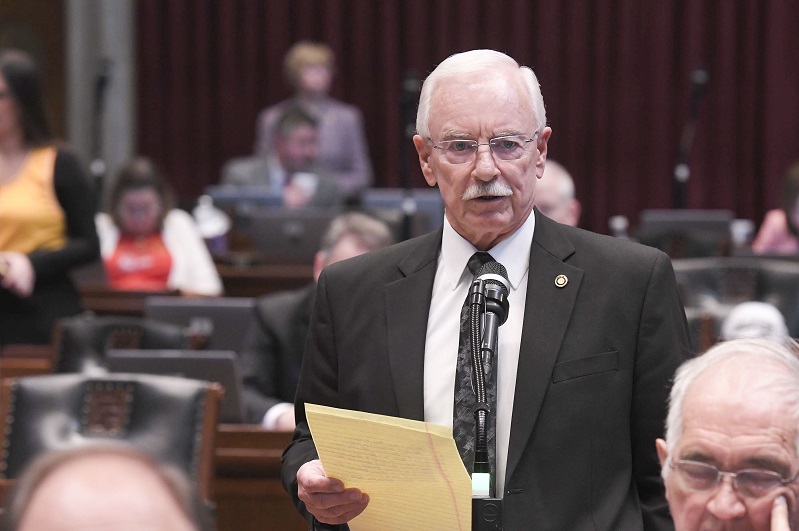
As the exchange progressed, Deaton told Fox, “I believe people deserve second chances and … people deserve to live their lives and go on. Not everybody deserves to work for state government. That would be my firm belief and position. Nobody’s owed a taxpayer job and a salary, and this is just one of the worst lapses in judgement I have ever seen.”
Deaton told her, “Well, Miss Ford certainly deserved to live, and she didn’t get that opportunity.”
Deaton then gave the floor to Representative Roberts, who was the Chief of the Joplin Police Department when Rowan Ford was murdered and during the subsequent investigation.
“We as an agency, and I think that Missouri as a state, believe that people with criminal convictions should be able to be employed, even by the state.”
Missouri State Public Defender Director Mary Fox
Roberts began by stating his respect for Fox and the work done by her and those in her agency. He then recounted a letter to the Commissioners of the State Public Defender that he penned in December which was also signed by fifteen additional current and former state representatives, including Deaton.
See Rep. Roberts letter to the Missouri State Public Defender here, and click here to see the Missouri State Public Defender Commission’s letter in reply.
Regarding Spears’ employment, Roberts wrote in that letter, “There is no defending this situation. It is wrong by any standard and we are unwilling to accept it.”
Since that letter was sent the Commission did alter hiring practices, and Fox confirmed that the changes are in “direct response” to the letter.
Under the changes, potential new hires will now be subject to investigation for potential conflicts of interest. Roberts and others say there was a conflict of interest in Spears’ hiring, particularly in that he was hired while his one-time co-defendant Christopher Collings was being represented by public defenders.
The other change is that when a background check reveals what Fox called a “bad report,” the Director and the Chair of the Commission must be consulted. Previously, such notification extended only as far as the office’s deputy director.

As to the legislators’ request that Spears employment be terminated, Commission Chair Charles Atwell issued on January 16 a letter to Roberts stating that after a review of Spears’ case and of Missouri statutes governing the office of public defender, “we believe that the authority to terminate employment of a clerical employee is not an express power granted to the Public Defender Commission.”
As the exchange continued, Fox and Roberts disagreed over the circumstances of Spears’ actions in relation to the murder of Rowan Ford. Specifically, Fox contested Roberts’ statement that Spears led authorities to the little girl’s body.
“This is the most ridiculous presentation we’ve heard. It’s embarrassing.”
Rep. Jeff Vernetti
“There’s a lot of details in a case … if you look at the evidence that was presented at the one case that went to trial, the evidence was that they went through the entire area. Some of the places they went, they went with Mr. Spears, but they did not find the body when they were with him. They did go back to many of those areas and one of those areas that they went back to, they did, eventually, find the body. But I would disagree with you, and I think the prosecutor in the case would disagree with you that Mr. Spears took them to the body,” said Fox. “I know that you were involved in law enforcement in the area at the time and were talking with the folks from McDonald and Barry [counties], but I think there was disagreement even among the police officers from Barry County and the police officers from McDonald County. One group felt Mr. Spears was responsible, the other group felt that he was not.”
Roberts told Fox that his concern has nothing to do with the quality of Spears’ work, but that he is employed by the state at all. After their exchange, other members of the committee echoed that sentiment.
Most passionate was Representative Raychel Proudie (D-Ferguson).
“I’m a no on this entire [budget request] book.”
Rep. Raychel Proudie
“I’m shaking, like I’m physically ill, so I’m going to leave after I say this. Let me just say I’m a ‘no’ on this entire book,” Proudie said, referring to the entire budget request from the Office of Public Defender. “With good conscience spirit I can’t go back to District 73 and tell these people that it is okay for us to use their money to pay someone who was complicit and willful even if it wasn’t for the murder, this man stood there with that woman while she was looking for her child.”
Echoing Deaton’s comments about whether Spears’ employment reflects badly on the office, Proudie said, “it does, because I’m going to walk out of here, and when it comes up, if that man is still employed, if I’m elected to something else [in the General Assembly], it will be a ‘no’ on this budget for the entirety of time that the Good Lord sees for me to serve in the legislature, and I mean it. So, if you don’t think it damaged your reputation, it absolutely did. I can’t believe that that was the response that you… I would have rather you sat there and said nothing.”
As to the office’s budget request, Roberts told Fox, “I am angry enough that I am going to ask the chair to consider an amendment during markup. I know you have [a new request to the budget committee] for some additional people. If this is going to be your hiring practices, then I would suggest that we deny that until such time as your policies allow the Commission to weigh in on these decisions and they have the majority vote.”
After her statement, Proudie did something she said she has never done in her seven years as a state representative, no matter how controversial or objectionable she found a subject: she walked out on the hearing. Outside the hearing room, representatives not on the budget committee later commended her for saying what they were thinking as they watched the hearing.
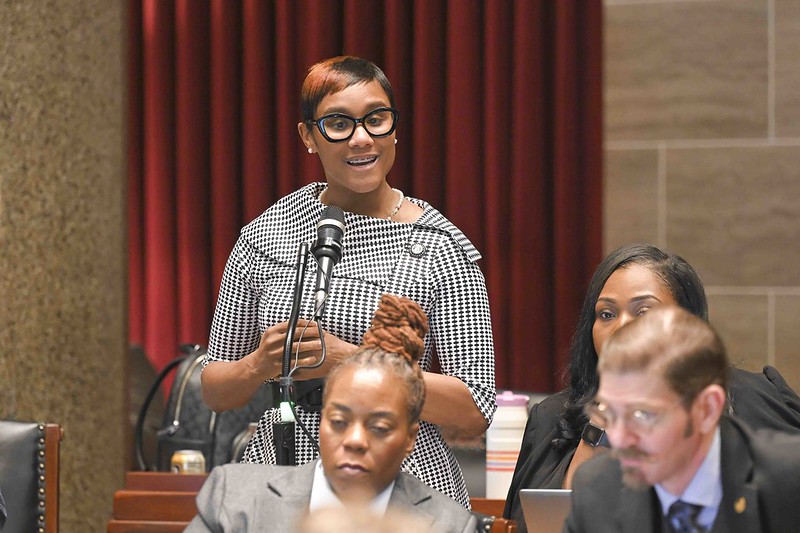
Her departure was soon followed by that of first year legislator, Representative Jeff Vernetti (R-Camdenton), who said, “This is the most ridiculous presentation we’ve heard. It’s embarrassing.”
“As a member of 163 [members of the House], subcommittee that controls [the budget of the Office of the Public Defender], member of budget, I’m a ‘no.’ I’m not even interested in hearing it until this is addressed,” Vernetti said before he, too, walked out of the hearing.
“I just plain don’t care. I don’t care about the reputation of the Public Defenders. I don’t care that he’s doing a good job. He has not, and never will, pay his debt to Rowan Ford.”
Rep. Lane Roberts
Following those remarks, Deaton told Fox she could continue with her presentation, but she asked if it should be continued at another time.
“I don’t want you to just say, ‘No, I won’t consider your budget.’ That’s not fair,” Fox told the committee. “I know you’re angry and I appreciate why you’re angry, and I just want you to think about the fact we experience this anger 80,000 times a year in our jobs, and we have people who do this really hard work, and they deserve your attention. They deserve for you to hear who we are – all of us, not just one person – who we are and what we do, and why it’s so important.”
Roberts and Deaton agreed it would be better to continue the office’s presentation at another time. With the committee’s schedule for next week already set, Deaton asserted that it would likely be two weeks before it could happen.
Deaton cautioned, “If we’re at the same place, say it’s in two weeks, I think we’re probably going to be right back where we are.”
Fox thanked the committee for listening to her, as well as to Deaton and Roberts, and agreed to come back at another time.
House Republicans’ media conference 02-13-2025
House Republicans talked about the week’s work and looked ahead to next week: