House votes to Restore Voting Rights to Those on Probation and Parole

The House has voted to restore the right to vote to people who are on probation or parole for a felony conviction.

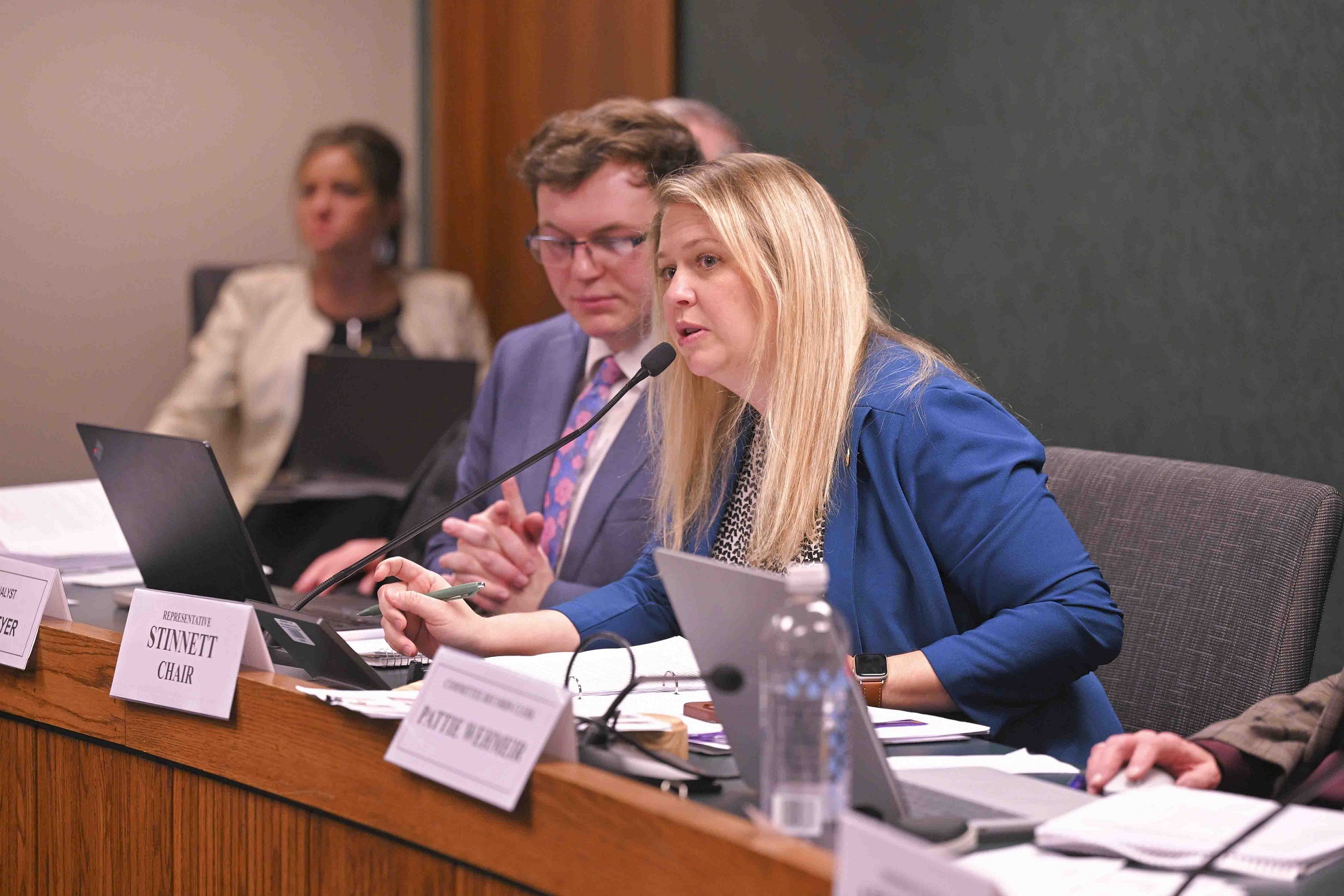
Representatives Kimberly-Ann Collins, Melanie Stinnett, and Marlon Anderson present legislation to restore voting rights to individuals on probation and parole to a House committee. (Photo: Tim Bommel, Missouri House Communications)

Missouri is one of 17 states that withhold the rights of convicted felons to vote until they complete probation or parole.  The proposal would restore that right as long as the person’s crime was not related to voting.

     The idea has bipartisan support and has been proposed by several legislators going back at least eight years.  This latest effort is found in House Bill 2592, sponsored by Representative Melanie Stinnett (R-Springfield)

     “Individuals who are living in our communities, working jobs, paying taxes, raising their children and complying with the terms of their probation or parole are still denied the right to vote,” Stinnett said, when introducing the bill in the House.  “This bill reflects something I believe at my core: we can be firm, but we can also be fair. We can uphold accountability while also supporting successful reentry.”

     Combined with Stinnett’s legislation were House Bills 2834, filed by Representative Kimberly-Ann Collins (D-St. Louis) and 2787, filed by Representative Marlon Anderson (D-St. Louis).

     Collins has championed issues related to corrections and criminal justice since she first came to the House in 2021.

     “Right now with the Department of Corrections, we have a little bit over 53,000 individuals that are under the supervision of the Missouri Department of Corrections by way of probation and parole, and this bill really does scream to the fundamental rights, the individuals who are paying taxes, have reintegrated into society. It gives that full idea that they should be able to participate in activities such as voting,” Collins said. 

     Anderson has proposed this change in each of his six years in the legislature.  He says he believes in this largely because of what he experienced while working as a probation and parole officer. 

     “I met a person that was probably about 65 years who did 30 years in [Jefferson City Correctional Center], and he was on life supervision, and given the fact that he was on life supervision, he wasn’t able to vote. This was actually one of the first bills that I filed six years ago about that, to give people the opportunity to get their rights restored. I believe if you have [done] your debt to society, you should have all your rights restored,” Anderson said. 

     “We have to stop ostracizing those who have been convicted of a crime once they are fully rehabilitated and if they’re good enough to come home and work and pay taxes, they should be able to vote.”

     This was the first proposal Stinnett ever filed, and like Anderson, she has been offering it ever since.  She said it resulted from an experience she had while knocking on doors during her first campaign.

Representative Melanie Stinnett said it was an encounter with someone she met while running for the House for the first time that prompted her to make this the first proposal she filed. (Photo: Tim Bommel, Missouri House Communications)

“I ran into one door where a gentleman was very upset, yelled at me, slammed the door in my face, and it was pretty unsettling because that’s pretty uncommon. I got about six houses down, I was speaking with a woman on her porch, and when I turned around from her porch, this gentleman was waiting on the sidewalk for me. As I got closer to him, I could see he was teary-eyed and he said, ‘I’m so sorry I treated you that way, I shouldn’t have done that, but I can’t vote.’ And it really bothered me, and he told me his story, and this impacted him. And that really planted a seed for me, and it wasn’t until later after I won my election and started talking with people about bills I was planning to file that this bill came up, and people didn’t even have to really pitch me on it. I saw how it impacted him and what it meant to him to have civic engagement in his community, and so as I said, this was the first bill I ever filed.”

     Another representative who has filed such legislation, LaKeySha Bosley (D-St. Louis), said for it to be passed out of the House, and early enough in session to give it a realistic chance of clearing the Senate as well,  gives her hope. 

“This is one of the main reasons that I actually ran for office in the first place,” Bosley said.  “This is something that would eliminate that barrier for [those] who are on papers, but regardless they have served their time. This will help them become good stewards of society and engage in their civic duty, and quite frankly, I think that it may make them more engaged.”

     Stinnett agreed, “I think when we have people that they’re your neighbors, they’re living next door to you, they’re paying taxes, their kids are going to our schools and, as much as we put a high importance on voting for president, these people can’t vote on school boards.”

“We want them to be invested in those things. We want them to feel a part of the community, and what I think the data shows is that they are then, when they are more engaged in their community, less likely to reoffend.”

     The House voted 107-36 to send that legislation to the Senate.

Restoration of Voting Rights to those on Probation and Parole is Proposed

      An effort to allow people on probation and parole to vote has been renewed for a third legislative session. 

Representative Melanie Stinnett (Photo: Tim Bommel, Missouri House Communications)

      Springfield Republican Melanie Stinnett has filed the language of House Bill 617 since she was first elected.  It would lift the prohibition on voting rights for those on probation and parole for a felony conviction, unless their conviction was for a crime related to voting or elections.

      “It is, in my opinion, a small bite that makes a big difference,” Stinnett said.  “It’s really my belief that we should be hoping that these individuals can reenter our communities and be successful members of our communities, and one piece of that is civic engagement.”

      Stinnett’s bill has received broad support in the past two years, despite falling short of becoming law.  She agreed to carry it largely because of an encounter she had while knocking doors during her first run for the House.

“I actually knocked on a door of a gentleman who was really upset that I was there knocking on his door and slammed the door in my face, wasn’t very happy with me, which is pretty uncommon when you’re door knocking, actually.  People are generally pretty kind.”

A short time later, the man caught up with her. 

“He was kind of teary eyed and he apologized and said, ‘I’m really sorry for how I responded but I can’t vote and it really just bothered me,’ and we had a great talk but he was in one of these situations where he had been previously incarcerated, was on probation and parole, and was unable to vote, but he is a member of our community and he is working and living in our community and it really bothered him that he didn’t have the ability to vote.”

      After meeting several more voters who were in a similar situation, and some thought and reflection, Stinnett said she was quick to agree to carry the proposal.

      “I said you don’t even have to sell me on it.  I saw the impact in my community and I think it’s a worthwhile bill to carry and look into, and so we’ve really pushed it pretty significantly over the past two years,” Stinnett said.  “We’re not just talking about voting for president, right?  We’re talking about voting for school board, we’re voting for local taxes, we’re voting for city council, and these things that we talk about are impacting our everyday lives.  These individuals who have done their time, been incarcerated, and been released don’t have the ability to contribute to their community in that way.”

      To exempt those guilty of violating election law makes sense for obvious reasons, Stinnett said, but she has seen no reason to have additional exclusions.

      “To draw a line somewhere I think for me is a challenge, because I want everyone to have the opportunity to be reinvested in their community and I don’t want to be the one kind of deciding exactly where that line is drawn.”

      House Bill 617 has not been assigned to a committee.  Stinnett is hopeful it will soon begin moving through the legislative process.