Subcommittee on harassment in Corrections Department frustrated by Department’s structure, process

A House subcommittee appointed to investigate harassment and retaliation in the Department of Corrections thinks how the Department handles allegations is not clear, at best.

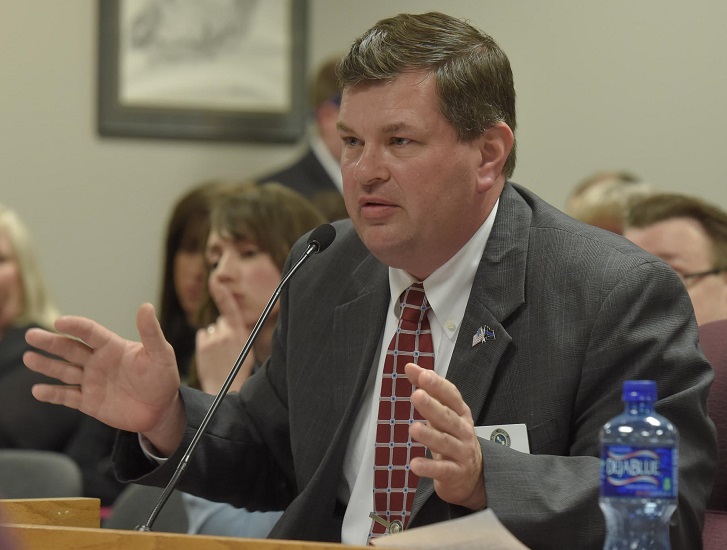
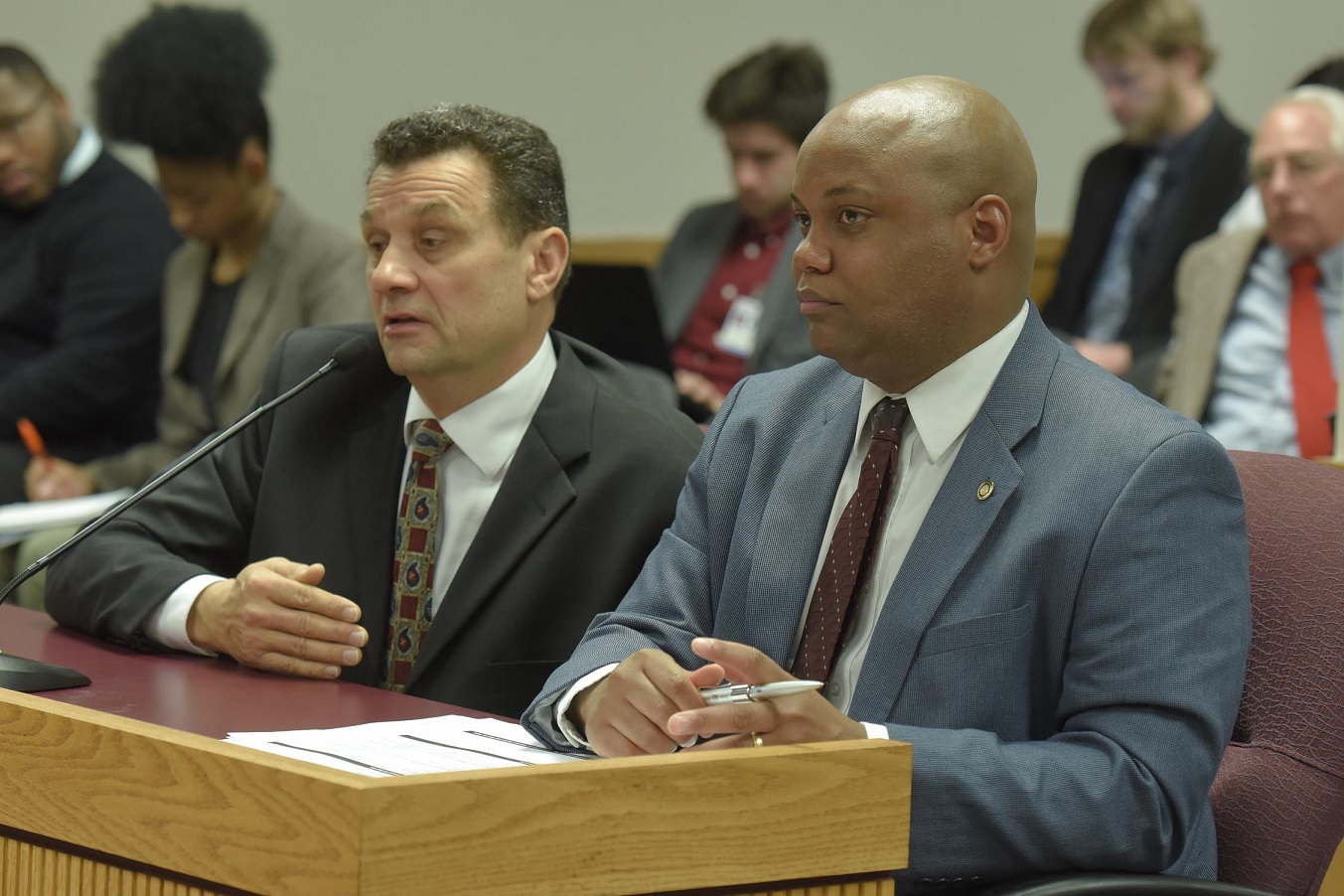
Representatives Paul Fitzwater (left) and Bruce Franks listen to testimony during a hearing by the Subcommittee on Corrections Workforce Environment and Conduct. (photo; Tim Bommel, Missouri House Communications)

The Subcommittee on Corrections Workforce Environment and Conduct was formed in response to an article on Pitch.com that detailed incidents within the department that in some cases led to lawsuits, costing the state millions of dollars.

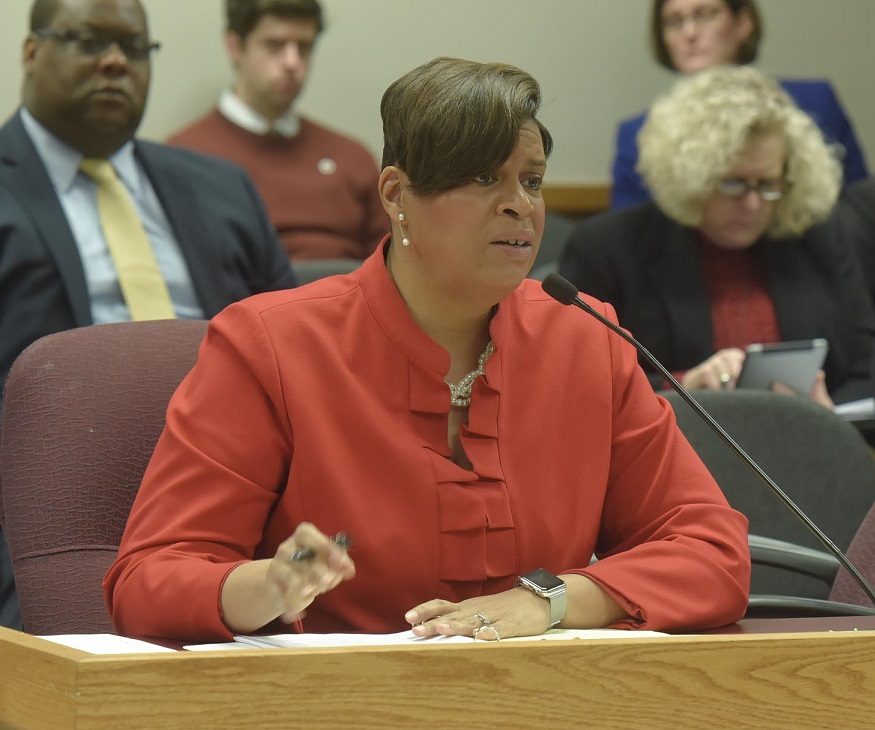
The subcommittee took testimony from the department’s Inspector General, Amy Roderick, and the Division of Human Services Director, Cari Collins.  Representatives asked questions about who handles harassment allegations and who makes decisions about any disciplinary actions that might be the result of those allegations.  They weren’t satisfied with what they heard, with members calling the Department’s administrative structure “confusing.”

“It appears to be a shell game to me in terms of where it goes, where it doesn’t go, who has a say in when it goes,” said subcommittee chairman Jim Hansen (R-Frankford).

Collins told the committee staff in her division deals with reports of harassment, and she was not aware of any complaints about how harassment had been handled.

“I don’t know of any examples where it wasn’t taken care of,” said Collins.  “Whenever anything is reported to us, we investigate it.  What is done with that investigation is not determined by human resources.”

She said decisions about discipline of most prison employees, including terminations, falls on the Director of the Division of Adult Institutions, Dave Dormire, who answers to the Department Director.

Collins told the committee changes have been made in the past five years in her division’s procedures and its number of staff members that conduct investigations.  She said some changes also followed meetings involving legal counsel, about the number of harassment complaints and resulting settlements.

“We increased the number of ways that an employee can report allegations, the number of people they can report it to, we also expanded the definition of what needed to be reported,” said Collins.  “We added unprofessional conduct because for a supervisor or even a CAO, we don’t want them trying to figure if something might be discrimination, harassment, or retaliation.  If it’s unprofessional we want them to send it up.  HR will look at it and make that determination … that’s one of the reasons the number of reports have increased, because we’ve expanded the definition of what needs to come to us.”

Representative Jim Hansen chairs the House Subcommittee on Corrections Workforce Environment and Conduct. (photo; Tim Bommel, Missouri House Communications)

Roderick told the committee her office does not handle harassment, but would investigate anything with a criminal component to it such as assaults.  The committee asked her if she was familiar with an incident described in the Pitch.com article in which an employee who had complained about harassment was allegedly poisoned when she returned to work.  Roderick said she had read the article, but had no knowledge of the incident.

Roderick said it would have been up to the Chief Administrative Officer (CAO), more commonly called the warden, of an institution whether to notify her office of such an incident.

“So she could be poisoned on the grounds of the institution and there’s a warden out there that didn’t think that needed to go up the chain,” said Representative John McCaherty.

“It could happen,” Roderick told the committee.

The Department’s structure frustrated many of the lawmakers on the committee.

“We have an investigative body that’s technically not allowed to investigate everything,” said Representative Bruce Franks (D-St. Louis City), referring to the poisoning case not being referred for investigation by the warden at the institution where it took place.  “I don’t like to speculate but I’m pretty sure this isn’t the only case.  And so the checks and balances, they aren’t there.”

Franks expressed frustration at what the two Department officials explained about how allegations are handled, and passed among different parts of the Department’s organization.

“We bring two directors here, or two professionals here … but it really seems like it’s just passing the buck, or saying, ‘Oh well, we don’t do this.  This person does this,’ and I just want to get the person in here who we need to be talking to,” said Franks.  “It seems like we just need to cut a bunch of positions and provide more compensation for our correctional officers.”

“The objective of this board is to get to the bottom of it and help,” Franks added.  “At the end of the day we just want it to be better, especially for our employees.”

Hansen said one of the subcommittee’s goals is to learn about how the Department is structured.  After that hearing he expects one of the subcommittee’s recommendations will be that Corrections’ process of handling all types of complaints be streamlined.

The subcommittee is expected to hold its next hearing Thursday morning.

New Corrections head to House budget makers: hold off on talk of a new prison

Some state lawmakers have questioned whether Missouri will soon need another prison, but the prison system’s new director hopes to keep that from being necessary.

Missouri Department of Corrections Director Ann Precythe testifies to the House Budget Committee February 14, 2017. (photo; Tim Bommel, Missouri House Communications)

House Budget Committee Chairman Scott Fitzpatrick told his committee and Corrections Department leaders this week that he’s concerned about the overall trend in recent years, of an increase in Missouri prisons’ populations.  Department staff said the state’s prisons are operating at or near capacity, with around 32,000 inmates.

Fitzpatrick referenced a recent case in which a man who molested and exposed himself to his girlfriend’s 14-year-old daughter was sentenced to only a few months in prison.

“I think a lot of that is pressures on judges and prosecutors, knowing that we’re at capacity,” said Fitzpatrick.  “I don’t want child molesters getting four months, or people who are exposing themselves and doing things like that to children getting out of jail like that.”

Despite the state’s current budget picture, in which legislators are looking for ways to cut and are expected to seek little or no new spending, Fitzpatrick told the committee, “Seems to me that we’re on a collision course with a new prison, and that may be something that we have to look at.  I’d rather see if we could do something to make it where we didn’t need as many prisons, but if it comes down to giving child molesters four months in jail or building a new prison, I am in favor of building a new prison.”

The Department’s new director, Ann Precythe, told lawmakers her preference would be to keep the state from needing more prison space.

House Budget Committee Chairman Scott Fitzpatrick (photo; Tim Bommel, Missouri House Communications)

“When I saw the need to expand and increase beds, my initial reaction is, ‘Wait a minute, we need to review what’s happening.’” said Precythe.  “Where are we getting the best bang for the buck?  And that’s going to be keeping people in the community, and then what are we doing to keep them in the community and help them not reoffend.”

Precythe said she wants the Department to focus on being more efficient financially, and on finding ways to reduce recidivism.

“My commitment to this committee is not to come back to you and say we need to build more prison beds.  I think we need to be criminal justice smart on crime and not just pay for crime, and there are ways to do that,” said Precythe.

Precythe, who was chosen in December by Governor Eric Greitens to head the department, said she’s not ready to discuss what policy changes she might ask for in addressing recidivism and prisons’ populations.  She expects to be able to tell lawmakers by next year what the future of the state’s prison system looks like.

Precythe said the age of Missouri’s prisons must also be accounted for when considering whether additions are necessary.  The state’s oldest, Algoa Correctional Center near Jefferson City, is a minimum-security facility that became a prison in 1932.  The new director has toured it and said it appears to be meeting what Missouri needs of it.

House members debate repeal of Missouri’s death penalty

Missouri House members were asked this week to consider whether Missouri should continue to have a death penalty.

Representative T.J. Berry said he wanted the House to have a discussion about whether the death penalty should be repealed before he is term-limited out of the chamber next year.  (photo; Tim Bommel, Missouri House Communications)
Representative T.J. Berry said he wanted the House to have a discussion about whether the death penalty should be repealed before he is term-limited out of the chamber next year. (photo; Tim Bommel, Missouri House Communications)

Missouri reinstated the death penalty in 1977 and currently uses lethal injection to carry out executions.   It most recently executed Mark Christeson on January 31 for the murders in 1998 of Susan Brouk and her children, ages 9 and 12.

Clay County Republican T.J. Berry offered an amendment that would have repealed Missouri’s capital punishment statute.  It would make life without the possibility of parole Missouri’s maximum sentence.

Berry said he favored the death penalty when he first took office in 2011, but said after looking at it objectively he no longer supports it.

“I don’t think that there’s any way that we can defend it any longer,” Berry told his fellow lawmakers.

Berry cited three reasons he wants to end the death penalty in Missouri:  people who are sentenced by courts are sometimes exonerated; it costs the state less to incarcerate a person for life than to sentence that person to death and respond to appeals through the life of the case; and it takes years for a death sentence to be carried out, extending the time victims’ families must deal with offenders’ cases.

St. Charles Republican Kathie Conway disagreed with Berry’s reasoning and his proposal.

Regarding exonerations, she believes DNA evidence and repeated reviews by multiple courts on appeals leave little doubt as to the veracity of modern death penalty cases.

“We very rarely make that mistake again,” said Conway of exonerations.

House Minority Floor Leader Gail McCann Beatty opposes the death penalty despite having lost three family members to murder.  She hopes the legislature will continue to consider the possibility of repeal.  (photo; Tim Bommel, Missouri House Communications)
House Minority Floor Leader Gail McCann Beatty opposes the death penalty despite having lost three family members to murder. She hopes the legislature will continue to consider the possibility of repeal. (photo; Tim Bommel, Missouri House Communications)

House Democratic leader Gail McCann Beatty supports repeal.  She agreed with another point Berry made; that some victims’ families don’t want the death penalty for those who harmed their loved ones.  She told the chamber she believed this even though her brother and two nephews have been murdered.

“At no time have I ever thought that I wanted the death penalty for the people who did it,” said McCann Beatty through tears.  “My brother was murdered by a friend of his that he grew up with.  I don’t see the point in making that family suffer.  They shared the pain that I did.  There is no point.  It doesn’t bring them back.”

Republican Paul Fitzwater (Potosi) told Berry he still supports the death penalty even though one of his best friends was sentenced to death and executed for murdering a couple in 1993.

“I attended his funeral the following Friday after that and it was tough on me, but it didn’t deter how I feel about the death penalty,” said Fitzwater.  “I can just imagine if someone would kill one of my children or my parents or someone.  I hear people get up there and say, ‘Well, you know, I can forgive him.’  I’m not sure I could ever do that.”

Conway also told Berry she doesn’t favor replacing the death penalty with a life without parole sentence, because efforts have been made in the legislature to allow some offenders with such a sentence to be paroled when old age or terminal illness is a factor.

“That’s a compact that we make with the jury.  Here’s the law.  This person will not be paroled, period, end of sentence, and we were going to change that.  So I don’t trust going forward that that might not be the case again,” said Conway.

Berry withdrew the amendment, saying he hadn’t expected it to pass but he wanted legislators to have a conversation about the issue and give it some thought.

“I thought the discussion was great on the floor,” said Berry.  “I was very proud of how people took it seriously.”

Berry, who is in the first year of his final term, hopes that future legislatures’ attitudes will shift more toward ending the death penalty in Missouri.

House Republicans continue labor reform efforts, address project labor agreements

The House Republican supermajority advanced another piece of its labor reform agenda, with the passage of HB 126 related to project labor agreements.

Representative Rob Vescovo (photo; Tim Bommel, Missouri House Communications)

The bill would bar required union agreements on public works projects.  Bill sponsor, Representative Rob Vescovo (R-Arnold) said project labor agreements discriminate against non-union workers and called them, “indefensible.”

“Project labor agreements are designed to stifle competition and force non-union contractors to become signatory on certain projects,” said Vescovo.

Democrats like Bob Burns (St. Louis) said project labor agreements allow local governments to guarantee quality work will be done.

“This is only for one reason:  to lower wages.  That’s all it’s about.  We want to pay less wages,” said Burns.  “They’re not talking about quality.  They’re not talking about safety.”

The bill goes to the Senate, which has already passed similar legislation.

The House earlier this session joined the Senate in sending Governor Eric Greitens a right-to-work bill, which was signed into law earlier this month.  The House also passed a bill supporters call, “paycheck protection,” which requires annual permission from a public union employee before union dues or fees can be taken from his or her paychecks.

Legislation dealing with prevailing wage laws, which make contractors pay a state-set minimum wage for trade workers on public projects, is moving through House committees and could be the next labor reform the chamber will debate.

House endorses tougher penalties for crimes against law enforcement

The state House is close to proposing greater penalties for those who commit certain crimes against law enforcement officers.

Representative Marsha Haefner (photo; Tim Bommel, Missouri House Communications)

House Bill 57 aims to increase by one degree the penalty for voluntary or involuntary manslaughter, first- or second-degree property damage, unlawful use of a weapon, rioting, or first-degree trespassing, when those crimes are committed against a law enforcement officer.

It’s sponsored by St. Louis Republican Marsha Haefner, who said she hoped the bill would deter the committing of crimes against law enfrocment.

“It is intended to show meaningful and additional support for our officers across the state.  It is also to express the level of intolerance Missourians have for those who commit crimes against the very people who have taken an oath to protect and serve us and protect our property,” said Haefner.

Some Republicans expressed reservations about the proposal.  Cedar Hill Representative Shane Roden, a firefighter and reserve deputy sheriff, said he was not supportive of changes from an earlier version that would have increased penalties in crimes committed against other first responders, including firefighters.  He spoke of an attack on his wife, who was attacked in the back of an ambulance two years ago.

“Our men and women from the fire service, from the ambulance side of things, are just as likely to end up getting attacked as the first responders,” said Roden.

Roden attempted to change the bill to extend to all first responders, but his amendment was defeated.

Kansas City Democrat Brandon Ellington believes the House shouldn’t be debating this issue when he and many Democrats believe it hasn’t done enough to respond to the 2014 shooting by a Ferguson police officer of Michael Brown or the unrest that followed.

“We haven’t had one officer that’s been shot down in the street and left there for six hours.  Not one.  But we’ve had other people of other colors that’s been left in the streets for over six hours and we can’t work on any kind of accountability legislation,” said Ellington.  “The only thing we want to do is give increased protections to those that aren’t in jeopardy.”

St. Charles Republican Kathie Conway is married to a retired police officer.  She said the bill would reinforce the legislature’s commitment to law enforcement.

“It’s not that the people that were out there ten or twelve years ago are any more dangerous, it’s that they are emboldened,” said Conway.  “I don’t remember the last time, before the incident in New York, that people walked up and shot two officers sitting in a squad car.  I don’t remember a time before when a peaceful march was taking place in Dallas and someone opened fire only to kill police officers.”

Representatives Brandon Ellington (left) and Bruce Franks, Jr. (right) stand on either side of Representative Tommie Pierson, Jr.   (photo; Tim Bommel, Missouri House Communications)
Representatives Brandon Ellington (left) and Bruce Franks, Jr. (right) stand on either side of Representative Tommie Pierson, Jr. (photo; Tim Bommel, Missouri House Communications)

St. Louis City Democrat Bruce Franks, Junior, cited two of his family members who were law enforcement officers that were shot and killed.  He said for that and other reasons, it is difficult to oppose House Bill 57.

“You never want anybody to think that you don’t care about law enforcement or you don’t feel that law enforcement should be protected each and every day and they shouldn’t return home.  That’s not my objective and that’s not where my heart is,” said Franks.  “We have measures in place … to put more into that, it doesn’t deter.  It won’t keep officers safe.  Nobody’s going to think about the fact that they have this enhanced penalty in the back of their head when they go do something horrendous to an officer, which is sad, but when somebody makes that decision, they’ve already made that decision.”

Kimberling City Republican Don Phillips, a retired Highway Patrol trooper, said he has no problem with the bill treating law enforcement like they are special.

“I can tell you when you get up in the morning and you get ready to go to work and the first thing you do is strap on a bullet proof vest, you strap on a – in my case – a .40-calibur Glock automatic and put 47 rounds of ammunition around your waist, you’ve got handcuffs with you, you’ve got an expandable baton, you’ve got another baton in your car, you’ve got a 12-gauge shotgun that’s loaded for riot situations if it comes down to that, you’ve got pepper mace, Mister Speaker when those are the tools of your trade, you’re not a normal citizen.  You’re a special person in society.  You’re a person that represents our law and order,” said Phillips.

The House also gave initial approval to House Bills 302 and 228, which would create a Blue Alert System.  It would be meant to help identify, find, and apprehend anyone suspected of seriously injuring or killing a law enforcement officer.  The system would send out messages over television and radio about those suspected of such crimes.

House Bills 302, 228, and 57 all need one more favorable vote to be sent to the state Senate.

House proposal seeks move of historic African American’s collection to Smithsonian

Historic documents related to a key figure in African Americans’ struggle for equal opportunity in education should be elevated to a national stage, according to a state representative.

Lloyd Gaines (Gaines Family Archive, University of Missouri Law School)

Representative Joshua Peters (D-St. Louis) is offering a resolution that would urge the University of Missouri’s Board of Curators to transfer the Lloyd Gaines collection to the Smithsonian Institution.

In 1936 Gaines applied for admission to the University of Missouri law school.  He was denied admission based on his race, and the state offered to pay the additional cost Gaines would incur to study law out of state, as was the state’s policy at the time.  Gaines declined and sued.

The U.S. Supreme Court ruled in Gaines’ favor, saying that the “separate but equal” doctrine of the time demanded that Gaines either be admitted to the University of Missouri or that the state create a separate school for African American students.

The state chose the latter course, and created the Lincoln University School of Law in St. Louis.

Peters says Gaines’ case led to the Brown vs. Board of Education case in Topeka, Kansas, which found the “separate but equal” practice of separating white and black students was inherently unequal, and unconstitutional.

“In Thurgood Marshall’s autobiography he wrote that if it was not for the Gaines vs. Canada case, he would not have been able to defend or to advocate for Brown vs. the Board of Education, Topeka, Kansas,” said Peters.  “It truly has a national impact.  It’s the premise that was used to really change America’s educational system.”

After the Lincoln University School of Law was established, the NAACP was preparing to file a lawsuit challenging its adequacy.  Around that time Gaines disappeared.  What happened to him remains unknown.

Gary Kremer, the Executive Director of the State Historical Society, said Gaines’ disappearance is a lingering mystery of the civil rights movement.

“It’s hard to imagine that more than seven decades later that he would have vanished without a trace unless there was some foul play,” said Kremer.

Representative Josh Peters (photo; Tim Bommel, Missouri House Communications)

Peters wants to see Gaines’ documents preserved and displayed at the national level.

“I think that anyone who knows about Mr. Gaines knows the impact that he had when it comes to law,” said Peters.

The Lloyd Gaines collection at the University of Missouri includes the letters Gaines wrote applying for admission, and the University’s responses denying his application due to his race.

Gaines has since been honored by the University, which named its Black Culture Center and a law scholarship for him and another African American student who was denied admission.  In 2006 he was granted an honorary law degree, followed by the Missouri Bar Association issuing him a posthumous law license.  Gaines’ portrait hangs in the University of Missouri law school building.

Peters’ resolution is HR 11.

Republicans’ labor reform agenda continues; House sends paycheck legislation to Senate

House Republicans have advanced another piece of their labor reform agenda, sending to the Senate legislation they call “paycheck protection.”  Democrats decry the bill as an attack on unions, calling it “paycheck deception.”

Representative Jered Taylor (photo; Tim Bommel, Missouri House Communications)

House Bill 251 would bar the automatic deduction of union dues and fees from a public employee’s paycheck without that employee’s annual, written consent.  It also specifies that information on how such deductions are used must be available to employees.

St. Louis Democrat Doug Beck said the bill is an attempt to take away the voice of middle class workers.

“Workers already have this freedom, to join or not join a union.  They can do it any time during the year.  We heard plenty of testimony on this.  They make it real easy on public employees whether they want to join or not join; whether they want to give money to political cause or whether they don’t want to give money to political cause,” said Beck.  “I don’t understand why we care about what people do with their money after they earn it.  It’s their money.  They can do what they want with it.”

Bill sponsor Jered Taylor (R-Nixa) rejected the argument that the bill is an attack on workers.

“I would say it’s the exact opposite of that.  It allows them to choose whether they want to be a part of the union.  Rather than having to go through multiple people, do multiple things in order to get out of the union, being forced to pay those dues,” said Taylor.

The legislation was sent to the Senate on a 95-60 vote.

House Speaker Todd Richardson (R-Poplar Bluff) said his supermajority will continue working on labor reform legislation that Republicans believe will improve Missouri’s business climate and bring more jobs to the state.  The next such issue the House will debate will be project labor agreements.

New prison system director talks to House committee about harassment, more

The “primary focus” for the incoming Director of the Department of Corrections is dealing with reports of harassment and retaliation within the department.  That’s what Ann Precythe said after talking to a House subcommittee created to review those reports.

Missouri's Department of Corrections Director-designee Ann Precythe talks to the House Subcommittee on Corrections Workforce Environment and Conduct. (photo; Tim Bommel, Missouri House Communications)
Missouri’s Department of Corrections Director-designee Ann Precythe talks to the House Subcommittee on Corrections Workforce Environment and Conduct. (photo; Tim Bommel, Missouri House Communications)

A news article citing court documents said some Corrections employees had been the victims of harassment by other employees.  Some were retaliated against after reporting incidents, and some cases led to lawsuits that have resulted in millions of dollars of legal settlements by the state, with more pending.

Precythe spoke to the House Subcommittee on Corrections Workforce Environment and Conduct about her plans for the department.  After her presentation she told reporters there is a “phenomenal framework” in place for dealing with custody and control and prison operations.

“My focus is really getting to staff treatment, employee morale; the things that make a difference that don’t cost the taxpayers a dime to work on.  Those are the things that I am focusing on right now.  That’s my number one priority,” said Precythe.  “It’s a new day in Corrections.  It’s a new administration and we’re getting ready to move forward with a new culture for corrections.”

Precythe previously served as the Director of Community Corrections in North Carolina before being appointed in Missouri by Governor Eric Greitens (R).  She told the committee North Carolina’s corrections system had a “zero tolerance” policy regarding harassment.

“In North Carolina we have the words, ‘zero tolerance,’ written in our policy and they were capitalized and they were bold,” said Precythe.  “I think that’s important that I establish a zero tolerance for reporting when sexual harassment, workplace harassment, or retaliation has occurred, and then I think it’s important to have a zero tolerance for responding to those complaints when they’re alleged.”

“The zero tolerance does not necessarily mean everybody gets put on administrative leave or subsequently gets fired, but it means that we’re going to take all complaints seriously and we’re going to look into them,” Precythe told lawmakers.

Precythe said she is still gathering information about what has happened in the department.  She told the committee, “I don’t have the answers for certainty about what’s not working or why, but I do know what can work and how to implement it.”

She said that means focusing on holding staff accountable, training and education, and making sure staff understands what professionalism in the workplace looks like.

Missouri’s entry-level corrections officers are the lowest paid in the nation.  Some have asked whether that could contribute to harassment issues, by lessening morale and making the keeping of the best employees more difficult.

Precythe said she thinks the pay should be considered, “but I don’t believe that that’s the driving force.  I think that folks want to be valued.  They want to be taken seriously.  They want to be appreciated.  They want to be recognized.  They want to be acknowledged for the good things … this is about a good working environment for all employees regardless of the business that you’re in, and that’s what I’m bringing back to Missouri.”

Representative Jim Hansen chairs the House Subcommittee on Corrections Workforce Environment and Conduct. (photo; Tim Bommel, Missouri House Communications)

The subcommittee’s chairman, Representative Jim Hansen (R-Frankford), said he was pleased with Precythe’s plans for a zero tolerance policy, and to focus on employee promotion and morale.

“She understands it.  She knows what the issues are and she’s already working on that behind the scenes, so yeah I’m satisfied with where she’s at,” said Hansen.

As for the committee’s work, he said he it has a long way to go.

“We’ve got employees and staff that we want to interview.  We want to get as much information as we can to help make the changes that we need to make,” said Hansen.

He said the subcommittee’s next hearing could be as early as next week.

House again considering requiring human trafficking posters at some businesses

The state House is again considering a bill that would require certain employers to display posters with information about human trafficking.

Representative Cloria Brown presents House Bill 261 that would require the creation and placement of posters offering help to human trafficking victims. In front of her are examples of posters from some of the 28 other states that have passed a similar law. (photo; Tim Bommel, Missouri House Communications)

House Bill 261 is based on one of the recommendations made by the House Task Force on Human Trafficking.  It’s sponsored by St. Louis Representative Cloria Brown (R).

“The objective of the bill is to assist victims and survivors of human trafficking by providing them with a telephone number; a national hotline that they can use to ask for help,” said Brown.  “It enables them to have access to critical support and services so that they can get away from their traffickers.”

28 other states have similar laws, and Brown developed her bill based on those.

The bill would require the Department of Public Safety to create the posters, and requires that it be displayed by hotels, motels, establishments “cited as a public nuisance for prostitution,” strip clubs or other “sexually oriented businesses,” airports, trains stations that serve passengers, emergency rooms, urgent care centers, women’s health centers, businesses that offer massages, bus stations, and privately owned facilities that offer food, fuel, showers, and overnight parking, such as truck stops.

The posters would have to be placed in or near the bathrooms or entraces of those businesses beginning March 1, 2018.

The signs must also be placed in businesses that offer “body work,” such as tattoo parlors.  Ellen Alper with the National Council of Jewish Women in St. Louis said that is because victims are often forced to get tattoos.

“Sometimes traffickers tattoo their victims in order to let people know who they belong to,” said Alper.

Alper said in addition to informing victims, the posters are intended to inform members of the public.

“If they see something or they notice something and they think, ‘Oh, that’s a little odd, we’re not sure what’s going on,’ it gives them a way to take action as well,” said Alper.

The same proposal was part of a bill passed last year by the House that never came to a vote in the Senate.  HB 261 was presented last week to the House Committee on Crime Prevention and Public Safety, which has not voted on it.

House budget chairman on the governor’s spending plan and House budget priorites

Governor Eric Greietens (R) has released his $27.6-billion proposed budget for Fiscal Year 2018.  It has gone to the House of Representatives, which will now prepare its own spending plan starting with Greitens’.

Representative Scott Fitzpatrick became the chairman of the House Appropriations Committee in the summer of 2016.  (photo; Tim Bommel, Missouri House Communications)
Representative Scott Fitzpatrick became the chairman of the House Appropriations Committee in the summer of 2016. (photo; Tim Bommel, Missouri House Communications)

House Budget Committee Chairman Scott Fitzpatrick (R) said he anticipated the governor would make significant cuts in spending, primarily to make room for growth in Medicaid and to deal with a drop in revenue.

Greitens did just that, proposing reductions including $159-million in state aid to the state’s colleges and universities, $52-million in aid for in-home care and nursing home care, and $31-million to K-12 schools’ transportation.

Fitzpatrick said he agrees, generally, with the governor’s budget approach, but will look to make some changes.

“We will look at some of the things the governor’s done in education.  I’m glad that he was able to hold the foundation formula [for state aid to K-12 education] flat in his budget but we’ll look at if there’s a way for us to increase that appropriation while maintaining the overall level of appropriations that the governor and the legislature had previously agreed to,” said Fitzpatrick.

“We’ll also look at some of the decisions that were made in the social services budget and try to get a first-hand account of what those cuts will mean,” said Fitzpatrick.  “I’m on board with what the governor’s saying in that we do need to rein in spending in social services, so I’m glad that he proposed some big ideas, but we’ll just look and see if we can actually implement those or not.”

As for the governor’s proposed reductions to higher education, Fitzpatrick said those could have gone much deeper if the governor hadn’t spread reductions out across the budget as he did.  He believes the governor still recommended, “a pretty sizable amount of money,” for those institutions.

“Higher education is one of the largest discretionary items in the budget,” said Fitzpatrick.  “I agree with a lot of what the governor said.  Higher education institutions aren’t the most efficient institutions when you compare them to a lot of other things that we do.  They’re expensive institutions to maintain, but one of the things about a higher education institution is that they have many other sources of revenue besides just state appropriations.  I think that if I were governor I would have probably focused the cuts in a similar fashion as he did in higher ed.”

Fitzpatrick said the legislature will look for places it can save some money that could be applied to other needs and priorities.

One would be the facilities maintenance reserve fund.  The legislature is required under the Constitution to pump money into that to pay for maintenance and repair of state buildings.

“There is some money in that fund already.  The governor had proposed transferring the full amount that the legislature is required to authorize.  We’re going to look at the condition of that fund – the amount of money that’s in it, the obligations that are expected to be incurred by that fund over the next year – to see if we really need to transfer that full amount this year, in such a tough budget year,” said Fitzpatrick.

He said House budget planners will also look closely at the state’s retirement plan, the Missouri State Employee’s Retirement System.  MOSERS had requested an increase in the state contribution rate to the pension system.  The legislature will consider whether that is necessary.

Fitzpatrick still wants to spend some time on two of his personal budget priorities.  He told House Communications after he was named budget chair that he wants to fully fund the K-12 foundation formula, increase pay for state employees, and accelerate repayment of the state’s debt on bonds.  He doesn’t expect, now, to address the latter of the three, but will give the other two consideration.

“We’re going to look at updated numbers on what it would take to fund the [K-12 education] formula.  I think that number has come down some because there has been less growth in average daily attendance in the state than had been anticipated,” said Fitzpatrick.  “We’re going to look at that and if it’s something that we can do with some of the potential savings in some of the other areas that I mentioned then that will be probably priority number one.”

“The other I would say equal priority if not greater priority than that would be, from my perspective as a legislator from a rural district – and there are a lot of rural legislators – would be to restore the general revenue cuts to the K-12 transportation appropriation,” said Fitzpatrick.  “One of the things that the governor recommended was removing all the general revenue from that line and I understand why he did it, because like I said there were a lot of tough decisions to make, but as far as what our priorities are I think that the General Assembly’s going to probably put a higher priority on that particular item.”

Fitzpatrick said it seems unlikely the House will find a way to pay for a proposed increase in pay for state employees, but said he would not take the issue, “off the table yet.”

He said he is pleased that Governor Greitens’ proposal would leave some money available for expenses that come up during the fiscal year and are often paid for in what is called a, “supplemental budget.”

“I agree with his budgeting strategy of not spending every last dollar because we’ve always had a supplemental since I’ve been here,” said Fitzpatrick.

House appropriations committees have already been holding hearings and continue to do so.  Fitzpatrick said he will soon meet with each of those committees’ chairpersons to see what their recommendations are.

He is confident the delay in receiving Governor Greitens’ budget proposal, compared to when the legislature received a governor’s proposal in recent years, will not keep the legislature from preparing its budget proposal by the May 5 deadline.